‘Linking to Life with Multimedia Obits’

Here’s a new story I wrote for Poynter Online:

Four months before Lovelle Svart died under Oregon’s Death with Dignity Act last September, Rob Finch, multimedia reporter at The (Portland) Oregonian, began conducting a series of interviews with her. Through 27 videos that came together in a piece called “Living to the End,” Finch captured Svart’s laugh, her sighs, her last words.

Finch’s use of multimedia mirrors what obit writers and those covering the dead and dying are doing to keep the memory of the deceased alive.

“It’s one thing to read a quote in a newspaper, and it’s another thing to hear somebody say it,” said Finch, whose videos were accompanied by articles that Oregonian reporter Don Colburn wrote throughout the three months. “There’s information that cannot be explained just by reading it. There’s the tone of people’s voice, there’s the shudder, there’s the fear, there’s the happiness, and the little tiny nuances you can see in their face. In terms of death, it’s seeing that person alive again.”

Gayle Sims, chief obituary writer at The Philadelphia Inquirer, has trained herself to think like a multimedia storyteller. When a prominent Philadelphia police officer died last August, Sims wrote about it and sought help in creating an accompanying slideshow. At the officer’s funeral, Sims recorded audio of bagpipers playing, while Inquirer photographer Ed Hille took photos.

A fallen officer finally laid to rest

Similarly, when civil rights activist Marie Hicks died, Sims wrote an obituary about Hicks and pushed for an additional multimedia component. With Sims’ encouragement, several photographers and a team of online video interns created a video of Hicks’ sons talking about their mother.

RELATED
“Writing Obituaries,” News University course.

“Post Mortem,” Washington Post blog dedicated to obituaries.

“Obituary Forum,” a blog geared to, and run by, obituary writers.

Obit Magazine: Life Stories and Revealing Obituaries.

“SAT-TV Obit Channel to Go Live Soon,” by Tom Heneghan.

“Writing About the Dead and Loving It,” by Alana Baranick.

“Debate rages over prewritten obituaries for young, living stars,” John Rogers, Associated Press.

“Obit Writing: Getting to the Heart of Things,” National Public Radio.

“Editors on Obits: Milestones of People’s Lives in Print and Online,” Poynter Online.

“Summing up a Life: Meeting the Obituary’s Challenge,” by Chip Scanlan.

“Let’s Breathe Some New Life Into Obituaries,” by Steve Outing.

“Why Not Post Obituaries Immediately?” by Peter M. Zollman.

“Want to Live Forever? Write Your Own Obit,” by Don Fry.

When resources and time are lacking, Sims points to other interactive resources. In an obituary about a World War II veteran who died in November, for example, Sims linked to a video clip of the veteran on WHYY’s “Voices of War” documentary series. She has also linked to tribute videos that family members of the deceased agreed to share online.

For the past several months, Sims has helped gather information for a multimedia project showcasing military fatalities in Iraq.

“Our hope is to write and produce extensive multimedia obituaries, or life stories, of each soldier, along with constantly updated interviews from friends or family members,” Sims said. “Our dream is that these will remain posted online forever with comments from readers, relatives and others for generations to come.”

With obituaries emerging as a strong dimension of online content, many newspapers are linking to online guest books at Legacy.com, a Web site that hosts the obit Web sites of more than 500 newspapers.

The guest books provide an opportunity for user-generated content by giving readers a chance to interact with others on the Web about death. This guest book, which was linked to an obituary that ran in the Dayton (Ohio) Daily News, has 17 pages of comments from readers. There is also an option for readers to leave an audio entry, view photo albums of the deceased and combine music and photographs in a “moving tribute.”

Alana Baranick, obituary writer at The (Cleveland) Plain Dealer, which uses Legacy.com, said she’d like to create multimedia obituaries, but training is hard to come by. “We’re evolving on this,” she said. “I think you’re still going to need reporter types to write an obit that sums up someone’s life, but it’s great to have links to photo slideshows, to people’s music or speeches, or oral history.”

Baranick, who wrote the book “Life on the Death Beat: A Handbook for Obituary Writers,” is also the author of News University’s new module on writing obits. Baranick runs a blog about obituaries called the “Obituary Forum” and just this month started the Society of Professional Obituary Writers. (The site is still under construction.) Written obits, she said, seem to live longer.

“There’s some stuff that’s online today and it’s gone tomorrow,” Baranick said. “When people put the obituaries in a booklet form, you can keep them and pass them along. If you put something on an eight-track tape a long time ago, people don’t normally have the equipment to listen or view those anymore. It makes it harder to find things sometimes.”

Mike Binkley, former anchor at KSTP-TV in Minneapolis, has left the newsroom and now records oral history. For his independent business, called What’s Your Story?, Binkley makes tribute videos, which are 15 to 30 minutes long and cost $3,000 to $5,000. So far, he said, four people have purchased videos.

“More and more funerals these days have photo montages, but they just feature the one-dimensional, flat images of this person that anyone could get through looking at a photo album. [People’s] mannerisms, their philosophies — I want to get them before the funeral,” Binkley said. “It’s a matter of feeling a person’s presence and being able to hear their voice and see their smile and feel them with you. People who write the written obituaries have the same limitations of fitting a life into a column, but so much can be said by the look on someone’s face in a 30-second clip.”

Ellie Brecher, TheMiami Herald‘s multimedia obituary writer, said she plans to start putting together videos, or “pre-bits,” of people before they die. Brecher wrote a piece that appeared in the Herald last August encouraging readers to consider a pre-bit. The idea for pre-bits, she describes in the article, came to her after watching The New York Timesmultimedia obituary of Art Buchwald.

Pre-bits and multimedia obits, Brecher said, are a service to both the living and the dead. “One of the most comforting things you can offer people who are grieving is the knowledge that the world has a chance to get to know the person whom you love and miss so much,” she said. “We all think that our loved ones are special, and when somebody outside of your immediate circle comes along and reaffirms that in a difficult time, it can really make people feel better.”

Most of the time, Brecher said, people are thrilled to share videos and photos of their loved ones for multimedia obituaries.

But there’s also the creepiness factor, the sense that multimedia obits add to the discomfort associated with death. The online comments in response to the Oregonian’s piece were mostly positive, but Colburn and Finch heard from those who weren’t so pleased. One reader, Colburn said, told him that “Living to the End” was the “most disgusting piece of journalism” she had ever read.

Whether viewed as celebrations of life or documentaries of doom, obituaries have become the source of lively discussions on the Web. Patricia Sullivan, Adam Bernstein and Matt Schudel, all obit writers at The Washington Post, keep the discussion going on their “Post Mortem” obit blog, addressing topics like “obiticide” and how to write about the death of a friend.

The face of obits is also changing internationally. In England, Andrew McKie, obituary editor at The Daily Telegraph, blogs about obituaries. Some recent headlines include “Europe’s skeptical approach to obituaries” and “Death and the digital revolution.” In Germany, a television producer is preparing to launch a satellite television channel early this year, showcasing obituary videocasts, advice for those approaching death and features about famous graveyards.

Because obituaries have a broad geographic following, people living across the U.S., and the world, can track obits online in ways that they can’t on paper, says Vernon Loeb, deputy managing editor for news at The Philadelphia Inquirer.

“Every obituary writer has to ask themselves the same question: What can I do to make obits a powerful draw?” said Loeb. “The Web gives all sorts of ways to link back to a person’s life.”

How does your newsroom cover obituaries? What other opportunities do you think obit writers have to incorporate multimedia into their work? Share your thoughts here.

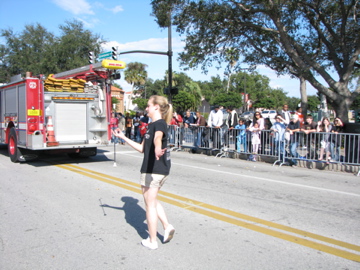
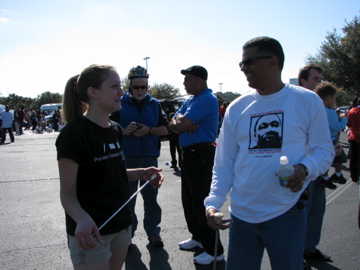
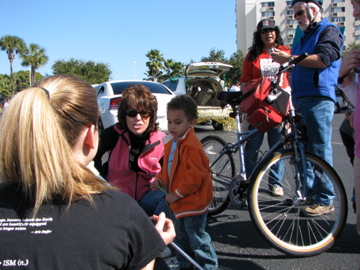
Baton Twirling in the MLK Parade

img_0089.jpg

It’s up there somewhere … 

img_0098.jpg

Twirling behind fire engines … worst place to twirl in a parade!

img_0084.jpg

Part of the Poynter posse 

img_0085.jpg

Keith trying to twirl. 

img_0083.jpg

Have to get ’em started at a young age. 

I told you in my last post that I would show you some footage of me twirling in St. Petersburg’s Martin Luther King Jr. parade. Well, you can watch me try to relive my glory days as a competitive twirler in this video, which my editor at Poynter made. Twirling the baton is like riding a bicycle. You (and the baton) might get a little rusty, but you never forget how to twirl.

What do you think? You ready for me to give you some twirling lessons?

Appreciating the Doctor

In recognition of Martin Luther King Jr. Day, at least one radio station in St. Petersburg has been playing Dr. MLK’s “I Have a Dream” speech. I twirled baton in today’s parade in St. Petersburg, Fla., (I’ll post twirling photos tomorrow) and was happy to see so many people turn out in support of the day — and for the fun of the parade.

I realized, looking back on the past few MLK days, that I’ve never celebrated the holiday the way I did today. Hearing the “I Have a Dream” speech so many times throughout the parade prompted me to go back and re-read the speech to appreciate what today is really all about. In case you want a little reminder, I’ve copied MLK’s famous 1963 speech below:

“I am happy to join with you today in what will go down in history as the greatest demonstration for freedom in the history of our nation.

Martin Luther King, Jr., delivering his 'I Have a Dream' speech from the steps of Lincoln Memorial. (photo: National Park Service)Five score years ago, a great American, in whose symbolic shadow we stand today, signed the Emancipation Proclamation. This momentous decree came as a great beacon light of hope to millions of Negro slaves who had been seared in the flames of withering injustice. It came as a joyous daybreak to end the long night of their captivity.

But one hundred years later, the Negro still is not free. One hundred years later, the life of the Negro is still sadly crippled by the manacles of segregation and the chains of discrimination. One hundred years later, the Negro lives on a lonely island of poverty in the midst of a vast ocean of material prosperity. One hundred years later, the Negro is still languishing in the corners of American society and finds himself an exile in his own land. So we have come here today to dramatize a shameful condition.

In a sense we have come to our nation’s capital to cash a check. When the architects of our republic wrote the magnificent words of the Constitution and the Declaration of Independence, they were signing a promissory note to which every American was to fall heir. This note was a promise that all men, yes, black men as well as white men, would be guaranteed the unalienable rights of life, liberty, and the pursuit of happiness.

It is obvious today that America has defaulted on this promissory note insofar as her citizens of color are concerned. Instead of honoring this sacred obligation, America has given the Negro people a bad check, a check which has come back marked “insufficient funds.” But we refuse to believe that the bank of justice is bankrupt. We refuse to believe that there are insufficient funds in the great vaults of opportunity of this nation. So we have come to cash this check — a check that will give us upon demand the riches of freedom and the security of justice. We have also come to this hallowed spot to remind America of the fierce urgency of now. This is no time to engage in the luxury of cooling off or to take the tranquilizing drug of gradualism. Now is the time to make real the promises of democracy. Now is the time to rise from the dark and desolate valley of segregation to the sunlit path of racial justice. Now is the time to lift our nation from the quick sands of racial injustice to the solid rock of brotherhood. Now is the time to make justice a reality for all of God’s children.

It would be fatal for the nation to overlook the urgency of the moment. This sweltering summer of the Negro’s legitimate discontent will not pass until there is an invigorating autumn of freedom and equality. Nineteen sixty-three is not an end, but a beginning. Those who hope that the Negro needed to blow off steam and will now be content will have a rude awakening if the nation returns to business as usual. There will be neither rest nor tranquility in America until the Negro is granted his citizenship rights. The whirlwinds of revolt will continue to shake the foundations of our nation until the bright day of justice emerges.

But there is something that I must say to my people who stand on the warm threshold which leads into the palace of justice. In the process of gaining our rightful place we must not be guilty of wrongful deeds. Let us not seek to satisfy our thirst for freedom by drinking from the cup of bitterness and hatred.

We must forever conduct our struggle on the high plane of dignity and discipline. We must not allow our creative protest to degenerate into physical violence. Again and again we must rise to the majestic heights of meeting physical force with soul force. The marvelous new militancy which has engulfed the Negro community must not lead us to a distrust of all white people, for many of our white brothers, as evidenced by their presence here today, have come to realize that their destiny is tied up with our destiny. They have come to realize that their freedom is inextricably bound to our freedom. We cannot walk alone.

As we walk, we must make the pledge that we shall always march ahead. We cannot turn back. There are those who are asking the devotees of civil rights, “When will you be satisfied?” We can never be satisfied as long as the Negro is the victim of the unspeakable horrors of police brutality. We can never be satisfied, as long as our bodies, heavy with the fatigue of travel, cannot gain lodging in the motels of the highways and the hotels of the cities. We cannot be satisfied as long as the Negro’s basic mobility is from a smaller ghetto to a larger one. We can never be satisfied as long as our children are stripped of their selfhood and robbed of their dignity by signs stating “For Whites Only”. We cannot be satisfied as long as a Negro in Mississippi cannot vote and a Negro in New York believes he has nothing for which to vote. No, no, we are not satisfied, and we will not be satisfied until justice rolls down like waters and righteousness like a mighty stream.

I am not unmindful that some of you have come here out of great trials and tribulations. Some of you have come fresh from narrow jail cells. Some of you have come from areas where your quest for freedom left you battered by the storms of persecution and staggered by the winds of police brutality. You have been the veterans of creative suffering. Continue to work with the faith that unearned suffering is redemptive.

Go back to Mississippi, go back to Alabama, go back to South Carolina, go back to Georgia, go back to Louisiana, go back to the slums and ghettos of our northern cities, knowing that somehow this situation can and will be changed. Let us not wallow in the valley of despair.

I say to you today, my friends, so even though we face the difficulties of today and tomorrow, I still have a dream. It is a dream deeply rooted in the American dream.

I have a dream that one day this nation will rise up and live out the true meaning of its creed: “We hold these truths to be self-evident: that all men are created equal.”

I have a dream that one day on the red hills of Georgia the sons of former slaves and the sons of former slave owners will be able to sit down together at the table of brotherhood.

I have a dream that one day even the state of Mississippi, a state sweltering with the heat of injustice, sweltering with the heat of oppression, will be transformed into an oasis of freedom and justice.

I have a dream that my four little children will one day live in a nation where they will not be judged by the color of their skin but by the content of their character.

I have a dream today.

I have a dream that one day, down in Alabama, with its vicious racists, with its governor having his lips dripping with the words of interposition and nullification; one day right there in Alabama, little black boys and black girls will be able to join hands with little white boys and white girls as sisters and brothers.

I have a dream today.

I have a dream that one day every valley shall be exalted, every hill and mountain shall be made low, the rough places will be made plain, and the crooked places will be made straight, and the glory of the Lord shall be revealed, and all flesh shall see it together.

This is our hope. This is the faith that I go back to the South with. With this faith we will be able to hew out of the mountain of despair a stone of hope. With this faith we will be able to transform the jangling discords of our nation into a beautiful symphony of brotherhood. With this faith we will be able to work together, to pray together, to struggle together, to go to jail together, to stand up for freedom together, knowing that we will be free one day.

This will be the day when all of God’s children will be able to sing with a new meaning, “My country, ’tis of thee, sweet land of liberty, of thee I sing. Land where my fathers died, land of the pilgrim’s pride, from every mountainside, let freedom ring.”

And if America is to be a great nation this must become true. So let freedom ring from the prodigious hilltops of New Hampshire. Let freedom ring from the mighty mountains of New York. Let freedom ring from the heightening Alleghenies of Pennsylvania!

Let freedom ring from the snowcapped Rockies of Colorado!

Let freedom ring from the curvaceous slopes of California!

But not only that; let freedom ring from Stone Mountain of Georgia!

Let freedom ring from Lookout Mountain of Tennessee!

Let freedom ring from every hill and molehill of Mississippi. From every mountainside, let freedom ring.

And when this happens, when we allow freedom to ring, when we let it ring from every village and every hamlet, from every state and every city, we will be able to speed up that day when all of God’s children, black men and white men, Jews and Gentiles, Protestants and Catholics, will be able to join hands and sing in the words of the old Negro spiritual, “Free at last! free at last! thank God Almighty, we are free at last!”

Source: http://www.usconstitution.net/dream.html

‘All She Wants to Do Is Dance’

thelma.jpg

[James Borchuck | St. Petersburg Times]

When I talked to Thelma Neely on the phone for the first time, I could hear the excitement in her voice, could feel the passion she exuded for life, could sense how much she loved to dance. There was a story there waiting to be told.

So I met with 86-year-old Thelma and her 89-year-old husband, Archie for an article I had pitched to the St. Petersburg Times. I sat with them and looked at their photographs, met their big black dog, Teddy Bear, and listened to them play Archie’s favorite dancing song, “Black Velvet.” I watched them dance at the Czechoslovakian Cultural Center in Gulfport, Fla., and visited them again at their home on several ocassions. All for the love of the story.

Part of the challenge in seeing Thelma and Archie so many times was figuring out which notes to use. My Steno pad likes to hold more notes than it needs. I wanted to include everything. I wanted to include the details about the two Dominican nuns who Thelma teaches dance lessons to, and I wanted to include details about Thelma and Archie’s prayer ritual. Every night, they hold hands and recite the Hail Mary and the Our Father. “Pray together, stay together,” Thelma says. But I couldn’t fit everything into the story, so I boiled my story down to one word: survival. It was then easier to figure out which details were most relevant. Through dancing, Thelma and Archie have survived. In many ways, dancing has kept them, and their relationship, alive.

So, here’s the story, which ran in Saturday’s St. Petersburg Times. Let me know what you think.

Maya Angelou: Freeing the Caged Bird

She looks up and recites the first of several “po-hems,” as she calls them:

But the caged bird stands on the grave of dreams, his shadow shouts on a nightmare scream, his wings are clipped and his feet are tied so he opens his throat to sing.”

Singing from her perch on the stage at the University of Southern Florida’s Sun Dome, Maya Angelou recited Paul Dunbar’s “I Know Why the Caged Bird Sings.” She told the crowded stadium stories of when she was a 16-year-old girl in the 1940s, 6-feet tall and pregnant, unmarried and uncertain of whether she would ever succeed in life. She remembers standing in front of the United Nations Building at age 16, watching as women like Eleanor Roosevelt walked through the building’s front doors. Maya was on the outside looking in, a caged bird who eventually opened her throat and began to sing through poetry.

She knew she had a gift with words, but she had lived in silence. What she needed, she said, was “to return to my voice.” Return to her voice so, like the caged bird, she could be free. Maya encouraged others in the audience to experience that freedom, through poetry, through laughter, through romance. Everyone needs a significant other in their life, she said, who will tell you that “Not only are you fine. You’re just right.” Everyone, she said, should “go to the library” because libraries are “ill-used,” and everyone should “memorize poems in case their computer flip flops.” It’s worth knowing some Shakespeare, too. Shakespeare, Maya said, has always been the “rainbow” in her clouds.

Didactic messages to be sure, but not preachy. As I watched her sit on stage, all 80 years of her, I was convinced of her greatness. Weak in stature, she’s powerful in spirit. Her po-hems have power, too. As she recited them, I didn’t just hear them; I felt them. They made me want to jump down a few bleachers and give Maya a hug, made me want to put her in my pocket and then take her out when I need a little poetry or pick-me-up in life.

I wouldn’t doubt that Maya “freed” some caged birds tonight, showing them that escape from entrapment is possible.

Who inspires you?


Strange Sightings from the Road

As someone who likes looking for unusual stories/sightings, I’m generally pretty aware of my surroundings. When I talk on my phone, I often park my car and walk around outside rather than sitting inside and talking. I want to see what’s going on in the outside world. I want to be where the action is, in places where I can observe the world around me. When I drive, I’m sometimes thankful for the extra time red lights give me to look around and breathe for a minute. Lately, I’ve made some red light observations that are more disturbing than they are funny.

On my way to St. Petersburg this morning, I sat in front of a stoplight and watched it turn from red to green, red to green and back again. None of the cars in front of me were moving, but the group of men surrounding them sure were. About four men had gotten out of their cars and were running around the road, snapping photographs of nearby cars, then getting back into their vehicles, only to wave their legs and feet out the window. They got back out and then started the process all over again. A game of musical cars, perhaps?

One of the men attempted to climb a telephone pole, his legs wrapped around its base. As the light turned green, the driver in front of me beeped his horn, as the woman sitting next to him twirled his index finger near the side of his head, indicating that the folks in front of her were “crazy.” The men eventually got in their cars and sped off. While I was at a stoplight next to them, they revved their engines, ready to race.

This is the third time I have seen an incident like this while driving in Clearwater and St. Petersburg. I’m not sure what to make of it, other than to say that some motorists should not be on the road. Acts like this can scare pedestrians and drivers, disrupt traffic and throw off people’s schedules. The last thing I want to be doing when I’m already running late is sit and watch a light flash from red to green, unable to move because a bunch of middle-aged men are running around their cars.

Some other strange sightings from the past couple of weeks:
–I was driving behind an old Pontiac GTO today. The car’s windshield was almost completely smashed. I’m not sure how the driver was able to see.

–A man stopped by my driver’s side door while I was at a stoplight and asked me if I had a pencil he could borrow.

–A passenger in a pick-up truck was sticking his head outside the passenger-side window, yelling profanities at passing cars. At one point, his entire torso was almost hanging outside the window.

Sounds like this could be the root of an interesting story. Has anyone else seen similar sightings recently?

Widgets, Twitter and the 2008 Elections

I recently came across two of the following features — widgets showing the 2008 primary delegate counters and “Politweets,” a site that features political-related Tweets, fed from Twitter. Does anyone know of other fun widgets/social networking tools that journalists are using to report on the 2008 elections?

In the spirit of the elections, I wrote an article for Poynter Online earlier this week about editorial endorsements, titled, “Endorsements: A Journalistic Obligation?” Feel free to share your thoughts on the piece.

Creativity Outside the Cubicle

After a brief hiatus, Word on the Street is back!

When I went home to Massachusetts, I made a couple of trips to Boston. I went to a cute independant bookstore on Newbury Street called Trident Booksellers and Cafe. Stacks of literary magazines and journals — a former English major’s haven — filled a small bookshelf across from the bookstore’s cafe. There, I found a copy of n + 1, a twice-yearly print journal. I bought a copy of it and read it during my flight back to Florida.

I found one article, “Birth of the Office” particularly interesting. The author of the piece, Nikil Saval, writes about the rise and fall of cubicles. He talks about how the size of cubicles has decreased from 90 square feet in 1999 to 75 square feet in 2006. Cubicles became flimsier, creating a kind of jail cell for workers, a stifling atmosphere that made it difficult to feel distinct when everyone else is surrounded by the same walls.

The walls aren’t so bad, as long as they don’t block your view of other people. Faces are doorways to creativity. People’s expressions, mannerisms, hand gestures, etc., often make me smile, wonder, and sympathize with the people I see. I want to know their stories, want to know why they’re acting the way they are. Because I’d rather be with people than sit in my room alone when I’m not at work, I often go to Panera to work or write on the weekends. Free Wifi is my new best friend. Panera and coffee shops are great places for writers, especially, because the people who frequent these places are often colorful, and make for good ideas for characters in books.

In his piece on offices/cubicles, Saval writes about the switch from working in an office to working in coffee shops, where he writes his freelance pieces: “Now I’m frequenting the cafes of New York City, enjoying my freedom. There are many like me — too many. I have to get up early in the morning to find a seat, which I claim with a valuable laptop. I’m afraid to get up and use the bathroom — the other freelancers might not steal my laptop, but they’ll certainly steal my seat. As a kind of rent paid to the cafe owners, I order a lot of expensive coffee and sun-dried tomato and mozzarella sandwiches on stale ciabatta. The usic is loud, arid through the day it seems to get louder, particularly when I ask the cafe owners to turn it down. Trying to read the words on the page in front of me, I find Im mentally repeating the chorus of the last song I played (I made a lot of mistakes/in my mind/in my mind.) The Internet access cuts out now and then.”

I like this passage because it’s true to my own experiences. And, I like the references to New York City, freedom, sun-dried tomato and mozzarella sandwiches on stale ciabatta and the reference to Sufjan Steven’s song, “Chicago.” I’m heading to Panera tomorrow to work on some stories. Too bad there isn’t a Trident Booksellers and Cafe with free Wifi in Florida.

Where do you work best? Do you like the confines of a cubicle, or would you rather work at a coffee shop, at the park, at your house, etc.?

Developing a Digital Identity

digitalid.gif

Billy Kulpa/Poynter

The term “digital identity” used to bother me. I didn’t like the idea of having an “identity” online, but as I researched the topic more, I realized that a digital ID is more about one’s presence or activity online than a sci-fi kind of identity.

My desire to learn more about digital IDs and the way they play into journalism led me to write an article for The Poynter Institute.

As I wrote on a Facebook discussion board I created about this topic: “As journalists, we’re storytellers. But knowing whether we should be a part of the stories we tell can be difficult. We work to tell the stories of others, but we have stories, too.

I think Facebook, Twitter, etc., can be valuable not necessarily to tell our own stories but to figure out how others are telling stories and interacting with the Web. There are many people who aren’t journalists who spend hours online, creating an identity for themselves on social networking sites.

What are the trends within these social networking sites? What are people thinking about? What makes them so interested in these sites? How can we as journalists captivate their attention in the same way through the stories we tell? These are questions I sometimes think about when I log onto social networking sites”

I’d be interested in hearing your thoughts about digital identities. Feel free to comment on this blog post, on the Poynter article page, or in the aforementioned Facebook discussion group.

Happy for ‘Book-Obsessed’ Kids

books.jpg

(Photo: By Brad Paris/New York magazine)

As I read New York magazine tonight, I couldn’t help but smile when I stumbled across the #50 reason why New York is a city worth loving: “Because Even Our Kids Are Book Obsessed.” The magazine devoted a two-page spread to photos of children holding books and quotes detailing the children’s favorite part of the book(s) they happened to be holding. I adore the photo of the baby and the “Goodnight Moon” book. That was one of my favorite books growing up. The author — Margaret Wise Brown — and I share the same birthday.

It makes me happy when I see mothers and fathers reading to their children. To instill the written word in children is to invite them into a world of imagination and wonder, a world where they can escape from the rigmarole of life and just … be.

What was your favorite book growing up?