Spotting Signs from Loved Ones Who Have Died

Every time I read Hope Edelman’s Motherless Daughters, I feel comforted in knowing that I’m not alone. In the book, Edelman talks about life as a motherless daughter and shares the stories of other daughters who have lost their moms. As helpful as it is to read these women’s stories, it’s also therapeutic to write my own story. Writing, in many ways, helps me keep my mom’s memory alive.

I sometimes wonder to what extent I should share personal stories with others. As a journalist, I’m used to telling other people’s stories, not my own. But we all have stories that need to be heard, read, and written. I’ve already shared some stories about my mom on this blog and plan to continue writing more for what I hope will someday become a memoir. Below, I wrote an essay about signs that I’ve been getting lately from my mom. I’m looking for feedback and hope you’ll share it. How can I make the essay better? What parts do you think I should explain more? What do you like/not like about it?

***********

I believe in the power of signs. When I veer off-course, signs point me in the right direction. When I begin to doubt, they give me reassurance. When I start to forget, they help me remember. These signs come in a multiplicity of forms – through songs, numbers, and engravings on the road. They help me to see that hope exists in the strangest of places, that death doesn’t have to be the end.

If death doesn’t liberate us, it tangles us up in webs of destruction, chaining us to the past and blinding what little vision we have of the future. We get stuck in patterns of the past, desiring what we can no longer have and asking why this, why now? I don’t have the answers, and I doubt I ever will. But in searching for them, I have found signs. In wanting to believe that there is life beyond death, I’ve found that there are ways to keep the dead alive. Not in a creepy kind of way, but in a way that reminds us that what we’ve lost doesn’t have to be forgotten.

I lost Mom when I was 11. She was diagnosed with breast cancer when I was 8. The cancer eventually took over her body, spreading to her bone marrow, her liver, and eventually her brain. The fighter that she was, Mom wanted to survive, and if she couldn’t, she at least wanted to be remembered. Before she died, she dedicated a song, Sarah McLachlan’s “I Will Remember You,” to me.

“I will remember you, will you remember me? Don’t let your life pass you by, weep not for the memories …”

It’s a silly question to ask. Of course I’ll remember you, Mom, I often say. Sometimes, though, my memory fails me. How wavy was her hair before chemotherapy stole it? What did her voice sound like? What did she look like when she stood tall, before she was confined to a wheelchair? For a woman with a soul as strong as Mom’s, I couldn’t understand how her body had become so fragile. Her presence in my life, though, is anything but weak. Mom’s song is 13 years old, but it’s still played regularly on the radio. More often than not, I hear it when I’m worried about something, feeling proud, or when I’m with my dad or grandmother. It’s as if Mom is saying, “Hey, I’m here, too!” My grandma doesn’t know contemporary music, but she knows Sarah’s voice. She calls me when she hears “I Will Remember You” to let me know that Mom’s thinking of us, that she hasn’t forgotten.

It’s not a coincidence that disc jockey Casey Kasem played Mom’s song as a long distance dedication nine years ago. Just as Mom would have, I decorated my letter to Kasem with stickers and yellow and pink fluorescent magic markers. I wrote “Read me!” all over the envelope in big bubbly letters. “Do something to stand out from the rest of the crowd,” Mom always said whenever I entered a contest.

Kasem must have caught on. He read my dedication on air and shared my story with listeners nationwide. At the end of the dedication he made the mistake of saying I was from Providence. Really, I was writing from Boston, but ironically a few years later I would be heading to Providence for college. After Kasem’s introduction, Dad and I sat in my room and listened to Mom’s song together. I kept repeating my mom’s name over and over in my head. To most listeners, Robin Tenore was just another woman. To me, she was a Mom whose memory had just been revived.

The next long distance dedication on the “Top 40 Countdown” that day was Celine Dion’s “Because You Loved Me.”

“You were my strength when I was weak. You were my voice when I couldn’t speak. You were my eyes when I couldn’t see. You saw the best there was in me.”

This was the song Mom had dedicated to my dad before she died. How ironic, I thought. How Mom-like to want to make sure that neither of us was left out.

Just as Mom’s songs are special, so too is her birthday. It’s a day to celebrate her birth and her 40 years of life. I’m reminded of her July 24 birthday whenever I see her “special time” on the clock: 7:24. Not long ago I was shopping for dresses for my friends’ weddings. Naturally, I began thinking about my Mom, wishing she could be there to help me shop and to help me pick out my own wedding dress someday. I don’t know what Mom would say about the dresses I picked out. The last time we went shopping together, I was wearing OshKosh B’Gosh overalls and Punky Brewster sneakers. Would she think my dress was cute? Too low-cut? Too expensive? After finding two grown-up dresses, I ended my day of shopping and got in my car. When I looked at the clock, time stared back at me. It was 7:24 p.m.

I will remember you. Will you remember me?

There are lots of things I’ll always remember. I’ll remember waking up early and going to yard sales with Mom every Saturday morning. I’ll remember Mom’s affinity for any and all things free, and her analogies to the Little Engine That Could when describing her battle against cancer.

When I’m tired or in need of inspiration, I think of the little blue engine chugging up the mountain and I begin to feel determined. Recently, when running a road race, my energy began to wane. My friend had run ahead of me, and I was feeling discouraged and frustrated that I couldn’t keep up. I think I can, I think I can, I think I can. As I approached a hill, I put my head down so I wouldn’t have to face what seemed like a mountain before me. Looking down, I saw the name “Robin” carved into the pavement. Mom, Robin Jo Tenore, was with me. Feeing her presence, I charged forward. I know I can, I know I can, I know I can.

The signs – they seem so obvious now, but they weren’t always that way. Before I believed they could be there, I wallowed in denial. Why would I have needed signs, reminders that Mom is still with me, if I didn’t believe she had actually died? For years, I tried to tell myself she hadn’t passed away. I directed every ounce of energy I had to keeping her alive. I wrote to her in my journal, I talked out loud to her, I wore her clothes. I wanted to be the same little girl I was when she died, so I tried to stay the same weight, keep the same hairdo, and stop the clock from ticking. For months, I refused to look at the calendar. I thought the older I got, the further away I would be from my mom and the easier it would be for me to forget her. During this time I stopped going to church. Last time I was in a church, Mom was in a coffin on the altar. Why go back? In losing my Mom, I lost sight of faith and love. I lost me.

I will remember you. Will you remember me?

I’ve found myself throughout the 11 years Mom has been gone, in large part because I’ve learned to understand that death doesn’t have to be all doom and gloom. Death, if we let it, can remind us of the importance of moving forward in life. I moved forward a lot during my freshman year of college. The week after I arrived at Providence College, a Catholic liberal arts college in Providence, R.I., I stepped inside St. Dominic Chapel and knelt down to pray. It was the first time I’d been to a Catholic church in years. As I prayed, I started to have trouble breathing. My chest felt tight and my heart felt like it might burst.

Then the tears came. All those tears that never came at the funeral when my mom lay on the altar, all those tears that for years I had kept hidden inside. I prayed, cried and felt a sense of peace, which continued to grow as I deepened my faith throughout college. I questioned certain Catholic beliefs and met regularly with a priest on campus who answered my questions and gave me guidance as a Christian, a student and a young woman searching for signs of remembrance. I eventually realized that although signs help direct us, they don’t always tell us where we’re going. Sometimes, I’ve found, we just need to rely on Providence. Not the city, or the school, but the idea that God directs everything toward its rightful end.

I was reminded of Providence while in New Orleans with my dad a couple of months ago. En route to Texas, we attended Mass at St. Louis Cathedral, the oldest cathedral in North America. We went on a whim, loudly tiptoeing into the service 15 minutes late. As I sat in the pews and prayed, I asked Mom for guidance. I asked her to be with me and to show me a sign that everything in Texas would be alright. Having just moved from Florida, I felt a sense of loss and wanted to know that the void inside me would somehow be filled. “Please, Mom, send me a sign now if you can,” I silently said. At that moment, my dad nudged me and pointed to a man who was walking down the aisle wearing a Providence College T-shirt. (A somewhat rare occurrence considering Providence College is a small school that mostly attracts students from the Northeast.) The man’s hands were folded in front of him, covering the word college, so all I could see was the word Providence. Mom, it seemed, was telling me to leave my worries in God’s hands, to remember that as much as we’d like to have complete control over life — and death — we can’t.

I will remember you. Will you remember me?

With so many signs, how could I ever forget? Longing for maternal love, I still weep for the memories. The tears don’t flow regularly or easily, but when they do, I let them fall. I look for signs to point me in the right direction, to remind me I’m not alone, that life doesn’t have to end with death. During a time in my life when I feel most compelled to write about my mom, I’m seeing more signs than ever: her song, her special time, her name, her answer to my prayers. It’s through writing, and being willing to receive these signs, that I’m learning to heal, and more than anything, remember.

Facing Fears, Indulging at the Texas State Fair

Me and my college roommate eating at the state fair.
Julia and I look a little fearful of the fried food.

Chocolate-covered strawberry waffle balls. S’mores. Chocolate truffles. Jelly Belly beans. Peanut butter and jelly. Grilled cheese. A banana split.

All deep fried.

Either the thought of this makes you want to indulge in the gooey goodness of it all, or it makes you want to hurl. I fall somewhere in between these two extremes.

I hardly ever eat fried food, except for an occasional order of French fries. But as I learned this weekend, there’s no excuse for not eating greasy treats at the Texas State Fair. Practically everywhere you look, there are fried food stands tempting passerby to indulge.

While my roommate from college, Julia, munched on a corny dog (they’re called “corny dogs” in Texas, not corn dogs), I waited in line at a stand that was selling fried snowballs, fried Snickers and fried Oreos. I went for the Oreos — three greasy, gooey, chocolaty Oreos nestled in a ball of batter, to be exact. They were gross, but at the same time so good.

Since I had eaten fried Oreos, I figured I might as well do something else I normally don’t do – ride a ferris wheel. I hadn’t been on a ferris wheel for about 10 years, mainly because I’m afraid of heights. But as I watched little kids waiting in line wearing smiles, I told myself it couldn’t be all that bad. Why not face my fear by riding the largest ferris wheel in North America?

I conquered my fear of heights by riding the largest ferris wheel in North America.
I faced my fear of heights by riding the largest ferris wheel in North America.

I stepped inside the little cage that would take us to the top and grabbed onto Julia’s hand, keeping my eyes closed like a child. When I was younger, I’d scream “Stop the ride!” whenever I got scared. But there was no screaming on this ride.

As we approached the top, I opened my eyes and admired the view. I actually liked being 212 feet above ground and seeing the state fair from a different perspective. It wasn’t nearly as frightening as I thought it’d be. Now all I need to do is go on my first roller coaster!

While at the fair I also got my handwriting analyzed. According to a handwriting analysis machine, my signature suggests that:

–I like to daydream and I have a vivid imagination.

–I tend to procrastinate on routine projects.

–I have a retentive memory for things that are important but am forgetful of minor details.

— I have good taste and dislike anything that is cheap and gaudy.

–I have definite goals.

–I worry too much about things I can’t change.

–I am strong-willed and have very definite ideas regarding most things in life.

–I sometimes enjoy being a nonconformist.

–I have the ability to negotiate or talk people into my way of thinking.

I’d say that’s a pretty good assessment, actually.

For a girl who was born and raised in Massachusetts and who had never been to a state fair before, the Texas State Fair lived up to the hype. I’d go back a second time, but probably not a third or fourth. The fair is expensive and not all that good for the arteries. It’s worth at least one trip, though, for the fried Oreos. I wonder what those fried s’mores and chocolate-covered strawberry waffle balls taste like …

What do you like to do/see at the Texas state fair, or at state fairs in general?

Walking Barefoot with Hanson

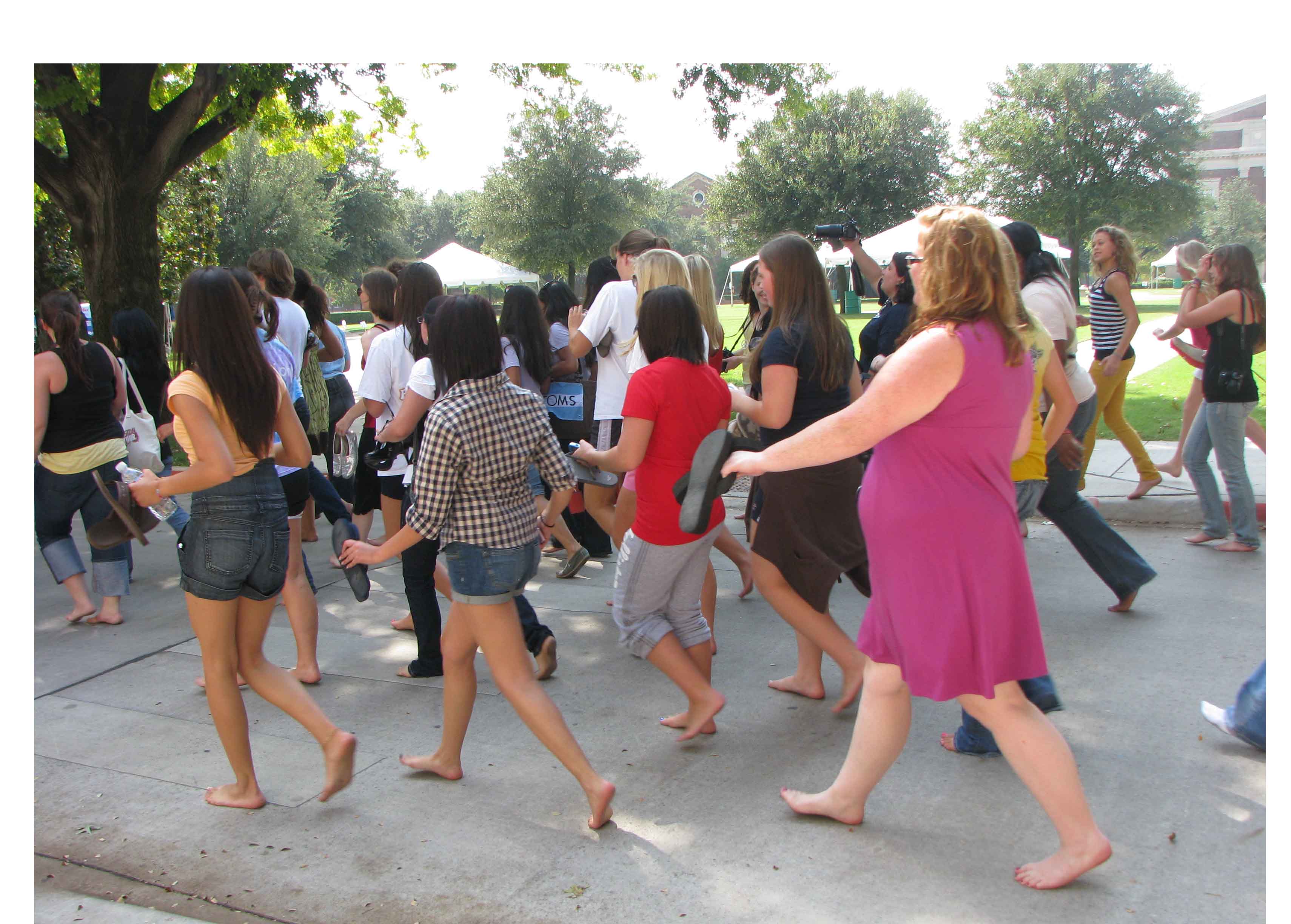
Fans walking barefoot
Fans walking barefoot at Southern Methodist University.

I’ll admit — I was a huge Hanson fan back in the day (when I was 13 or 14), but the group fell off my radar years ago.

In just the last week, though, I’ve interviewed the eldest brother, Isaac, written stories and blog posts about the brothers, walked barefoot with them, and gone to their concert. Let me explain the barefoot part: The Hanson brothers are walking barefoot in every city they tour in to help raise awareness about poverty and AIDS in Africa. They’re encouraging fans to join them and to register their own walks online.

I joined them on their walk in Dallas, which you can see from the photos I posted. It’s funny because I was running alongside screaming young girls as I tried to get toward the front of the pack to take better photos. I was amazed by how many girls still ooo and aww over the boys. The bros may have matured into young men, but they sure as heck still have lots of teenie-bopper fans. Here are my Hanson articles/blog entries:

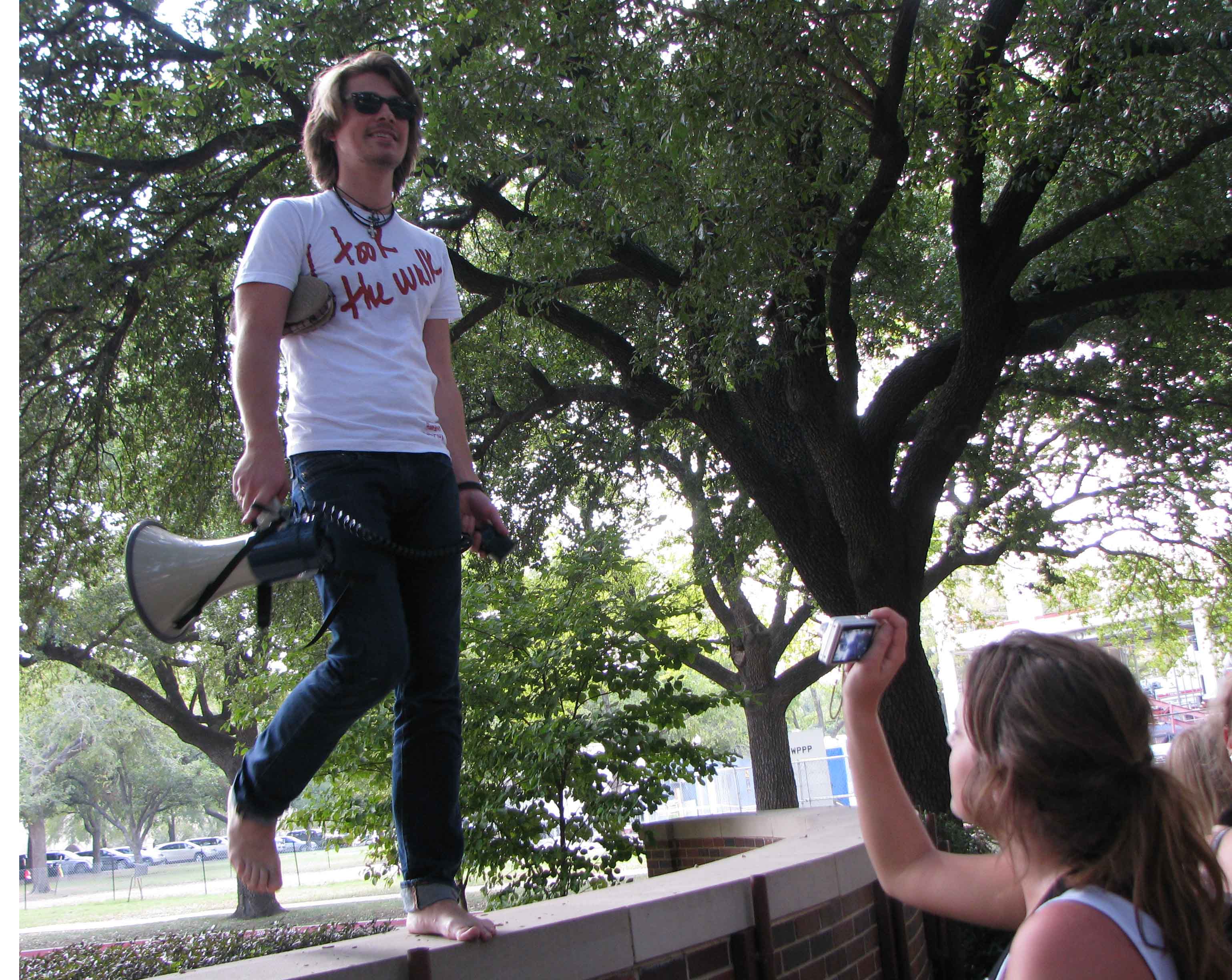
Taylor talking to fans after the walk
Taylor talking to fans after the walk.

“Hanson Asks Fans to Join Walk for Aid to Africa”

“Hanson Frames Catchy Songs in Sibling Harmony”

“Hundreds of Fans Walk with Hanson Brothers”

“Hanson Brothers Still Have Rhythm, Energy and Harmony”


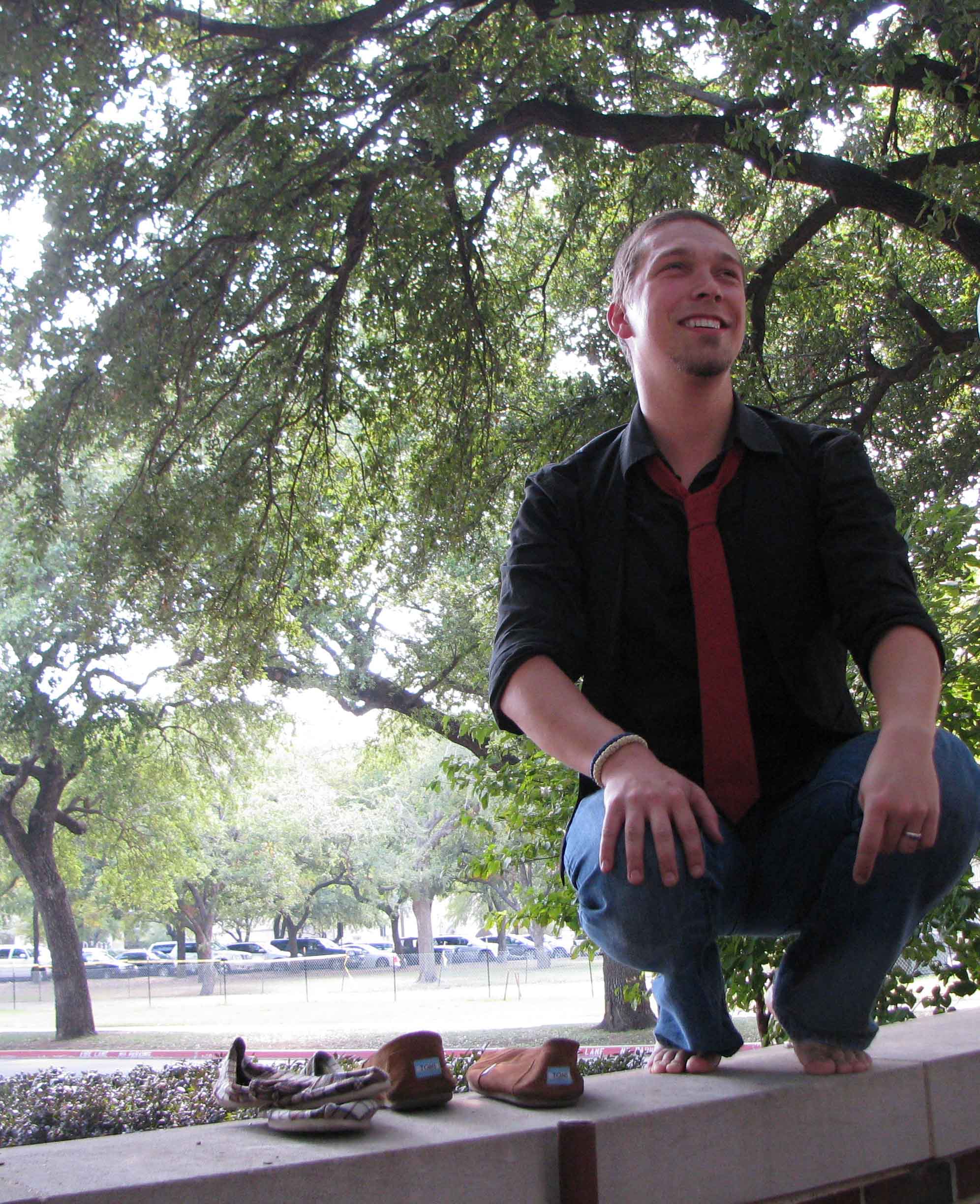
Isaac after taking the walk
Isaac after taking the walk.
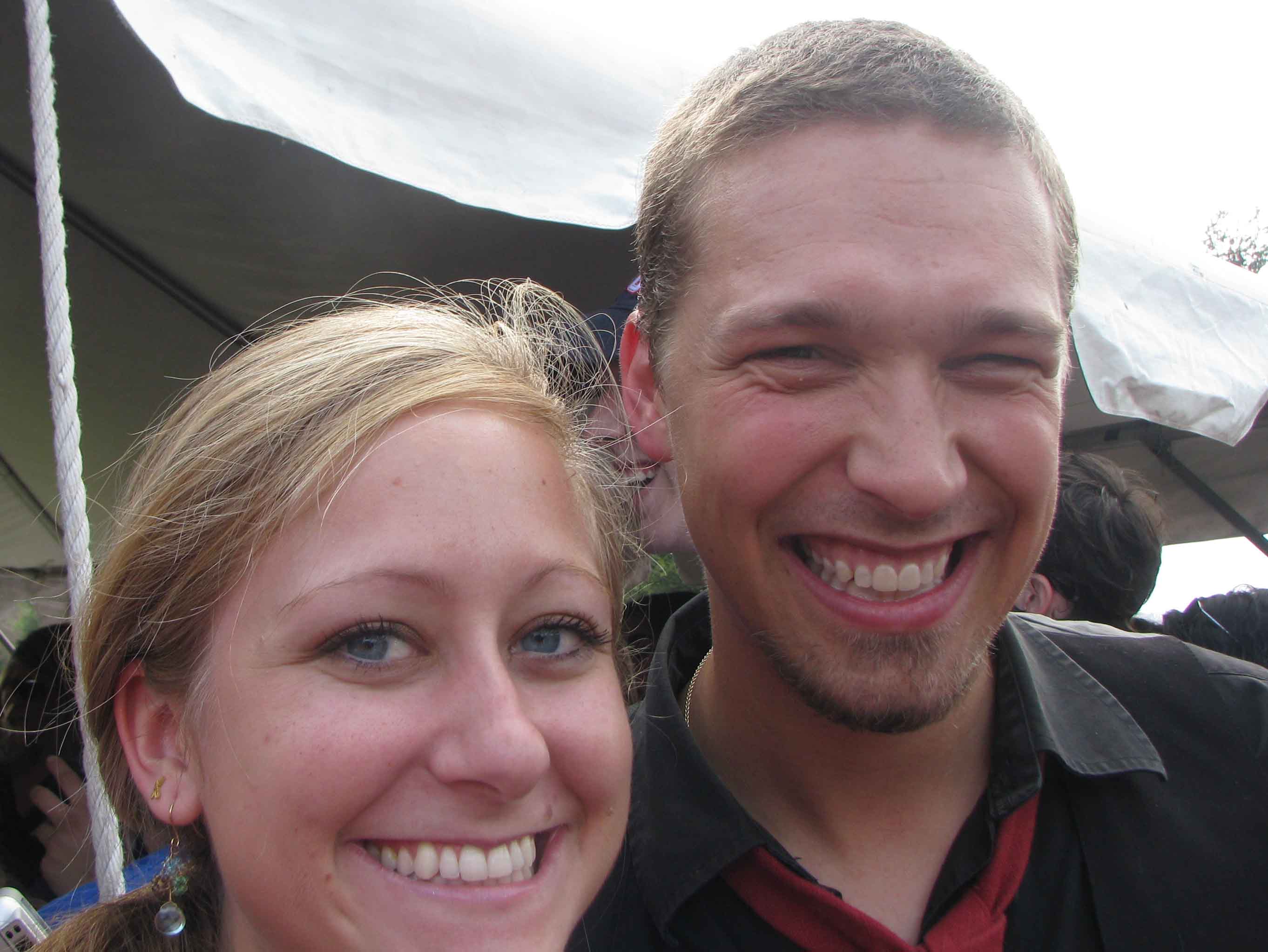
An unflattering photo of me standing next to Isaac.
An unflattering close-up of me next to a smiling Isaac.

Writing the Story Behind ‘The Late Homecoming’

Kao Kalia Yang
Kao Kalia Yang

Earlier this week I interviewed Kao Kalia Yang, author of The Late Homecoming: A Hmong Family Memoir. While talking with her, I was struck by how beautifully she spoke. It was as though her writing and speaking voice were synonymous. Having read her book, I grew to appreciate her poetic style of writing, and I listened with earnest as she shared the back-story of her book with me.

In both her book and in our conversation, Yang spoke candidly about her struggles as a writer and as a Hmong American. For much of Yang’s early life, she struggled to survive. Born in a Thai refugee camp in the aftermath of the Secret War, Yang fled to America with her family at age 6. As she grew older, she struggled to adjust to a new lifestyle, a new culture, a new home. She began writing about her family’s journey in her early 20s, she said, because the story of Hmong Americans had not yet been told.

In talking with Yang, I learned a lot about how writing The Latehomcoming helped her to remember and recount pieces of her past.

Click here to read more about Yang and her book:

As a child, Kao Kalia Yang immersed herself in books. She read about the Vietnamese, the Chinese and the Japanese, but she could never find books about the people she identified with best, the people of Hmong.

So at age 23, she decided to write her own story.

It took four years, but the result was The Latehomecomer, which Coffee House Press released this spring. Hailed by Publishers Weekly as a “moving, unforgettable” book, The Latehomecomer details the arduous journey Ms. Yang’s family took from Laos to the refugee camps in Thailand to America in the aftermath of the Vietnam War. She’ll discuss that journey, and her book, today in Allen.

[READ MORE ….]

Moms Finding Time For Friends, Themselves

I just finished writing a story about two moms who found time last week to go to the movies and step away from their responsibilities as mothers and wives. The moms saw “The Women” as part of a premiere event that a local moms group, Moms Out Loud, was sponsoring.

Originally, my article was going to be about the parallels between the mother’s lives and those of the movie’s characters. Because of space constraints, however, I found it was too difficult to delve into each of the mom’s lives and do them justice. The story, in its first draft, fell flat.

After talking with my editor about the story, though, we thought of a different angle: Why not turn it into a mini narrative — a slice of life piece? Once I had a clearer focus, the words flowed from me with ease. The story wasn’t pegged to any particular news event. It was just a story about two moms finding time to bond together, a story that celebrates motherhood and friendship.

Click here to read the short story:

In between bites of chicken nachos and coconut shrimp, friends Julie Bearden and Monique Swinson giggled while watching The Women at the Studio Movie Grill in Plano.

“That’s so you,” Ms. Swinson whispered to Ms. Bearden as they watched Debra Messing’s character taking care of a house full of children. “Yeah, no kidding,” Ms. Bearden said, sipping on iced tea.

Critics of the movie, which is a remake of George Cukor’s 1939 film, say it does little more than skim the surface level of complicated issues concerning relationships.

But this outing wasn’t about movie criticism. It was about Ms. Bearden and Ms. Swinson finding time to put aside their responsibilities as moms and wives and to relax together as friends.

[READ MORE …]

Homesick? Create a New Comfort Circle

I didn’t like Dallas when I first moved here. I remember walking around downtown near The Dallas Morning News building and thinking, “There’s nothing to do here!” But that was before I realized how sprawling Dallas is. That was before I really gave the city a chance.

Everything in Florida had been going well, so when I arrived in Dallas at the end of July for an internship at The Dallas Morning News I felt uprooted, scattered, and lost. I arrived in the newsroom the day buyouts were announced, I didn’t know my way around the city, and every face I saw looked unfamiliar. Dallas is a big city for a girl who lived most of her life in a small Massachusetts suburb. I’ve found, though, that the old cliche about time is true: it really does heal. It took me about a month, but I now feel more comfortable here and have actually started to like it.

Part of what has helped me make the transition is knowing that I’m going back to Florida. Leaving a place that feels like home makes you realize how much you took for granted while you were there — the lifestyle, the familiarity, the relationships. But it also makes you realize how much more there is to see outside your circles of comfort. These circles keep us focused, shape our lives and help us survive. (I often think of Sara Crewe, the main character in my favorite childhood book, A Little Princess. After Sara’s boarding school director made her a servant and forced her to live in an attic, Sara drew a circle on the attic floor. Within that circle, she felt safe.)

But these circles can also engulf us, making our lives so cyclical that we trap ourselves in the same routine day after day, week after week, month after month. Going to Dallas has helped me create new comfort circles in unfamiliar territory. I’ve taken on new hobbies, tried new foods, and explored new places. To keep track of my explorations, I started a list of all the fun places I’ve visited. Here are some of the places I’ve been throughout the past week:

Kalachandji’s — A Hare Krishna temple with a gift shop and Indian restaurant attached to it. The temple is open to anyone who wants to worship there, or just catch a glimpse of the ornate decorations. And I’d highly recommend the restaurant. I normally don’t like Indian food, but it’s all vegetarian, and it’s not loaded with curry. The restaurant is cafeteria style and reasonably priced. And the dessert is delicious, too.

Central Market — This grocery store is like Whole Foods on steroids. It’s full of organic food, fresh produce, gelato, and salad bars. It’s also a haven for fruit mix fanatics. There are bins upon bins of different kinds of fruit mixes that customers can scoop into plastic bags. Same goes for coffee beans and candy. Oh, and I can’t forget my favorite part: Free samples! I left feeling full.

Southside on Lamar’s Jeanette Kennedy Gallery — I took a free yoga class here Sunday night. I had only done yoga once before and wasn’t sure if I’d like it, but I found it to be incredibly relaxing. I listened as the instructor guided the class through the motions. “Inhale. Exhale. Oooowwwwwm,” he said. “Breathe, smile. 🙂 Breathe, smile. 🙂 Pretend as though your brain is falling to the back of your head. Relax.” At times I felt funny, my head hanging between my knees, my arms and hands folded in a knot. But by the end of it, my body felt like jello, and my mind felt at rest.

The Buffalo Exchange — Lately, I’ve become more interested in fashion. Maybe it’s all the talk at work about the paper’s coverage of New York’s fashion week. Or maybe it’s the fashionable girls and guys I see walking around the city streets. I like to look, but I don’t buy. I found both fashion and frugality at the Buffalo Exchange, though. There are lots of stylish clothes here with price tags that didn’t make me cringe. I ended up buying three cute dresses and a pair of yellow hoop earrings for $50. Not a bad deal.

NorthPark Center — This mall is huge, and it’s a great place to people watch. For a while, I was walking behind a little old man, who seemed as though he was doing his speed walking workout for the day. At another point, I walked behind a group of five ladies who were all wearing over-sized T-shirts and hats that had pink and purple strands of hair attached to them. Then there were the women in Barneys New York who were buying $600 dresses. I walked inside the store, just so I could say I’d been there. Naturally, I gravitated toward the sales rack. Wow, a T-shirt for “only” $199! This store, and many of the other stores in the mall, are a little too pricey.

Snider Plaza — This outdoor shopping center near Southern Methodist University has cute little boutiques, nail salons and restaurants. It’s three blocks long and great if you’re looking for a shopping area that isn’t dominated by designer stores. I like the names of some of the stores here: “The Blues Jean Bar,” “Goo Goo Eyes,” “Peek in the Attic” and “Peggy Sue BBQ,” (which I’ve heard is pretty good). Heck, there’s even a snoring center. (What?!)

The Crow Collection of Asian Art — Located in downtown Dallas, this collection is worth a look. The museum currently has an impressive display of Chinese art from private collectors in Texas. There are photographs, paintings, sculptures and more. The museum is free of charge, making for a cheap and cultural experience.

Nasher Sculpture Center — This outdoor museum features sculptures from artists such as Edgar Degas and Picasso. I expected there to be more sculptures, but I still enjoyed what I saw. Sculptures, I found, seem more beautiful in the outdoors. Sunshine and shadows fall on them, creating an interesting balance of light and darkness depending on the time of day. My favorite sculpture in the center is called “Walking to the Sky.” Sculpted by Jonathan Borofsky in 2004, the piece features seven life-size figures walking up a 100-foot stainless steel post. It looks as though they’re walking on clouds, determined to reach the sun.

In the month-and-a-half that I’ve been in Dallas, I’ve seen a lot. But there’s still so much more to see …

Weigh in: What recommendations do you have for things to do/places to see in Dallas?

Writing Concert Reviews on the Entertainment Beat

Rex C. Curry, special contributor, The Dallas Morning News
Photo of the Counting Crows' lead singer, Adam Duritz, taken by Rex C. Curry, special contributor, The Dallas Morning News

When I wrote about Steely Dan for my first concert review last month, I had difficulty speaking with authority on the band, seeing as I didn’t know its music well. Sure, I had researched the group, read reviews about its members and familiarized myself with its music on YouTube, but it was difficult to critique and review a band I knew little about. It was much easier to do this when reviewing the Counting Crows, Maroon 5, Enrique Iglesias and Aventura earlier this week because I know all of these groups’ music.

Concert reviews are good practice for writing on deadline and for writing succinctly. (We have to keep reviews to 10 inches, or about 350 words.) And they’re good for learning how to think about music on a deeper level. Some of the questions I’ve been asking myself when reviewing concerts are: How well does the band perform together? How does the band engage fans? What are the fans’ reactions? Does the music sound the same as it does on the band’s CDs? What’s unusual about the band’s performance? Does the band have energy, or is it lackluster?

I still have a long way to go before I make it to the level of seasoned critics, but I’m learning, and I’m enjoying the opportunity to explore a new genre of writing. Oh, and getting to see concerts for free is pretty sweet, too.

Here are links to my:

Counting Crows/Maroon 5 review and related blog post.

Enrique Iglesias review and related blog post.

Latest Texas Ballet Theater story.

More to Cowboys Than Hats and Horses

This cowboy doesn't look too happy about being in a photo with me!
This cowboy doesn't look too happy to be in a photo with me!

One of the first questions my friends and family from the Northeast ask me now that I’m in Dallas is: “Have you seen a lot of cowboys??”

“Not really,” I tell them. Sure, some girls and guys walk around wearing cowboy boots or hats, but I have yet to see a full-fledge cowboy or cowgirl roaming the streets of Dallas.

I saw plenty of them, though, while in Fort Worth. When my family came to town last week, we took the 45-minute ride to the Forth Worth stockyards and caught a more traditional, (or shall I say stereotypical?) glimpse of Texas life. Cowboys and cowgirls are a staple of everyday life in the stockyards — not an exception. They ride around on horses and drink beers at bars. They take pictures with tourists and help guide cattle along the main road that runs near the stockyards.

It was a bit of a culture shock seeing them at first, and I couldn’t tell how much of what I saw was authentic, or just for show. It felt a little like walking through Texas’ version of Massachusetts’ Plimouth Plantation. I took a photo with one of the cowboys, and I’ll admit: I looked at him differently than I would have two months ago before stepping foot in Texas. Cowboys and cowgirls, I’ve learned, are not just southern people who wear funny hats and ride big horses. They’re not just buckaroos, cowpokes, cowhands or cowpunchers. They’re men and women who come from a longstanding tradition of hard work, dating as far back as the medieval times in Spain.

Recently, I read a Texas Monthly cover story that helped explain the history of cowboys and the struggles they face in the present day. In the story, Elmer Kelton, the son of a Texas ranger, writes that a cowboy is “a common man in an uncommon profession, giving more than he receives, living by a code of conduct his detractors will never understand.” Since George Bush became president, however, Americans have increasingly referred to cowboys in a derogatory manner, targeting them as lazy loners. The word cowboy, Kelton writes, has become a political epithet that’s “thrown around as a pejorative, hijacked by pundits and politicians to refer to arrogant, reckless types who go it alone.”

I came to Texas with my own preconceived notions of what cowboys and cowgirls were like, without ever really knowing who they are, what they do, or how their way of life originated. Being willing to learn more about them and see them for myself, even if it was in a touristy setting, helped me assess my biases. I might not see cowboys and cowgirls in my everyday life in Dallas, but I now have a greater understanding of, and appreciation for, who they are and how they live their lives.

Addressing (and Parodying) Criticisms of the ‘Eastern Media Elite’

“On a mission to destroy.” “On a witch hunt.” “Got it wrong.” “Tackier than a costume change at a Madonna costume.”

Ouch.

These are just some of the criticisms that have been used to describe journalists and their coverage of vice presidential candidate Sarah Palin. Last week, Republicans called out The New York Times for an article it published about Palin and her 17-year-old daughter’s pregnancy, saying the paper used the pregnancy news as “fodder for political purposes.”

The Times‘ public editor, Clark Hoyt, points out that journalists were just doing their job: reporting the news and educating readers about Palin’s background. In an article in Sunday’s Times, Hoyt addressed concerns about the Times‘ coverage and rightfully admitted to a mistake the paper made regarding the lack of an attribution. He described the articles being criticized, saying:

“The drip-drip-drip of these stories seems like partisanship to Palin’s partisans. But they fill out the picture of who she is, and they represent a free press doing its job, investigating a candidate who might one day be the leader of the Free World.”

Thank goodness for public editors who can serve as the liaison between the public and the press and, when necessary, clarify and explain why journalists do what they do. It’s important to listen to people’s criticisms of the press because they’re often valid. Other times, though, they’re unfounded or unfair and stem from a misunderstanding of news organizations’ intentions and purpose.

Dana Milbank of The Washington Post also responded to recent attacks on the “Eastern media elite” in this video, in which he parodies the idea that journalists are among the “elite.” It’s pretty funny. Journalists will especially enjoy it because they know that a journalists’ job is anything BUT glamorous. Crappy pay, ever-changing hours, cubicles instead of offices, late nights on deadline … the passion definitely has to be there to want a job like this.

New York Times reporter Mark Leibovich offers this bit of advice to the “elite”: “Thicken that skin of yours and develop a good sense of humor.” It seems Milbank and hopefully others are doing just that.

Weigh in: How well do you think the press has handled its coverage of Palin?