Keeping Childhood Curiosity Alive

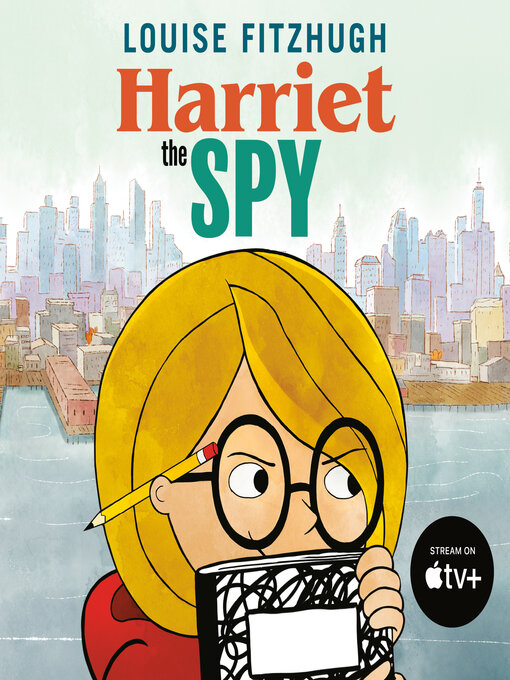
As a child, I embraced curiosity and imagination. I climbed the maple tree in my front yard and looked at passerby with binoculars, pretending I was Harriet the Spy. I hid slices of bread and sleeves of crackers in my room and fed them to the ducks in the stream in my backyard. I would yell “Quack Quack,” and the ducks would come flying toward me from the other end of the stream. The quack-quacking was a secret language, one that signified food and fun.

I collected trolls when I was little — I had 365 of them. Once, they were displayed in the children’s department of the Holliston Public Library. A local newspaper columnist wrote about me and my collection, which barely fit into the library’s glass display case. I tried selling them at a yard sale years later, but when my grandma saw them lying next to Barbie dolls on blankets in my front yard, she confiscated them. The so-ugly-they’re-cute creatures now live in boxes in my grandma’s basement. I collected stamps, buttons and costume jewelery pins. I had extravagant lemonade stands, which I’ve written about before. I sold paper fans, plants, bookmarks and pins made of eyeglass lenses at the end of my driveway. One summer, I made $76.

I used to twirl the baton competitively and would perform for neighbors and passerby in my front yard. I used to dress up in leotards while twirling and would bring my big boom box decorated with stickers on it outside. Katrina and the Waves’ “Walking On Sunshine” was one of my favorite twirling songs. I used to play the clarinet, too, and would sit outside with an old music stand my grandma used to use when she played the accordion in New York City in the 1930s. I used to plop myself in a plastic pool in my front yard and read, just for fun. I used to listen incessantly to Mr. T’s “Peer Pressure” music video. (Seriously, check this out.)

I played imaginary games, which I named “Medieval Times” and “Sissy Little Rich Girls.” For a while, I was obsessed with “Bridge to Terabithia” and “Tuck Everlasting,” and created imaginary games based on the characters in these books.

I don’t do any of these things anymore.

I often think back to my childhood and share my memories of it with friends. They laugh, and say they can still see the child in me, the girl who gets excited about reflecting on the past and tries to keep parts of it alive. Innocence. Curiosity. Excitement. Creativity. Imagination.

I don’t want to lose the parts of my childhood that meant so much to me. They’re part of who I am, and they remind me to take time to ask questions and really be curious about the world. Now, I’m not hiding in a maple tree with binoculars — I’m talking on the phone with reporters, interviewing them about their craft. Now, I don’t collect trolls — I collect books. I don’t twirl to loud music outside my apartment — I wear out my vocal chords in the car and dance in my seat. I don’t play imaginary games — I walk around the city and look for unusual people or stories on back roads. I make wrong turns. I get lost to find what I’m looking for.

This curiosity about the world, this desire to look at the world from a child’s perspective, to question things without apprehension is worth preserving. Perhaps George Orwell says it best in his essay, “Why I Write” when he says: “I am not able, and I do not want, completely to abandon the world view that I acquired in childhood. So long as I remain alive and well I shall continue to feel strongly about prose style, to love the surface of the Earth, and to take a pleasure in solid objects and scraps of useless information.”

Well said, George.

What are some of your favorite childhood pastimes? Do you still see them played out in your life now?

Images of Family Love

Mommies are like magnets. I notice this whenever I’m at church and I see children grabbing onto their mother’s arms, playing with their hair or looking up at them for a reaction. This morning at church, two boys wrapped their arms around their mom and hugged her for a minute or two. The mom kissed the boys’ head and murmured something to them, making them smile. There’s nothing quite like a mother-child relationship.

Last week, a man and woman (seemingly a mom and dad) sitting a few pews in front of me caught my eye. They were holding hands as their children latched onto their parents and rested their heads on their arms.

I wish I had a picture of the embrace, but memory will have to suffice. Images can help remind us, though, of moments we’d like to see more of in our daily travels. Hanging on my wall above my desk is a picture of a mother and daughter — Tina Fey and her little baby girl. The girl is sitting at a desk chair, looking as though she is typing, as her mom, Tina, sits underneath the desk, looking stumped. I’d look that way, too, if I were sitting underneath a desk that looks as though it might collapse from all the weight of the papers on top of it. The floor is covered with even more papers than the desk. Post-it notes line the walls. The messiness adds character.

Images of Fey and her daughter and the mothers and children I mentioned from church are important to preserve in memory or in photographs. They can remind us that even in a world of chaos, where broken families struggle to survive without scars, family love does still exist and, in many cases, is still strong.

Entrepreneurial Journalism/Gmail’s ‘Share Your Story’

Today, I came across a New York Times article about entrepreneurial journalism. I’ve often thought that while this may not be the “best” time to be in journalism, it’s nonetheless an exciting time, a time for innovation. So many people speak of the demise of journalism, but this article points to the possibilities that young journalists have to enter the journalism industry and thrive. Now, we don’t just tell stories through writing and photography — we have so many more ways of telling stories, through video, audio slideshows, social networking, etc.

The author of the article, Saul Hansell, writes: “It seems to be a great time to be starting out in journalism. Just don’t ask advice from anyone who has been in the business for more than five years.” It is, indeed, an exciting time to be a journalist … but only if you choose to see it that way.

Speaking of telling stories, I noticed on Gmail chat tonight that there’s a “Share your Gmail story” link. Gmail is asking its users to upload videos explaining what they use Gmail for and why they like it. Some of the sample videos are funny, but they represent stories nonetheless, and a chance for people to be heard.

Connections That Thrive on (and off) the Web

Interesting article by Jeff Jarvis on The Guardian today about social networking and how the notion of friendship is changing on the Web. Jarvis, a journalism professor at the City University of New York, is right — in today’s world of online technology, it’s easier, faster and simpler to stay in touch with friends than it was in the past. He talks at length about Facebook, saying, “With 50 million active users, that’s a lifetime value of $300 per friend – and those friendships will have long lives.”

Sometimes I feel as though it’s a cop-out to just send someone a Facebook message and consider it “keeping in touch,” but a wall post beats nothing at all. And sometimes the very nature of searching Facebook – looking at people’s pictures, studying the applications on their Facebook profile, reading their status is enough. Interacting with these different elements makes you feel connected to others, as though you’re keeping in touch with their lives and their interests, even without ever really talking to them.

The same can be said for other social networking sites like Twitter and De.licio.us. Knowing what people are doing, even if it’s only through a 140-character blurb on Twitter, makes me feel more in-tune with their lives. Reading others’ De.licio.us pages, though less interactive, still makes me feel as though I am connected through the stories, articles and multimedia projects that others I know have found interesting lately.

I’ve often thought, too, about how certain objects can make you feel closer to others. Take books, for example. If someone recommends a book to me and I read it, I can pick out the points in the book that I know the other person would like. The words, and the images they evoke, connect me. When I hear music that friends like, I listen to the music for company. Even listening to the radio makes me feel connected, more so than if I’m just listening to music on a CD (no, I don’t have an iPod), because I know others are listening to the same thing at the same time.

Does anyone else feel this way? How do you use social networking, books, music, etc., to connect to the world around you?

Getting Dizzy in the Spin Room

I like this article from yesterday’s St. Petersburg Times, written by John Frank and Aaron Sharockman. They do a good job of capturing the more humorous moments in the spin room and the madness that ensued.

Poynter summer fellows, look for the first of Tom French’s nine-part series on the zoo in tomorrow’s Times. “Life. Death. The Paradox of Freedom.”

Spinning Around After Wednesday’s Debate

huckabee.jpg

FORMER GOV. MIKE HUCKABEE, R-ARK.

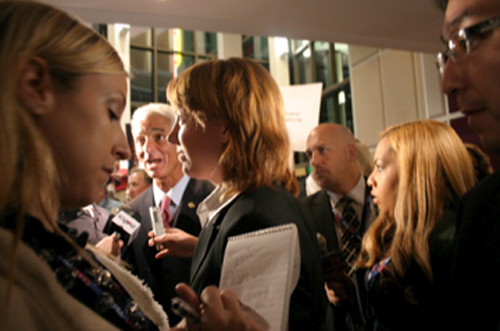
I took this photo and the ones below in the spin room after the CNN/YouTube debate last night and wrote this piece about journalists’ thoughts on debate coverage. It was fun dodging under armpits and peeking over shoulders to try to work my way into the action.

One man ended up falling over onto his back during the rush to interview Chuck Norris. It’s interesting that the reporters seemed to follow Norris more closely than they did the actual candidates. I’ll admit, though: I was just as excited to see Mr. Walker Texas Ranger himself, who was there hearting Huckabee. Romney, Giuliani and McCain didn’t make it into the spin room, so I got what photos I could.

I’m curious: What did you think of the debate? How well do you think journalists covered it?

ronpaul.jpg

REP. RON PAUL, R-TEXAS

img_3948.jpg

REP. DUNCAN HUNTER, R-CALIF.

crist.jpg

CHARLIE CRIST, GOVERNOR OF FLORIDA

img_3909.jpg

RICK BAKER, MAYOR OF ST. PETERSBURG

img_3891.jpg

REPORTERS HARD AT WORK

norris.jpg

and here he is … CHUCK NORRIS, HUCKABEE SUPPORTER


Can’t Help but Be a Newsroom Nomad

dsc02742.jpg

Taken this weekend at a stop light in front of The Miami Herald building.

When I had my first internship at The Holliston TAB in high school, I wondered where I’d sit. There were some open cubicles, but they were piled high with papers and books, and there didn’t seem to be enough room for another body to creep its way into the cubicle’s confines. My editor told me I’d probably have to move around a little bit, and he was right. I called myself the “newsroom nomad,” the writer who didn’t have a fixed spot, but who roamed around the newsroom, in search of a place to rest my steno pad. As time grew and I moved to other newsrooms, I found my place, in more ways than one. I remember my excitement at having an actual desk (and my own phone!) at the other papers where I interned. When I freelanced for papers, I would return to my nomad status, usually filing stories either from home, or late at night from some other reporters’ cubicle.

But being a nomad isn’t so bad — especially when you’re a reporter. It’s fun to explore new places and meet new people. I like roaming around main streets and seeing the tourist attractions and then stepping onto side streets, where I find some of the most interesting people and stories. And I love looking at different newsrooms, even if it’s just the outside of them. (This might explain why I often roam around the newsroom/office when I need a break from writing.) In the past week, I’ve been lucky enough to travel to New Orleans and Miami, where I’ve made special trips to see the outside of TheTimes-Picayune and The Miami Herald newsrooms. There’s something exciting about being near the presence of news and holding onto the hope that you’ll catch a glimpse, or actually meet, the people who give it life.

I try to keep this life alive by picking up papers wherever I go, to see their layout and design, their style of writing, their range of stories. They’re the best, cheapest souvenirs you can buy, rough drafts of history documenting the day you visited a particular city. For the sake of sentimentality and the love of newspapers, I can’t throw the bulky things away. The second drawer to my dresser is filled with newspapers. As for when, or if, I’ll get rid of them, I can’t be sure, so for now they’re staying put.

The pile in my drawer reminds me of the piles of newspapers in newsrooms, the ones that are replenished every day, and the ones that reporters keep under their cubicles or next to their chair. These are the piles that surrounded me during my newsroom nomad days. But I suppose sitting next to newspapers beats sitting next to the bathroom. When you’re first starting out, you never know exactly where you’re going to land in the newsroom. I’m still a young’un, but I’m guessing you eventually find where you belong.

Do you have any newsroom nomad stories? What do you think about visiting newsrooms/saving papers?

‘Funny’ Videos Not So Funny

Friends of mine love to send me links to funny Web videos they’ve found through word of mouth or while surfing the Web. Some are funny, and some are just downright stupid, which, in the spirit of dumb humor, seems to heighten their comic appeal. This week’s issue of New York magazine highlights some of these videos in an article titled “Funniest Web Videos of 2007.”

I watched every one of the videos, thinking they might strike my funny bone, but I didn’t find many of them all that comical. I had seen this College Humor video before and think it’s the funniest one on the “Top 20” list. The “Jeannie Tate Show” video starring Saturday Night Live’s Bill Hader might make you laugh, too. Quite the prank. This “I Like Turtles” video and the accompanying Bill O’Reilly spoof of it should have made the list, too.

Which video(s) from the list do you like best?

Sharing Work …

Only have time for a short post tonight, but here’s some recent work I did for Poynter Online. Enjoy!

Curry: Finding Diversity Within Diversity

Troxler on Politics and Journalists’ Role in Holding the Powerful Accountable

Anyone have links to projects/articles they’ve worked on recently that they want to share? Add them to the comment section if so, and I’ll respond.

Disruptions Worth Discussing

A few times for my birthday, I’ve gotten “e-cards,” the kind you can download for free over the Internet. I’ll take any card I can get these days, but I’d much rather open a card and see someone’s handwriting than click on a link and hear a dancing pink bunny sing me Happy Birthday. Maybe I’m just old-fashioned. Or maybe I just want to add to the collection of cards in my dresser drawer. I can’t ever throw away a card.

Despite my inclination to want to preserve the past, I’m fascinated by new technologies. I like knowing what they are, how they work, and why they are, or aren’t, popular. But when they replace, or lead to the demise of, something meaningful that could continue serving its purpose just fine if left alone, I wonder if they’re worth the wahoo.

Technologies that unexpectedly replace old technologies are what Clayton M. Christensen, Harvard business school professor, calls “disruptive technologies.” In his book, “The Innovator’s Dilemma,” Christensen lists established technologies and links them with a disruptive technology. You’ll see that the technologies he lists aren’t necessarily “technologies” in the sense that we think of them. Here are some of my favorites from his list:

  • Standard textbooks –> Custom-assembled, modular digital textbooks [Those sound scary.]
  • Classroom and campus-based instruction –> Distance education, typically enabled by the Internet
  • Medical doctors –> Nurse practitioners
  • Silver halide photography film –> Digital photography
  • Open surgery –> Arthroscopic and endoscopic surgery
  • Desktop personal computers –> Sony Playstation II, Internet appliances

Sometimes it makes sense to replace old technologies with new, more efficient ones. Other times, it seems disruptive technologies are formed out of laziness or a lack of funds. It’s a lot easier to send an e-card online than it is to buy a card, write in it, then buy a stamp and mail it. If we consider newspapers, we could argue that the Internet is a disruptive technology. With newspapers losing money, more and more news organizations are turning to the Web to tell stories. And people are responding, opting for the comfort of their mouse in place of an inky octopus.

This discussion begs the question: Does every new technology have to be “disruptive”? Can’t it just be supplemental? Let’s have handwritten greeting cards and e-cards, standard textbooks and digital textbooks, newspapers in print and online. Yes, all of these things still exist, but do newspapers have to die, for example? As we think about the future, can’t we include the past?

Thoughts, anyone?

If you don’t have any thoughts, I do accept e-cards …