Story Behind St. Petersburg Times Narrative about Florida School for Boys

I wrote a story for Poynter Online this week about the St. Petersburg (Fla.) Times‘ recent narrative, “For Their Own Good.” The story details the lives of several men who were severely beaten as children while at the Florida School for Boys, now the Arthur G. Dozier School for Boys, in Marianna, Fla.

One of the things that struck me while I read the story was the idea of reporting on a story that happened when you were young, or decades before you were born. Lots of stories are rooted in the past and told from generation to generation, or kept hidden in the recesses of the mind. How as a reporter do you dig deep enough to accurately capture memories that may be fuzzy? How do you tell a story from the past in the present and still make it relevant? How do you help people remember?

I asked some of these questions to the people behind the “For Their Own Good” project — reporters Ben Montgomery and Waveney Ann Moore and photographer Edmund Fountain. You can read my story here:

Troubled youth who were sent to the Florida School for Boys in Marianna, Fla., decades ago say they remember being beaten by a one-armed man with a leather strap. The boys, now men, all share similar memories and scars — emotional and physical markings that remind them of a time in their lives that is painful to remember, but too difficult to forget.

Several news organizations have reported on the abuse at the state reform school, but a recent St. Petersburg (Fla.) Times project takes a more rigorous look at the history of the school and at the boys whose lives were forever changed by going there.Poynter’s St. Petersburg Times reporters Ben Montgomery and Waveney Ann Moore, and photographer Edmund Fountain, spent six months working on the project, which culminated in a 6,300-word narrative that ran as a six-page, ad-free spread in the paper’s April 22 Sunday features section. The online presentation of the story features a video and a gallery of 23 portraits of the men.

[READ MORE …]

Clara the Cat: Loquacious & Irresistibly Cute (Not That I’m Biased Or Anything)

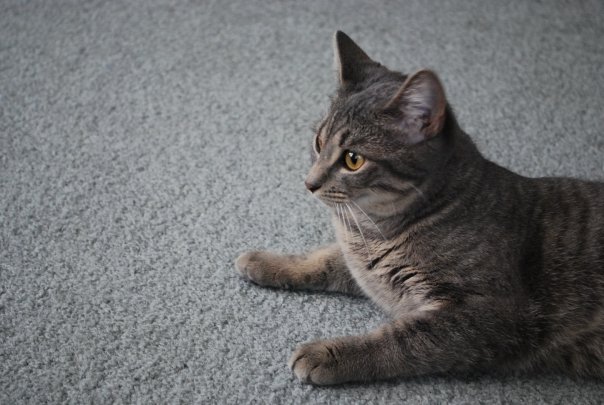
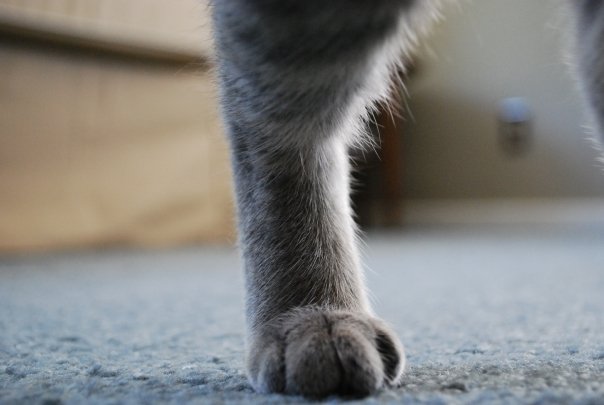
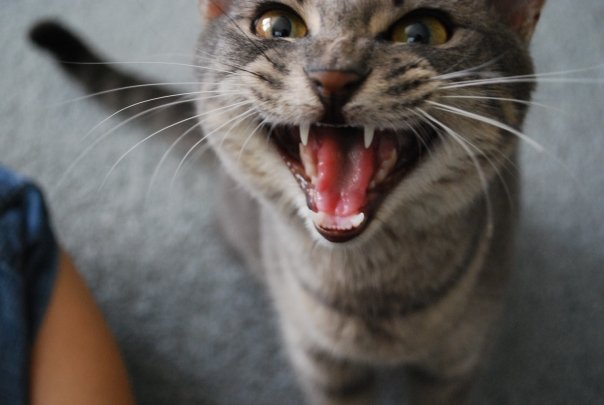
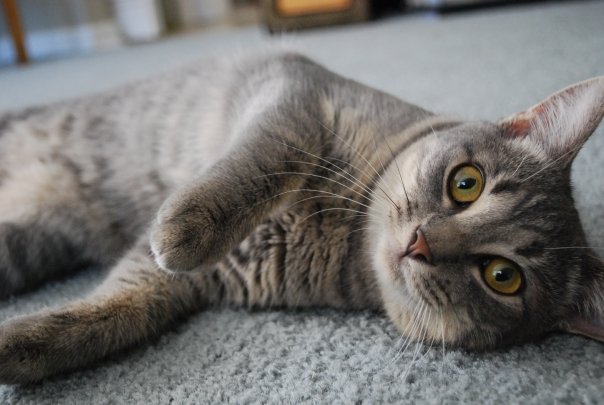
I love these photos that my friend took while cat sitting Clara last weekend. The contrast between the first viciously cute meowing photo (my cat likes to talk a lot) and the second “look-at-me-I’m-so-adorable” photo is classic. How can you not like cats after seeing these photos, or after spending some quality time on this “Random Kitten Generator” site?

clara1

clara2

clara3

image4

Prepping for Friends’ Weddings

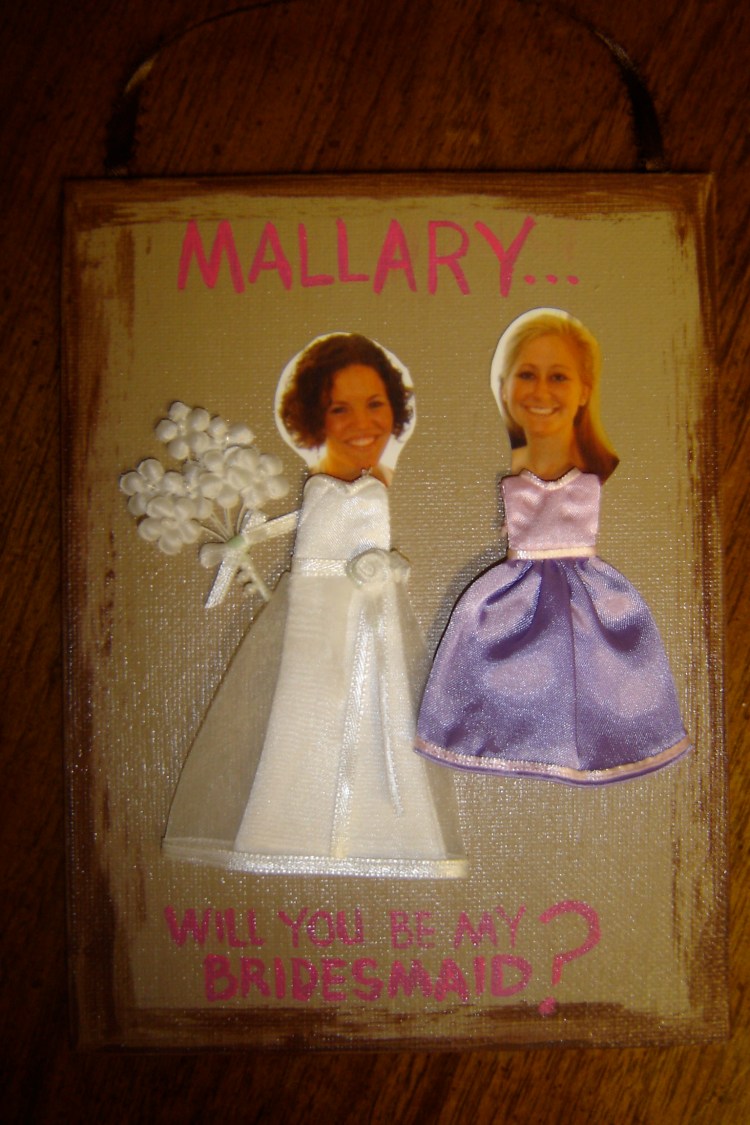
bridesmaidWhen I walked into my friend’s apartment in Minneapolis last weekend, I spotted a wrapped present on her bed that said “Mallary.”

I opened it to find a little canvasboard that had cut-out photos of my friend and me from senior year of college.

In pink paint, my friend had written, “Mallary, will you be my bridesmaid?”

“Of course!” I yelled, running toward her and giving her a long-lasting hug.

She’s the first of my 10 good girlfriends from college to get married, so I couldn’t help but get excited and embrace the moment.

I’ll probably be experiencing a few more of these moments in the months and years to come as more of my friends get married. Throughout the next five months, I may end up going to five weddings in five different states.

Oh my.

All this marriage talk kind of weirds me out. I always used to equate weddings with older family members, but now it’s my friends who are taking the plunge and exchanging vows. As much as I want to be at that stage in the future, I’m nowhere near it now. I suppose, though, that we all approach such stages in our own good time. For now, I’m just looking forward to going to the weddings and spending time with friends, eating good food and, of course, dancing.

The slow dances at weddings often remind me of sixth-grade dances. Dave Matthews’ “Satellite” or some other slow song from your childhood would come on, and you’d awkwardly look around you, realize all the non-wallflower guys were taken and then pretend it was OK that you were alone.

I thought of this at the last wedding I went to, where I was one of the only single girls, save for a few children. When it came time for my friend to throw her bouquet, I stood there, surrounded by a group of giddy, prepubescent girls.

I couldn’t help but laugh at my situation. I made a mad dash for the bouquet and ended up catching it, though I’m not sure if my catch was an indication of anything to come. Nevertheless, I came away with pretty yellow and orange flowers and some sorrowful stares from the little girls around me.

This weekend I’m off to a wedding in New Orleans. The Saturday of Memorial Day weekend I’m leaving for a wedding in Dallas. I’ve been lifting weights and running so I can be in tip-top shape to catch the bouquets at both weddings. Well, not really, but that would be pretty funny.

Here’s to having good laughs, being a bridesmaid and celebrating the next stages of life.

Grammarians, Language Lovers Unite at 13th Annual ACES Conference

“Who loves semicolons?” a grammarian asked while teaching a workshop at the American Copy Editors Society conference last weekend. A room full of hands shot up. “Woohoo!” one audience member yelled.

It was an appropriate set-up for the discussion that followed — a discussion rooted in the nuts and bolts of grammar and in the belief that the structure of sentences and words matters. Talk of multiple singular antecedents, parallelisms and subject/verb agreement led to questions and concerns over a perceived “laxness” in the world of grammar.

Is it OK if we split infinitives? What about beginning sentences with “but” or “and”? How about using sentence fragments (sparingly?) It’s OK to do all of these things in moderation, said Wichita Eagle Deputy Copy Desk Chief Lisa McLendon, who led the workshop.

Some “rules” aren’t so bendable, though. Subjects and verbs should agree, modifiers shouldn’t be misplaced and participles shouldn’t dangle.

Seeing McLendon and audience members become impassioned by the discussion made me chuckle at times, but also made me realize how important it is to have a group of professionals who care about preserving the English language. We need people who cringe when they see misspellings in menus, who take pictures of grammatically incorrect signs that say “Veteran’s Memorial Park” and who save writers from confusing “who” from “whom” and “lie” from “lay.”

Having edited my college newspaper and lots of stories on Poynter Online, I can understand why newsrooms need copy editors, and I can’t help but worry when I hear about them getting laid off.

Just last week, The Baltimore Sun let go of many of its copy editors, including the esteemed John McyIntyre. Fewer copy editors (and reporters, photographers, etc.,) in the newsroom often results in fewer attendants at conferences such at ACES. Chris Wienandt, ACES president, made it known that the society lost thousands of dollars by holding this year’s conference. The society also opened the conference up to more non-journalists this year.

Some of the estimated 235 attendees (down more than 100 from previous years) were from trade publications, universities and even the CIA. Others I talked to were simply interested in editing or had recently gotten laid off and wanted a chance to surround themselves with fellow language lovers.

As a copy editor, I valued what these language lovers had to say. And as a writer, I’ve always appreciated getting calls or pointers from them.

–“You put a comma before and after Joe Smith’s son’s name. That would mean that’s his only son. Is that true?”

–You said ‘While preparing for her presentation, she only talked to people who had been affected by the tragedy.’ I’m guessing she probably did more than just talk to people while preparing for the project, so we should make that “While preparing for her presentation, she talked only to people who had been affected by the tragedy.”

Oops.

They’re subtle changes, but they matter to copy editors and to readers who are sticklers for good grammar. They matter to me, too. I’m a “copy editor” by title, but I don’t always consider myself one in the sense that I do a lot more than copy edit in my current job. I edit stories from beginning to end, then copy edit them, and I write, do Web production, etc.

I’ve always enjoyed reporting more than copy editing, but I think that in many ways, being a copy editor can make you a better writer. The job teaches you to pay attention to words, sentence structure, details, facts and more. It’s helped me to clear clutter from my own writing, craft SEO-friendly headlines and more diligently check my facts. One of my journalism friends recently told me, “I think it helps, actually, to write for a few years and then edit, and then write again.”

I’d agree. Working as both an editor and a writer also helps you understand how different departments in the newsroom work, and makes you better able to advocate for colleagues on both ends of the production cycle.

If I didn’t have any editing experience, I probably wouldn’t have as fully enjoyed the “smackdown” between Merrill Perlman, former director of copy desks at The New York Times and Bill Walsh, copy chief for national and foreign news at The Washington Post at the end of the conference. The smackdown involved an Everlast T-shirt, red boxing gloves and a heated debate over, yes, style points.

One point of debate: Should we say “The real-estate agent bought an ice-cream cone” or “The real estate agent bought an ice cream cone” sans hyphens? (Walsh said yes to the hyphens, while Perlman and others said no.)

The crowd joined in. One woman who was passionate about hyphens, or a lack thereof, shouted, “AP finally dropped the hyphen in ‘teenaged’ – YES!”

These kinds of exclamations are commonplace among copy editors, especially when you get a group of them together. I may not always share the same level of excitement, and I can’t say I love semicolons, but I sure appreciate those who do.
Where to Go When Visiting Minneapolis?

This week I’m going to Minneapolis for the American Copy Editors Society conference and to visit one of my best friends from college, who just recently got engaged. I’ve never been to Minneapolis before, so I’m taking suggestions as to where I should go and what I should do.

Normally, when I travel somewhere I write about it after the fact, as I’ve done with my trips to Dallas, San Diego, Washington, D.C., and more. This time, though, I want to find out about the city’s worthwhile museums, parks, restaurants, bars, etc., ahead of time. My friend I’m staying with knows the area well, but I’m sure there are new places we could both explore together.

I’ve spent a little time on vita.mn, which is a great guide to the hotspots and latest happenings in the Twin Cities, but I’d like some more personalized suggestions, too.

So, where should I go/what should I try to do while I’m in Minneapolis?

Stories Behind Dallas Morning News’ ‘At the Edge of Life’ Project

When I interned at The Dallas Morning News last summer, I heard a lot about “the death project.” Editors talked about in the stairway and the other interns would ask with interest if I’d heard anything about it.

I never met Lee Hancock, the reporter on the project, but I met photographer Sonya Hebert briefly while learning how to edit video one day. She was sitting through hours of footage, trying to cut it down and edit it for one of the many videos that ended up in the project.

The videos made me teary-eyed, especially the one that included the story of a girl who struggled with an eating disorder as a way of coping with her mom’s pending death.

This is just one of several stories Hebert captured with her camera for the five-part series, “At the Edge of Life.” The series addresses some difficult questions that look at the way we experience death, and how it changes the way we, and our family members, live. Given all the emotions and trauma associated with death, it’s the type of story that lends itself to powerful images and storytelling.

In timing with Hebert’s nomination as a 2009 Pulitzer finalist, Poynter’s Kenny Irby has put together a Q&A with Hebert. It’s worth a read to find out more about the project and the lessons Hebert learned from it.

Signs Misspelling Name of Webster Lake Now Fixed

“There’s no excuse for a misspelled word,” my late grandpa once said, picking up his dictionary and grunting like a body builder lifting a heavy weight.

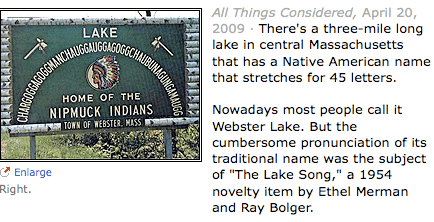
I agree with him, but am willing to allow for a little clemency when it comes to words and names like Chargoggagoggmanchauggagoggchaubunagungamaugg. Yes, there’s a three-mile long lake in Webster, Mass., home of the Nipmuck Native American tribe, that actually has this 45-letter name.

The lake has been in the news a lot lately up north, as two local signs that misspelled the name in 2003 have now been fixed. The name, which is Native American, is generally translated as “You fish on your side, I’ll fish on my side and nobody fishes in the middle.” There’s some dispute about this, though. The translation was thought to have come from a Worcester, Mass., reporter who fudged its true meaning. The real meaning of the lake’s name, the Webster Lake Association says, is “fishing place at the boundaries — neutral meeting grounds.”

It would be interesting to hear from an actual Nipmuck Native American to get a better sense of the meaning of the word and it significance to the tribe. I’m part Native American (Wampanoag tribe) and I’m from Massachusetts, so when I heard a story about the lake on National Public Radio Monday evening, I was naturally intrigued. I’ve never been to this lake, but with a name like Chargoggagoggmanchauggagoggchaubunagungamaugg, I’m guessing it’s pretty darn cool.

I’m glad people appreciate the lake and the importance of correctly spelled names enough to change the spelling on the signs. Gramps would be proud.

More from NPR …

More from www.npr.org ...

St. Petersburg Times Wins Two Pulitzer Prizes

I nearly cried when I heard the news. The St. Petersburg (Fla.) Times had won not one, but two, Pulitzer prizes — one for national reporting and another for feature reporting. It’s the first time the paper has ever won two Pulitzers in the same year.

The national reporting award was in recognition of the paper’s “PolitiFact” project, which combines computer programing and investigative reporting to fact check politicians’ statements.

The feature award went to Lane DeGregory for “The Girl in the Window,” a narrative about 9-year-old Dani, a feral child who was seriously neglected by her biological mother, practically left to die in a small room infested with feces and thousands of German cockroaches. The story is about so much more than neglect; it’s about what it means to let love into your life, to communicate without words, to be lost even after you’ve been found.

I’m of course happy for all the newspapers that won a Pulitzer this year for such stories. But I can’t help but be especially happy for the Times, seeing as I work for The Poynter Institute, which owns the paper.

Nelson Poynter on May 4, 1964, after finding out the Times had won a Pulitzer.

Nelson Poynter, former editor of the Times, founded the institute in 1975 so that journalists could have the training they needed to be better at what they do. He believed that “ownership or participation in ownership of a publication or broadcast property is a sacred trust and a great privilege.”

His mission and vision for the institute have been carried out throughout the years, so it makes sense that the Times‘ wins means a lot to the school that has such a close connection to the paper.

This year’s Pulitzer awards are a sign that despite all the doom and gloom, good work is still being done. During a time when newspapers are struggling, and on a day that’s marked by historic moments such as the anniversary of the Columbine shootings and Adolf Hitler’s birthday, it was refreshing to associate April 20 with something new — victory and hope for the future of quality journalism.

Story Behind Go! Cover Photo of Kissing Interracial Couple

go_coverI wrote a story for Poynter Online this week about a Go! cover photo of an interracial couple and the racially charged comments it generated.

To find out more about the issue, I talked with editors at the St. Louis Post-Dispatch, including Kurt Greenbaum, editor of social media, about how they handled the comments:

When you’re trying to foster a conversation about race, how do you choose whom to include and whom to exclude?

It’s a question that reporters and editors at the St. Louis Post-Dispatch have asked a lot since launching the paper’s ‘A Conversation about Race‘ blog in January, and one that generated quite a bit of attention last week.

In a ‘Conversation about Race’ blog post on Friday, Post-Dispatch reporter Doug Moore wrote about the controversy surrounding a photo of a interracial couple that appeared on the Post-Dispatch‘s weekly Go! magazine. The photo generated negative comments from readers, many of whom said they were disturbed that the paper would run such an image.

[Read on for a Q&A with Greenbaum ….]