Collections: Reminders of Our Individuality, What We Hold Dear

Monday night I was reading FDluxe, a Dallas Morning News publication that features articles about fashion/style, homes, dining, etc. The May 2008 issue includes a full-page spread showing various treasures people collect. I’ve always been fascinated by people’s collections. I once knew a guy who had a whole basement full of baseball caps. He was in his 80s and had been collecting them since he was a teenager. My former next-door neighbor, Mrs. Irish, used to collect goose eggs, which she decorated and sold at craft fairs.

As a child, I collected:

  • Stamps — I still have an old, rust-colored stamp book full of them.
  • Buttons — You’d be surprised by how many cool buttons are out there.
  • Rocks — Yes, as an only child I needed to find something to entertain myself when playing outside.
  • Trolls — I had 365 of them and was featured in the local newspaper when the Holliston Public Library put my collection on display!
  • Precious Moments dolls — I loved their teardrop eyes.
  • Costume jewelery pins — I had two six-foot boards full of them, which are now gaining dust at my home in Massachusetts.
  • Anything to do with frogs — I still have a fetish for frogs, and for butterflies.

Now I really don’t collect much, except for books. (The Border’s next to my apartment tempts me all too often.)

Here are some of the slightly more sophisticated collections featured in the FDluxe piece:

  • Vintage pagodas
  • Two-faced vases
  • China
  • Taxidermy — deer heads, small minks and beavers.
  • 19th and 20th-century hand-painted photographs of women
  • Napkins
  • Hand-blown glass
  • Wine
  • Antique prints
  • Vinyl records

I can’t see myself collecting any of these “treasures,” especially not napkins. But that’s the beauty of collections — they speak to who we are as individuals, to what we hold dear and, sometimes, to what we’re afraid to lose.

What do you collect?

Responsibilities Rise as Copy Desks Shrink

Mallary Tenore/Poynter Online

My editor asked me to write an article about “the future of copy editing” last week after hearing talk of copy desks shrinking nationwide. She said she thought I would be especially interested in the topic, given that I am going to spend the next year copy editing for Poynter Online and News University. (I’m going to keep freelancing on the side, but my primary duties will revolve around editing.)

I agreed, but wondered how I would approach the article. “Future of” stories can be tough to write because you have to approach them with a clear focus so you don’t end up with a simple round-up of people’s guesses as to what the future will be. I didn’t want to write an article that was preachy or not grounded in research and reporting, so I made some phone calls and spent five days talking with copy editors, top editors and others for the story. It took me longer than usual to find a focus for the piece, and it wasn’t until after I wrote the first draft and sat down with my editor that I realized what I wanted the message to be. I conveyed this message in the nut graf of the story:

Those in charge of hiring copy editors aren’t so quick to call copy editing a dying profession, but they know change is on the horizon. The future they envision for copy editors includes a merging of responsibilities, a greater focus on editing blogs and multimedia and an understanding that even with fewer resources, the basic fundamentals of copy editing still need to be upheld. Outsourcing, meanwhile, has reminded them of the importance of knowing a coverage area at the local level so they can catch mistakes that might otherwise find their way onto sites like “Regret the Error.”

The stakes are no doubt high for copy editors, who are the last folks to see a story before it gets published. If a mistake slips through, the copy desk is usually blamed. Now, there are fewer people to blame, but greater responsibilities to be had. Copy editors are being asked to do page layout and design in many newspapers, meaning their sole focus is not editing. Some copy editors I talked to for the story said they fear that accuracy could be jeopardized with fewer people to catch mistakes.

Outsourcing copy editors is another risky undertaking, they say, because outsourced workers won’t know the communities being written about. I’m learning more and more that to be a copy editor, you have to know a community as well as, if not better than, reporters do. Copy editors need to know how to spell city council members’ names, and they need to know which streets run parallel and which ones intersect. They realize the value of such details. It’s their careful attention to detail and accuracy that make copy editors such valuable assets to the newsroom. They’re the unsung heroes of news operations, the folks who never get a byline but who “save” reporters and editors from making themselves look silly or careless.

In reporting the copy editing story, I found that many copy editors don’t think the newsroom understands all the work they do. John McIntyre, assistant managing editor for the copy desk at The Baltimore Sun, alluded to this in my interview with him when he asked: “Will copy editors find it within themselves to immerge from their customary anomyinity and make a persuasive case for the value of what they do? If not, then they’re going to lose out.” I didn’t have room for this quote in the article, but it struck me as an interesting question.

I raised a question yesterday in the comments section of my piece about the dialogue that copy editors and reporters have — or don’t: “I’ve talked to a lot of copy editors at mid to large-size papers who say they have little interaction with reporters when editing their stories,” I wrote. “Sure, assigning editors talk with reporters, but it seems like it would be smart for copy editors to do the same. Maybe then more people in the newsroom would better understand the work they do. What’s the conversation like between copy editors and reporters in your newsroom?” Feel free to join the discussion in the comments section of my story by clicking here.

The responses I’ve gotten in the comments section of the article and in personal e-mails has made me realize just how passionate copy editors are about the work they do, and how much they are trying to ensure that the value of their work will not be undermined in the future. My article didn’t reveal what the future of copy editing will be, but I hope it at least provided readers with a sense of where the future is headed. As the kicker of my article says: For now, this much is true: The stakes for copy editors aren’t getting any lower.

I’d like to continue writing copy editing stories and am open to your ideas. What questions do you have about copy editing that you’d like to see me pursue?

Messages and Memories Found, Preserved in Books

Just some of what I found in the books on my bookshelves.

Last week I was flipping through my mom’s old cookbook. It’s a cookbook written by Ellie Deaner, who Mom and I used to take cooking classes from when I was a child. The red cover is torn from the spiral binding of the book, and the pages are stained with what looks like butter, teriyaki sauce and chocolate. As I looked at the recipes in the book, I was surprised to see my mom’s handwriting on the pages, little messages alerting readers to which foods Mom thought were “good,” “excellent,” or “eh.”

The pesto pinwheels and cheddar cheese puffs were marked “good.” The beef and nectarine stir-fry? “Not so great.” Underneath the banana cake recipe was a note that read: “12/28/91 very good bread.” And underneath the eggplant dip: “Put eggplant in a collender for 1/2 hour with a heavy object on it so the juice can be extracted from the eggplant.” The penciled messages are hidden cues to which foods I should cook and those that I should stay away from, little helpful hints from Mom.

As I looked at the books on my bookshelves, I realized just how many messages books contain — not plot-based messages, but handwritten messages scribbled on the inside of the book, or on random slips of paper we use as bookmarks and then forget about. I wonder what librarians find in books when people return them. Here are the messages/makeshift bookmarks I found in some of the books on my bookshelves:

  • “A Book of Common Prayer” by Joan Didion: “… We’re all drifting separable golden leaves like little toy boats on the pools in the streets, drifting down and ocassionally touching. ~Lisa.” Dated May 8, 1977, on the inside of the front cover.
  • “Divine Secrets of the Ya-Ya Sisterhood,” by Rebecca Wells: “Friends forever!” signed by author Rebecca Wells on the inside front cover of this used book. Not dated.
  • “Becoming a Writer,” by Dorothea Brande: A discolored bookmark from Toronto Women’s Bookstore on 73 Harbord Street in Toronto.
  • “Why a Daughter Needs a Dad,” by Gregory E. Lang: “To: Mallary. From: Dad. So much of this book reminds me of us. <3” Dated Christmas 2006 on the inside of the front cover.
  • “The Digital Photography Book,” by Scott Kelby: The address of a friend who lives in Rome, N.Y.
  • “The Last Hurrah,” by Edwin O’Connor: A sheet of white-lined notebook paper with unknown names and numbers next to them.
  • “Anna Karenina,” by Leo Tolstoy (A 1944 copy I found for $4.50!): “This book is from the hoard of Marie Garher. Read thoroughly, handle carefully. Return promptly.” Not dated, on the inside cover.
  • “Love: Quotes and Passages from the Heart,” by B.C. Aronson: “Mallary, life is all about love. May you enjoy all kinds of love throughout your life.” Dated 2008, on the inside cover.
  • “Tell Me Why,” by Arkady Leokum: Dried flowers and prayer cards for St. Thomas Aquinas, the patron saint of Providence College, and a subscription card for Vanity Fair magazine.
  • “El Alquimista,” by Paul Coelho: A metal bookmark that says: “Courage. Life shrinks or expands in proportion to one’s courage.”
  • “Living Out Loud,” by Anna Quindlen: A photograph of my maternal grandfather and his parents and 13 brothers and sisters. On the back is this: “Tom 36, Curt 35, Ruth, 34, Edith, 33, Arthur, 30, Eva, 29, George, 27, Ray, 26, Bob, 24 (my late grandfather), Roy 21, Lilian 18, Albert, 16, Ma 58, Pa 57. July 4, 1951.” Hard to believe that photo is 57 years old.
  • A Boston tourbook: A $50 birthday check! Eek, good thing the check is only a month-and-a-half old.

The messages remind me of my own past, and make me wonder about other people’s pasts. What did Lisa’s message in Joan Didion’s book mean, and who did she write it to? Who wrote on the back of the photo of my grandfather and his family? I usually sign books when I give them to people so that someday, when the novel or cookbook is lying dusty on a shelf in a used bookstore, the message and memories will live on.

What have you found in your own books?

Committed to Commenting … Or Not

I often wonder why some articles receive more comments than others. If I receive three comments on a Poynter Online article, I consider that to be pretty good. I thought the article I wrote about journalists paying it forward last week would receive at least a couple of comments, given the subject matter of the piece and the question/”click here” link at the end: “Click here to share your stories about how fellow journalists have helped you.” Yet, it was a centerpiece story for three days on Poynter Online and it didn’t receive a single comment.

The lower number of comments on our site compared to other Web sites may have something to do with the fact that the majority of our users are journalists. My colleague Amy Gahran wrote a thought-provoking piece about journalists commenting on the Web, called “Journos: Do You Post Public Comments? Why/Why Not?” She writes that: “In almost every blog and public forum where I participate, I’ve noticed that generally few of the commenters are journalists working for mainstream news organizations.” She raises a valid point that a whopping 17 readers expand upon in the comments section of the piece.

Another recent Poynter Online essay, “Hazarding a Guess on Race” by Sally Lehrman, received 14 comments, which is a lot for a Diversity at Work item, or any article on our site for that matter.

Drawing from your own experiences, what compels you to want to comment on an article/multimedia piece, etc.?

When Zippers Won’t Come Undone

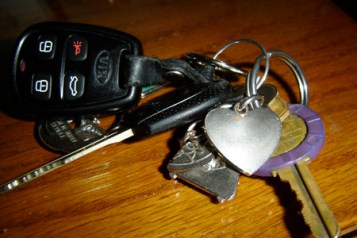
My keys were stuck in my pocket thanks to a zipper that wouldn’t come undone.

Not long ago, I wrote about little angels — strangers who help us when we need a pick-me-up or a favor. I bumped into two of these angels today, when I was in need of some zipper help. I had just come back from a 12-mile bike ride and was outside of my apartment trying to get my keys out of my pocket. I was wearing black spandex shorts that have a little pocket on the butt. It’s the perfect size for keys and for the student ID I used to stick in there while running at college.

But the pocket’s zipper isn’t so perfect. When I tried to open the pocket, the zipper wouldn’t budge. After a few minutes of unsuccessful attempts, I went downstairs, thinking maybe I could find someone who would help me. As I waited outside in the lobby to my apartment, I looked through an abandoned baby book that was full of photos dated 1977. The album was accompanied by a baby book filled with details about the baby’s birth and growth. I didn’t know why the books were there, nestled underneath a stack of phone books and some copies of The Clearwater Citizen, but they entertained me while I waited.

I heard a “bing” and looked up to see the numbers on the elevator light up. I hoped someone would come downstairs who didn’t seem to be in much of a rush. Within a minute, an old lady riding a motorized scooter came off the elevator. Perfect. At the same time, another elderly woman walked into the lobby, and the two started talking.

Their conversation went something like this:

“Wow, feel this beautiful breeze,” said Helen, the woman on the scooter.

“Oh I know, they ought to keep these doors open more often,” said Anne, her friend.

I had never seen these two women before, but I chimed into the conversation, saying, “Yeah, this breeze feels great. I just got back from a bike ride, so I’m loving it.”

After easing my way into their conversation, I made my move. “Hey, this is a strange request, but I stuck my keys inside my pocket before I went for a bike ride, and now I can’t get the pocket’s zipper undone.”

“What?” they said. “We can’t hear you. The breeze is creating a wind tunnel.”

“Oh,” I said, moving closer and elevating my voice. “I just said that I’m having trouble undoing my pocket zipper, and my keys are stuck in there.”

Helen beckoned me toward her, and she began to tug on my zipper. “Hmm, it won’t budge.” She kept trying to no avail.

“Let me try,” said Anne, the brim of her sun hat shading her face. “I don’t have my glasses, so I don’t know how well I’ll be able to see, but I’ll try.” She concluded that the teeth on the zipper were not lined up correctly.

“Can you take your pants off? You don’t want to lose those panties.”

“Oh my shorts? No, if you have some scissors, I can probably just cut the pocket open.”

Helen decided she would call her son, Mike, for some help. He didn’t answer, so she left a message. “Hi Mike, there’s a lady down here who needs help getting something unzipped.” (True quote)

Oh my.

“Why don’t you come into my apartment?” said Ann. “I’ve got some scissors you can use.”

As we walked a few feet to her apartment, I said lots of thank yous so she wouldn’t worry about having a complete stranger in her house armed with scissors.

I went into her bathroom and cut the pocket open. The keys fell into my hand. Mission accomplished.

“I got ’em!” I said, smiling and dangling the keys in the air.

“Oh great! And you still have your pants on!”

“Yep, I still have them. I can still wear them, I just can’t use the pocket anymore.”

“Oh good!”

We walked outside, and Helen was waiting nearby. I told her I was all set, thanks to Anne and her save-the-day-scissors.

You never know when you’re going to run into a little angel. And you never know when your zippers will break. You just have to hope you’ll run into some sweet, little old ladies who will lend you some scissors and give you a good old-fashioned laugh.

Click here to read another story about strangers and zippers.

Heading to Dallas, Then Back to St. Petersburg

During a time when many journalists are getting laid off or leaving the industry to further their education or enter a new field, I’ve been putting out feelers for reporting jobs. I like to think that despite the difficulties the industry is facing, there is hope for young journalists who want to enter the field. I get inspired when I see more than 20 young journalists enroll in Poynter’s six-week summer program, or when I see the new class of Chips Quinn scholars talk with excitement about starting journalism internships this summer in newsrooms around the country. Sure, I’ve been known to be overly optimistic, (I was voted “most optimistic” in high school), but I try to be realistic at the same time.

Part of being realistic is realizing that today’s journalists need to be versatile — they need multimedia skills, traditional reporting and writing skills and copy editing skills. It’s this realization, in part, that led me to accept an offer today as a copy editor at The Poynter Institute. In thinking about my decision to take the position, I considered the fact that editing and reporting are not mutually exclusive. My ultimate goal is to be a reporter, but I’m looking forward to taking some time to develop my editing skills and, in turn, become a better writer.

I’ve always believed that writers need to have knowledge about a lot of different subjects, hence the reason why I was so drawn to a liberal arts education at Providence College. Editing helps you to become more knowledgeable on a variety of subjects, particularly because you have to approach whatever you read with a certain level of scrutiny. Just as reporters should be curious about the world around them, so too should editors be inquisitive and ask questions about the copy they’re editing. The copy editing I’ve done so far has helped me to become a more focused reader, pay closer attention to detail and develop a greater appreciation for facts, accuracy and truth.

It has also provided me with an opportunity to improve the writing of those whose work I edit. Every day I walk past a piece of origami paper that’s hanging on my bedroom wall. It reads: “Being a good editor is about making people better.” I wrote down this expression after hearing National Public Radio’s Ellen Weiss say it during a talk at Poynter last fall. Weiss’ simple message stuck with me because of its great meaning. I would argue that the same message applies to reporters — being a good reporter is about making people better by telling stories that give a voice to those who may otherwise remain unheard.

Of course, the best way to be a reporter is to do actual reporting. I’ve made it a goal to freelance at least one story a month while I’m at Poynter and to continue writing personal essays. (Maybe someday I’ll write that memoir I’ve been talking about …) The wonderful thing about writing is that you can do it anytime, and anywhere. For three months this summer, I’ll be reporting and writing at The Dallas Morning News, where I have a feature writing internship. I have never been to Texas before, so I’m looking forward to exploring a new city and finding story ideas in a new community. I’ve often thought that one of the greatest ways to get to know a new city is to be a reporter. As a journalist, your job forces you to talk to people in the community, ask questions and find your way after getting lost on an assignment. (Not that this has happened to me …)

As the Naughton fellow, my beat has been the journalism industry. When I go to Dallas, I’ll be immersing myself in “my beat,” and I’ll be able to bring that much more knowledge of the industry back to Poynter. I’ll head to Dallas on July 26, at which point I’ll end my Naughton fellowship at Poynter. I’ll return to the sunshine state at the beginning of November with a fresh sense of the issues newsrooms are facing and the ways in which they are maintaining hope.

You can be sure I’ll post “Word on the Street” updates between now and the end of July and that I’ll blog about my road trip to Dallas and my experiences there. Stay tuned!

Books That Remind Us of Childhood, How Much We’ve Grown

On my morning commute to work earlier this week, I caught the beginning of a segment on National Public Radio (NPR) about “everyone’s favorite ‘Little Women’ character,” Jo. The second oldest of the four children, Jo aspires to be a writer and is the kind of woman who some say Louisa May Alcott wanted to be. She stands out among her sisters for her headstrong and creative nature, and is a feminist for her time.

In hearing women on NPR talk about Jo, I was reminded of the power books have to take us back to childhood and to make us realize how much we’ve grown. Depending on where we’re at in our lives, we experience the characters in books differently. We often grow to view characters as friends or late-night companions. They become people who we relate to, aspire to be, or promise never to be like. Sometimes we reconnect with these characters years after we close a book, and find that the connection we once had with them has weakened, or remained the same.

One woman interviewed for the NPR segment, for example, said that her view of “Little Women” changed after reading the book as an adult. “It was only reading it again that I realized that I didn’t really like the book. I like Jo the best of them, but I really didn’t like Jo either,” she said. “That family was just too good. And I think part of the thing that bothered me growing up was it made me feel very guilty because I knew I couldn’t be that good.” The woman said that as an adult, she didn’t want to read about the idealized Jo; she wanted to see more of the real Louisa May Alcott in Jo’s character.

Sometimes, we want to see ourselves in fictional characters. I sometimes compare myself to Harriet the Spy, the main character of one of my favorite childhood books, who inspired me to want to be a journalist. I recently re-read “Harriet the Spy” and found that I still loved it just as much as I did as a child. After listening to the NPR segment, I now have the urge to re-read my all-time favorite childhood book, “A Little Princess,” to see how my experience of the book changes.

I think I’ll still love Sara Crew’s charismatic nature, and I’ll probably still smile when I read my favorite scene in which Sara draws a circle for herself on the floor of her attic with a piece of chalk. She tells herself that curled up inside this circle, she will always be safe. I’m sure that re-reading this scene would make me think of my childhood, a time when chalk-drawn circles were safety nets and imagination a companion for loneliness.

Books like “Little Women,” “Harriet the Spy,” and “A Little Princess” (all pretty girly, I realize!), can bridge the gap between childhood and adulthood, brining new meaning and understanding to the stories in books and those of our lives.

Journalists and Press Secretaries: Understanding the Divide

I wrote a Poynter Online story this week about the working relationship between journalists and press secretaries, following the publication of White House Press Secretary Scott McClellan’s new book, in which he criticizes the press for not being aggressive enough in the lead-up to the Iraq War. The topic of this piece is also relevant given the fact that some journalists are now leaving the field to work toward becoming press secretaries, public relations officers, public affairs officials, etc.

I talked to a journalist who used to be a press secretary, a press secretary who used to be a journalist, a former White House press secretary and others. One press secretary I interviewed said journalists often believe they’re more important than they actually are. Newspapers, she said, just aren’t as highly read as they used to be, and not all politicians read the newspaper anymore. To read more of this story, click here.

Confederate Flag Flies Over Tampa

Freedom. A loaded word that lets us act according to our own wills, even at the expense of trapping others. It’s freedom that lets us speak our minds without censorship, and it’s freedom that allows a group in Tampa to fly a confederate flag at the intersection of interstates 75 and 4. Towering over Tampa, the city’s second largest flag will fly above the intersection of wrong and right, black and white, progression and regression.

On the day the “southern heritage” flag was raised, cars drove by below. Passerby stopped and stared. Occasional truck drivers honked their horns and gave a thumbs-up sign, the St. Petersburg (Fla.) Times reported. A reminder of what so many tried for so long to forget, standing tall with pride for all to see. “Welcome to my city,” the flag will boldly say when it’s raised again, forgetting that this city belongs to not one group, but many. A few miles south on 275, an American flag already blows. “Welcome to our city” it says.

The unwelcoming flag is the antithesis of freedom for black men and women, and yet it is because of freedom that the flag can fly. For all the progress that has been made, for all the acceptance that has been gained, many wonder why some still want to fly flags like this. At the intersection of southern heritage gone wrong, confederacy detours us from the freedom that so many fought so hard to gain. No doubt, the city’s confederate flag has already torn and divided people, but what has been torn by freedom can be mended by freedom.

Some suggest that the way to respond to the flag’s presence is to challenge its dominance by erecting Old Glory above it. You can read more of the ongoing discussion about this idea here.

Value in Virtual Communities

In preparation for the end of the primary season Tuesday night, I looked at ways in which journalists can use virtual communities such as Facebook and Twitter to enhance their political coverage. It’s funny when I think back to this time last year. I used to have trouble seeing the value in social networking sites. Why not just step outside the office and report in the real community? I used to think.

There is great value in going out into real communities and talking with people, hearing their concerns and observing their work/living areas. But in researching social networking sites and their implications for journalists, I’ve come to realize that there is also value in online communities. Journalists are communicators of truth, so it only makes sense that they would explore the various forms of communication on the Web, so long as doing so doesn’t sacrifice their face-to-face time with sources.

Sites like Twitter can also help improve journalists’ writing. I’ve used the site to help curb my tendency to be wordy when writing. Because Twitter only lets you post 140-character updates, the site has helped me to think more concisely and to be more conscious of the words I use. With only 140 characters to spare, I can’t waste words. As with journalism, every word counts.

How have you used virtual communities to enhance your reporting/storytelling process?