Listening to Children’s Stories

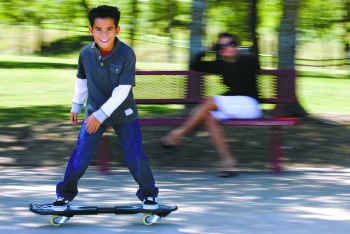
Photo of Bryce Cass taken by Mike Stone, special contributor, The Dallas Morning News

I’ve always enjoyed interviewing children, mostly because they get excited about talking to reporters. No cold shoulders. No “off the records.” No shameless plugs. In the past when I’ve covered school events, all the teacher had to do was introduce me as “the lady from the paper” and children would swarm me. “What are you writing about?”, “Do you work for the newspaper?”, and the most frequently asked question: “Is my name going to be in the paper?!”

“Maybe!” I’d usually say, not knowing how many of the quotes I’d use.

While children are often enthusiastic to talk, they challenge journalists’ ability to ask good questions. If you ask a child a yes or no, close-ended question, they often reply with a one-word answer. So, I try to ask open-ended questions. Instead of “Did you have fun at the show?” I rephrase this question and ask: “What did you like best about the show?” or “Tell me about the show.” Sometimes, all you get is, “It was really fun,” but keep prodding. “What was really fun?”

This week, I interviewed a rising star, Bryce Cass. The 10-year-old from Rockwall, Texas, is one of the five children on this season’s Are You Smarter Than a Fifth Grader? When I met him and his mother, Terry, I was struck by how close they seemed. At one point during the interview, Terry began to cry when I asked her how proud she is of her son. Bryce ran over to her and threw his arms around her neck, pressing his face against hers. “It’s OK, Mom,” he told her. It was a beautiful moment that I wanted to include in the narrative. When interviewing Bryce and Terry, I didn’t want to record what they told me so much as I wanted to relay what the mother-son pair said to each other.

Stories about kids can make for wonderful narratives, in part because kids have so much energy and interesting things to say. If you’re not getting anywhere with your interview, sit back and listen. Watch children interact with each other or with their families. What are they saying to each other when they’re not talking to “the lady from the paper”? Capture these conversations.

Click here to read the story I wrote about Bryce.

Last week, I wrote a story about young filmmakers who competed in Samsung Mobile’s Fresh Films competition.

And here is the latest story from the ballet beat.

Weigh in: Do you find that kids are open to sharing their stories, or have I just been lucky?
Finding My Way on the Ballet Beat

I wrote a story for Tuesday’s paper about the Texas Ballet Theater falling short in its fundraising goals. The company has to raise $1.5 million in pledges and $500,000 in cash within the next week or it will close. In writing so many stories about the ballet, I’ve developed a lot of local sources. I need to start storing my numbers electronically, or just get a good, old-fashioned Rolodex!

You can read my ballet story here:

With only one week to go before its deadline, the Texas Ballet Theater is falling hundreds of thousands of dollars short in its fundraising efforts.

The company says it needs $1.5 million in pledges and $500,000 in cash by Sept. 10, the opening day of the company’s season. As of Tuesday, Margo McCann, the group’s interim managing director, said it had raised $145,326 in cash and about $800,000 in pledges.

“Quite frankly, it’s not that much money for two cities to come up with,” said Ben Stevenson, the theater’s artistic director.

Most of the contributions have come through small donations from community members, Ms. McCann said.

The company’s board of directors finalized a formal business plan last week, which includes doing away with live music at performances, she said.

A development director – a position the company has been without for the past three years – also has been chosen. Administrators are withholding the name of the director until they can be sure the company will stay open.

[READ MORE …]

Weigh in: If you’re a journalist, how do you store/save sources’ contact information?

Sixth Floor Reminders of Why Journalism Matters

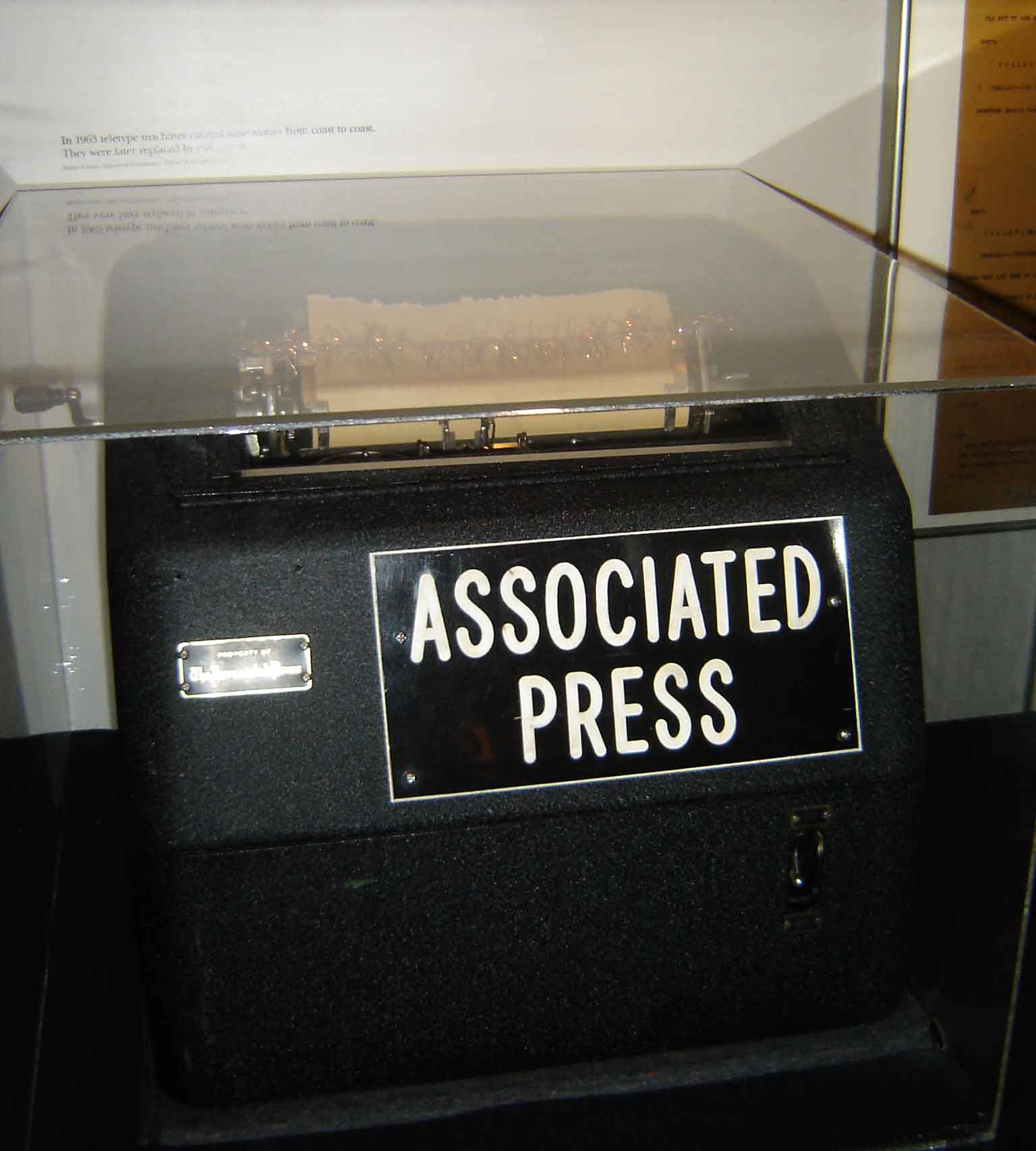
A glass case with the Associated Press teletype that was used to disseminate information at the scene of the shooting sits on a stand in the museum, a reminder of how quickly the press hustled to spread the news of JFK's assasination.
The Associated Press teletype that was used to disseminate information about JFK's assassination.

I’ve heard people say that newspapers are the rough draft of history. On Saturday, I gained a better understanding of what this means.

While at the Sixth Floor Museum in downtown Dallas where John F. Kennedy was shot, I gravitated toward a display titled: “Pandemonium and the Press.” The display shows photos of journalists at the scene of JFK”s death and features vignettes about the role of the press during this traumatic moment in history.

Many of the photos and documents in the museum would not be there if it hadn’t been for journalists. There were no bystanders sending mass text messages or bloggers detailing the events of Kennedy’s 1963 assassination. Reporters had to act fast with little technological help. And act fast they did. They provided vivid photos of the presidential limo speeding down Elm Street after JFK was shot, and wrote stories for the next day’s paper about his death and the emotional reaction it stirred. “The press and the television people just took over,” Forrest V. Sorrels of the Secret Service said at the time.

I saw more proof of journalists’ hard work when I walked into the museum gift shop. I couldn’t help but buy a reprinted copy of the paper The Dallas Morning News put out the day after Kennedy’s death. For me, it’s a reminder of what journalism is all about: reporting truth and recording history in the making. I’m tempted to hang the reprinted paper in my room, in part because I’m a journalism nerd, but also because I think that now more than ever, it’s important to remember that journalism is a noble profession that still very much matters.

In Love with My iPod

I’m having a love affair with music.

I run with it. I work with it. I drive with it. I sleep with it. I’m sure lots of people are tuned into their iPod throughout the day, but I’m new to the iPod world, having just bought one a little over a month ago. Now, I don’t know how I managed without one. For so long, I resisted buying an iPod, just as I resisted buying a North Face fleece in college. Almost everyone on campus had one of these overly expensive, wannabe jackets, and I didn’t want what everyone had. iPods, though, are different; I can understand the appeal in them.

I especially like running with my iPod because it distracts me from thinking about fatigue or heat. Running with a partner has always helped me run harder and faster, but an iPod fills this void when running partners aren’t an option. Lately while running, I’ve been listening to Coldplay’s “Life in Technicolor” (great, upbeat instrumental); “Lost” (nice beat) and “Lovers in Japan” (good lyrics): “Lovers, keep on the road you’re on/ runners until the race is run/ soldiers, you’ve got to soldier on/Sometimes even right is wrong. …

At night, if I’m hanging out, I usually put my iPod on shuffle. When I go to bed, Sarah McLachlan and Norah Jones put me to sleep. I’m a little reluctant to listen to my iPod at work, and only do so if I really need help focusing. And I won’t listen to my iPod while casually walking around. For as much as I love music and being tuned into my iPod, I don’t want to seem tuned out to the rest of the world.

Weigh in: When is it/isn’t it appropriate to listen to your iPod at work?

Round-up of Recent Stories

Mike Stone/Special Contributor, Dallas Morning News

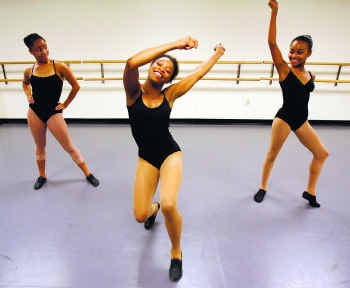
A story I wrote about the Dallas Black Dance Theater’s youth ensemble, Bloom, ran in Tuesday’s Dallas Morning News. I found the story while trying to make contacts with local dance directors. I’ve been writing lots of stories about professional dance/ballet companies lately, but hadn’t yet written about a youth dance group, so this was a treat. You can read the story here:

Alexandria Johnson, 15, has spent nine years studying African dance. She’s read books about it and talked to her dance instructors about what Africa is like. But she never dreamed she’d actually go, let alone perform, there. Today, that will change.

Alexandria, who lives in Dallas and attends Yvonne A. Ewell Townview Center high school, and seven other young dancers who are part of the Bloom, Dallas Black Dance Theatre’s performance ensemble, leave today for Kampala, Uganda. They’ve been invited to perform at “Kwatu Fest,” a three-day peace festival that begins Wednesday. It marks the first time the 11-year-old ensemble has been invited to perform internationally.

[READ MORE …]

Here are some other stories I’ve written throughout the past week:

“Texas Ballet Theater Cancels Live Music” — Who knew ballet could generate so many stories?

“Texas Ballet Theater Dancers Organize Fundraising Effort” — Yes, more from the ballet beat.

“Steely Dan in Fine Form During Nokia Show” — Covering the Steely Dan concert was a challenge, seeing that I don’t regularly listen to Steely Dan. I listened to a lot of the group’s songs on YouTube before writing the story, though, and I researched the history of the group. It was difficult to speak with authority on the group and to write the story on a tight deadline, but it was good practice for upcoming concerts I’m going to cover. The article is only a couple hundred words long, mainly because concert reviews that are filed late at night have to be kept pretty short for production-related reasons.

“The Arts Experience: The Moments Before the Art Comes to Life” — A vignette about a photographer’s process for hanging his photos in an exhibit.

A Visit to Irving Bible Church

While in Texas, I’ve decided to visit different types of churches. I’m a practicing Catholic, but I’ve always been interested in learning about different faiths and forms of worship. On Sunday, I went to Irving Bible Church, a non-denominational church that has more than 3,500 members. I had read in Saturday’s Dallas Morning News that Sunday marked the first time that the 40-year-old church was going to have a female preacher, Jackie Roese, give the sermon. So I decided to go.

The Dallas Morning News reported that: “The church’s elders – all men – spent 18 months studying the Bible, reading other books, hearing guest speakers and praying. They concluded that despite ‘problem’ passages, the Bible doesn’t prohibit a woman from instructing men in theological matters.” (Check out the varying viewpoints on this in the comments section of the article.)

I’ve always been fascinated by female pastors, having not been accustomed to seeing them on Catholic altars, and I thought Jackie Roese’s sermon was inspiring, uplifting and empowering. She encouraged the congregation to take risks that can help bring them and others closer to Christ. It’s better, she said, to be “warriors” rather than “wimps.”

Roese’s sermon aside, I was shocked by how big the church is. “Holy crap” was the only reaction I could muster upon seeing it. The church resembles a concert hall with a talented Christian band as the main attraction. There are two jumbo screens that flash the lyrics of each song the band plays. I’m used to relatively small churches that have a fair number of empty pews, but this church was full, mostly of young people. In the lobby of the church, which is known as the “Town Square,” there is a huge playground, perhaps a reward for children who patiently make it through the service. I’ve never seen a church like it before. I guess what they say is true: Everything, or at least a lot of things, are bigger in Texas. Especially the churches.

Free to Roam Miles Away from Home

Earlier this morning, I was running through Oak Cliff, the predominantly Mexican neighborhood where I live in Dallas. Piñata shops, taquerias and dozens of auto repair shops line the side of the road in Oak Cliff. In many senses, I’m a minority in this community, a community where blonde hair and blue eyes almost always makes heads turn. But I wouldn’t want it any other way.

Since coming to Dallas, I’ve done a lot of things I wouldn’t normally do in the Northeast where I grew up and went to college, or in Florida, where I’ve lived for the past year. Stepping outside of my comfort zone — by trying new foods, taking Tejano dance lessons, and going to a Nine Inch Nails concert, for instance — has helped distract me from the friends and family I dearly miss. I wouldn’t say these new experiences have cured my homesickness, but they’ve helped my time here go by faster, they’ve made me like Dallas more, and they’ve helped me grow.

Too often, I think we get stuck in the same routine. We shop at the same stores, eat at the same restaurants, drive to work the same way we always have. Change means having to make adjustments, having to step away from what we know and, sometimes, having to say goodbye. Goodbyes can spark feelings of loss, which can be difficult when what we’ve gained is so good and when what we’ve lost in the past still hurts. There’s comfort, though, in knowing that a temporary goodbye is more so a “see you later” or “so long for now.”

I’m thinking about all this while sitting at a Starbucks in Uptown, one of the ritzier areas of Dallas. It’s only a few miles from Oak Cliff, but culturally and socio-economically, it’s worlds away. Most of the customers here are white, and they’re wearing fancy clothes and carrying Crate & Barrell and Pottery Barn bags. There’s nothing wrong with this, but it reminds me a lot of what I experienced while growing up in a small Boston suburb. And it’s part of the reason why I knew I couldn’t go back there after I graduated from college. I needed to step away from what I’d always known and diversify my life experiences. I needed to prove to myself that I could be on my own and be OK.

Even though the transitions from place to place are tough, they help shape who we are and help us to realize what we like and don’t like, what we’ve been missing out on and, often, how lucky we are. I can’t wait to go back to Florida at the end of October, but rather than waste time longing for the familiarity of a place I’ve come to love, I’m braving unfamiliar territory and embracing change.

What suggestions do you have for helping yourself adjust to a new place?

Six Inches: Enough to Tell a Story?

I wrote another story about the Texas Ballet Theater this week. Because of space constraints, though, this story was much shorter than the others I’ve written. I swear, it’s harder to write a 250-word brief than it is to write a 1,000 word story.

It seems that more and more papers feature shorter stories. I’ve always liked writing longer pieces, so when I hear, “6-inch story,” I cringe. I’ve been writing for the Web for the past year, so I haven’t had to think in inches or lines, but now that’s all I hear in the newsroom. It’s difficult when I learn that my story can only be 6 or 8 inches, after I’ve already written a much longer story. If nothing else, though, chopping my stories is a good exercise in learning how to be clear and concise when writing. And it’s a helpful reminder that when writing short pieces, every word really does count.

You can read the short piece I wrote about the Texas Ballet Theater here.

What tips do you have for writing short pieces, or for condensing longer pieces into shorter ones?

Pennies: Worth Some Luck, but That’s About It

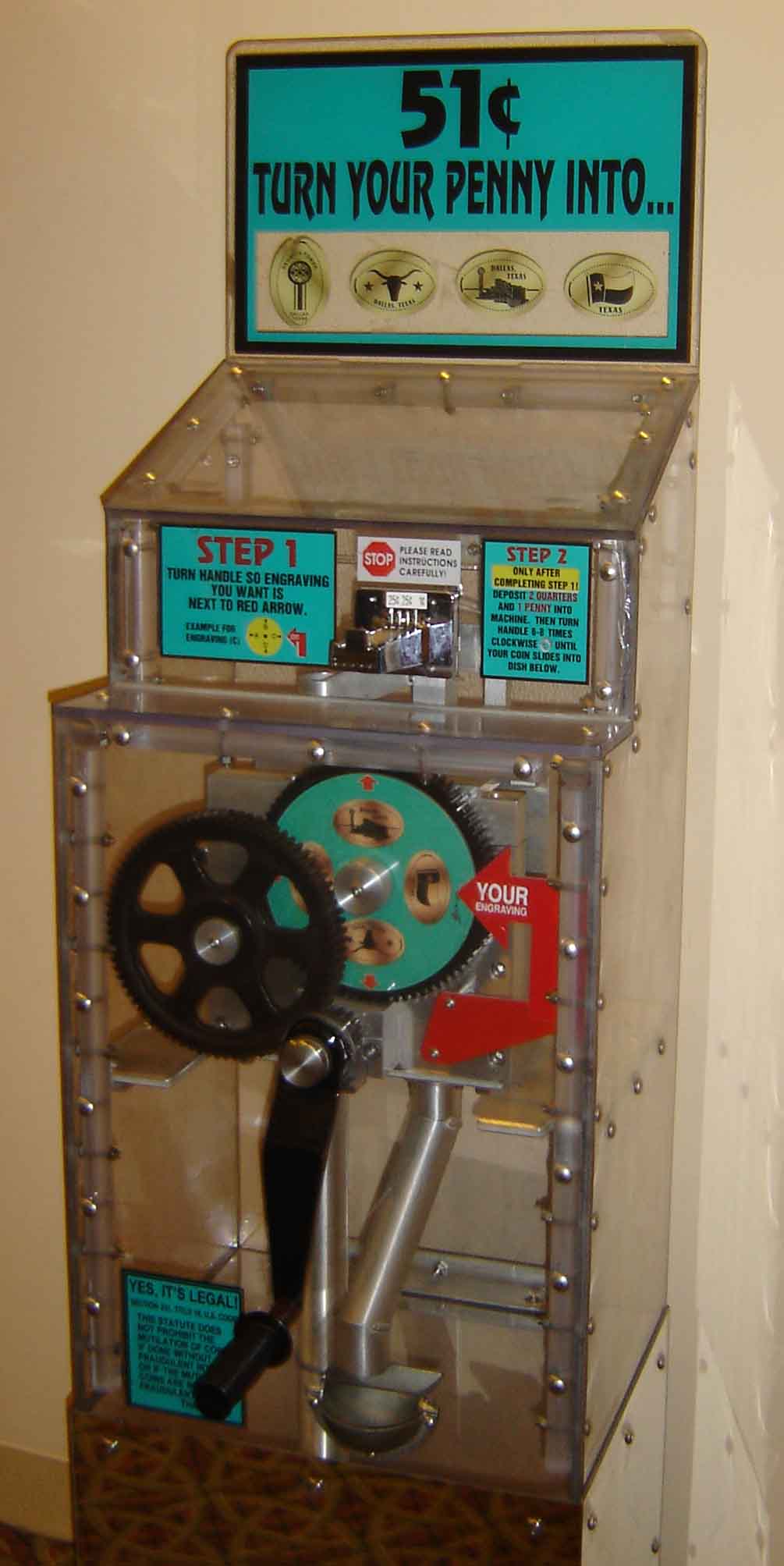
The penny press machine I saw last weekend made me laugh. It sat in a corner of the Hyatt Regency in downtown Dallas, looking lonely and unused. I wondered: Why does it cost 51 cents to flatten a penny? What’s the extra cent for? Actually, what’s the extra 50 cents for? It’s just like the “dollar store” or the “penny candy” store. You’re lucky if you can buy a sweet treat for a quarter in a penny candy store. Sigh.

While on my way out of the Hyatt, I crossed through Union Station and stumbled across a heads-up penny on the railroad tracks. I picked it up and put it in a special pocket in my purse. A penny might not buy me much, but it might bring me some luck.

How Art Can Help Heal

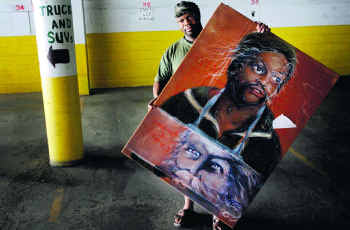
Photo of Charles William taken by Mona Reeder/The Dallas Morning News

One of the feature stories I’ve been working on ran today as the main feature in the Sunday edition of The Dallas Morning News’ arts and entertainment section. You can read the story here:


 When he looks in the mirror, artist Charles William sees a reflection he often runs from, but one that he is learning to embrace.

The misspelled message painted on his self-portrait, “Unfinished Reflections,” explains it well: “I keep faith, knowing comefort in my own skin.”

It’s taken Mr. William, 34, a while to learn what comfort means. For years, he lived on street corners, in shelters and under bridges. Comfort became a patch of shade, a tuft of grass, a sandwich from a stranger. Then he went to the Stewpot, where he learned of the Dallas-based shelter’s art program. Four years later, he is the shelter’s most prolific painter, the artist who has shown how art can help heal.

[READ MORE …]

How I got the story: I found this story while exploring the city on my first day in Dallas. I’ve always been intrigued by churches, so I visited each of the churches downtown and stumbled upon an art exhibit in the Goodrich Gallery at the First United Methodist Church. I noticed that the artwork had been created by homeless and at-risk individuals who visit the Stewpot, a local shelter. Wanting to know more about the artists behind the work, I picked up a pamphlet about the exhibit, made some calls and eventually got in touch with the woman who runs the Stewpot art classes.

After getting some background information, I asked the director if she could point me to a particular person in the program who had an especially interesting story. I wanted to tell the story of the program through the eyes of a person rather than writing a simple round-up story about it. I’ve always believed good storytelling isn’t so much about places and things. It’s about people.