If you ask NBC Chief White House Correspondent Chuck Todd how social media has changed political coverage, he’ll tell you that it’s made it more reactive, and more anecdotal.
Chuck Todd
“140 characters is a great way of sharing the anecdote, but you can sometimes be drilling down so far that you forget the big picture,” Todd told me in a phone interview. He said he feels lucky to have a job where he can share anecdotes on Twitter and his TV show “The Daily Rundown,” and then take a look at the bigger picture on the “NBC Nightly News” and the “Today Show.”
Using Republican presidential candidate Herman Cain as an example, Todd also said that social media has helped flatten out the barriers to entry for a presidential candidate: “Before social media, Herman Cain would not have been able to get the type of traction he’s gotten that would have allowed him to be in the presidential debate just four years ago.”
I interviewed Todd about this and about how he uses social media — Twitter in particular — to get news and share it with others. I also talked with him about why he thinks blocking people on Twitter is anti-First Amendment and why “the media is flat.”
I’ve admired Todd’s work for a long time, so I was happy to have the opportunity to talk with him. He was friendly and open, and our talk seemed more like a genuine conversation than a formal interview. Cheers to that.
I’m now officially an iPad owner. My boyfriend unexpectedly bought me one for my birthday after seeing how much I enjoyed using his whenever we went on road trips or were lounging around. It’s one of those gifts that I wouldn’t buy for myself, but that I’ve secretly wanted for a while.
I’m still getting used to it. The iPad isn’t the most conducive device for writing blog posts or sending emails, but I’m finding other uses for it. For starters, the iPad gives me an opportunity to limit the number of emails I send after hours. I’ve been trying to view it as more of a leisure device. I set up my personal email on it so I wouldn’t feel as tempted to check my work email after hours. (Ok, who am I kidding? I still keep my work email open in Safari, but I try not to look at it too often.)
I’m slowly starting to download some news apps, and today I downloaded Zite — an app that analyzes the types of stories you read and creates a personalized magazine with content that’s likely to interest to you.
So far, my favorite iPad feature is iBooks. Most recently, I downloaded “The Central Park Five: A Chronicle of a City Wilding” by Sarah Burns. I got the urge to read it one night and was able to purchase it right away rather than having to find time to go to the bookstore and spend more money on it there.
I don’t go to the bookstore nearly as much as I used to. It’s not because I don’t want to keep buying books; it’s that I’m trying to save money and I don’t have room for them in my apartment. The built-in bookshelves in my room are full, and the gigantic bookcase in my guest room is overflowing with books. (I’ve always dreamed of having a house with a room reserved just for books — a mini library of sorts. Then I’d never have to say “I don’t have room for more books.”)
I still love going to bookstores, and I love holding books in my hands and marking them up with notes. But I’m starting to really like the iPad book-reading experience, in part because it feels more interactive. I like swiping the screen to turn the pages, and I like that the screen tells you how many more pages you have left in a given chapter.
iBooks make it easier and more fun to read books at night. I would have loved the brightness of the iPad screen as a little girl. Instead of “borrowing” my dad’s flashlight so I could use it to read under the covers when I should have been fast asleep, I could have read books on my iPad. Prior to getting the iPad, I always had to get out of bed to turn off the lights after reading. Now, I can read and simply close my iPad when I’m done — without getting up. I’m probably making myself sound really lazy right now, but reading relaxes me so much that the last thing I want to do is get out of bed when I’m done, especially when my cat is cuddled up next to me.
I still use my laptop a decent amount at night, but I’m trying to use my iPad more instead — not just to read books but to surf the Web. I think I just have to make a habit of using it consistently.
If you have an iPad, what do you like to use it for? Have any recommendations for apps I should download?
I was asked to talk about how we use metrics to track traffic on Poynter.org, but I didn’t want to just talk about metrics. Tracking traffic is important, but I think it’s easy to get caught up in numbers rather than looking at what those numbers mean and what strategies we can develop to ultimately increase those numbers.
I talked about Chartbeat and Google Analtycis during my presentation but focused primarily on strategies for building an audience. To build an audience, you have to start a conversation about your stories and get them in front of the right people. This takes time and patience, but the more you make it part of your routine, the easier it gets.
There are a few steps you can take to make it easier and that can help drive more traffic to your site. Drawing on my presentation, I wrote about these steps in a Poynter.org story and interviewed NPR’s Matt Thompson, The Huffington Post’s Mandy Jenkins, Facebook’s Vadim Lavrusik and the Associated Press’ Oskar Garcia for related tips.
Here are my five steps:
Let sources know about your story, ask them to share it.
Include names of sources in tweets and Facebook updates.
If other news sites have reported on the topic you’ve covered, link to their work and let them know you’ve done so in a tweet.
Comment on stories that have been written about the topic, and include a link to your story.
Tweet follow-ups that help advance the discussion about your story.
You can read the piece in its entirety here. Feel free to share your own tips in the comments section of the piece.
When I interviewed New York Times reporter Frank Bruni a couple of months ago, I was struck by the emphasis he placed on reading. He said that when preparing to write his memoir, Born Round, he devoured memoirs to see how other writers told their life stories:
“In part I approached my own story the way I would someone else’s. To supplement my own memories I debriefed family members and friends. But mostly I took some time to read, in rapid succession, the kinds of memoirs I’d read before but never with a particular focus. I looked closely at how they were done, how they were paced, their tones. And I tried to draw from that some internal sense of how I should proceed with mine and what I wanted it to read and sound like. …
“I probably read more than a dozen memoirs prior to writing “Born Round,” including ones by Augusten Burroughs, Frank Rich and Jeanette Walls, to name just a few especially prominent writers.”
While slowly writing my own memoir, I’ve been reading books about food, mothers and daughters to get a sense for how other writers structure their stories, how many details they share, and how they draw connections between the past and the present.
I’ve found some memoirs to be too self-absorbed for my liking. The memoirs I gravitate toward most are the ones that make me feel as though I can relate to the characters, even when I may not have experienced the same things they did. Ultimately, that’s what I want to do with my own memoir — write it in such a way that helps other people realize they’re not alone. When readers tell me that they can relate to my personal essays, or that they learned something about themselves from reading them, I know I’ve accomplished what I set out to do.
The other night I compiled a list of memoirs that I think will help me write my own memoir. I hope you’ll look at the list and add your own recommendations.
Throughout the past year, I’ve started writing a lot more about women’s issues, particularly as they relate to the media world. Part of this has to do with my editor, who has prompted me to write about these issues and given me a newfound appreciation for them. I’ve always been interested in writing about diversity in the media, so this is an extension of that.
Today, I wrote about what news sites are doing to attract more female readers. I interviewed folks from a few of the eight top news sites that attract more female readers than male readers and found that two of the sites — Yahoo News and msnbc.com — have developed strategies that have led them to attract more women. You can read the story here to find out what these sites have learned about what women want.
Osama bin Laden’s death dominated headlines in the media world Sunday night and Monday, and rightfully so. But there was other media news that was overshadowed as a result.
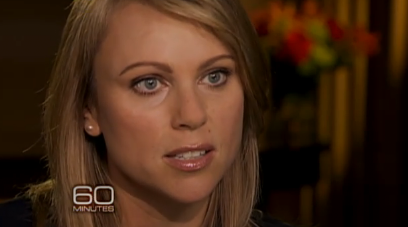
“There was no doubt in my mind that I was in the process of dying,” Logan told 60 Minutes’ Scott Pelley. “I thought not only am I going to die, but it’s going to be just a torturous death that’s going to go on forever.”
Logan has chosen to break what she calls "the code of silence."
Logan is one of many journalists who have been sexually assaulted while on the job, but she’s one of the few who have spoken out about it. Many women remain silent about their attacks, sometimes fearing that they’ll be told they can no longer report in conflict areas if they step forward.
“Women never complain about incidents of sexual violence because you don’t want someone to say, ‘Well, women shouldn’t be out there,’ ” Logan told Pelley. “But I think there are a lot of women who experience these kinds of things as journalists and they don’t want it to stop their job, because they do it for the same reasons as me — they are committed to what they do. They are not adrenaline junkies you know, they’re not glory hounds, they do it because they believe in being journalists.”
Lauren Wolfe, senior editor at the Committee to Protect Journalists, is hoping that Logan’s decision to break the silence will inspire others to do the same. Wolfe is working on a lengthy piece about journalists who are assaulted while on the job, and hopes to find out more about the stigma around reporting assaults.
Wolfe, who plans to finish the piece in the next couple of weeks, has interviewed journalists in the Middle East, Africa, Pakistan, Afghanistan and South Africa.
“I talked to women who experienced constant groping. I spoke to women who were raped in the course of their reporting or in retribution for their reporting,” Wolfe said in a phone interview. “It’s been really interesting, for me at least, to see how many people want to tell me their stories — how many people say they think it’s important that we get a picture of this issue.”
You can read more about this issue in a related Poynter.org story I wrote on Sunday. I care deeply about this issue and plan to continue writing more about it as news develops.
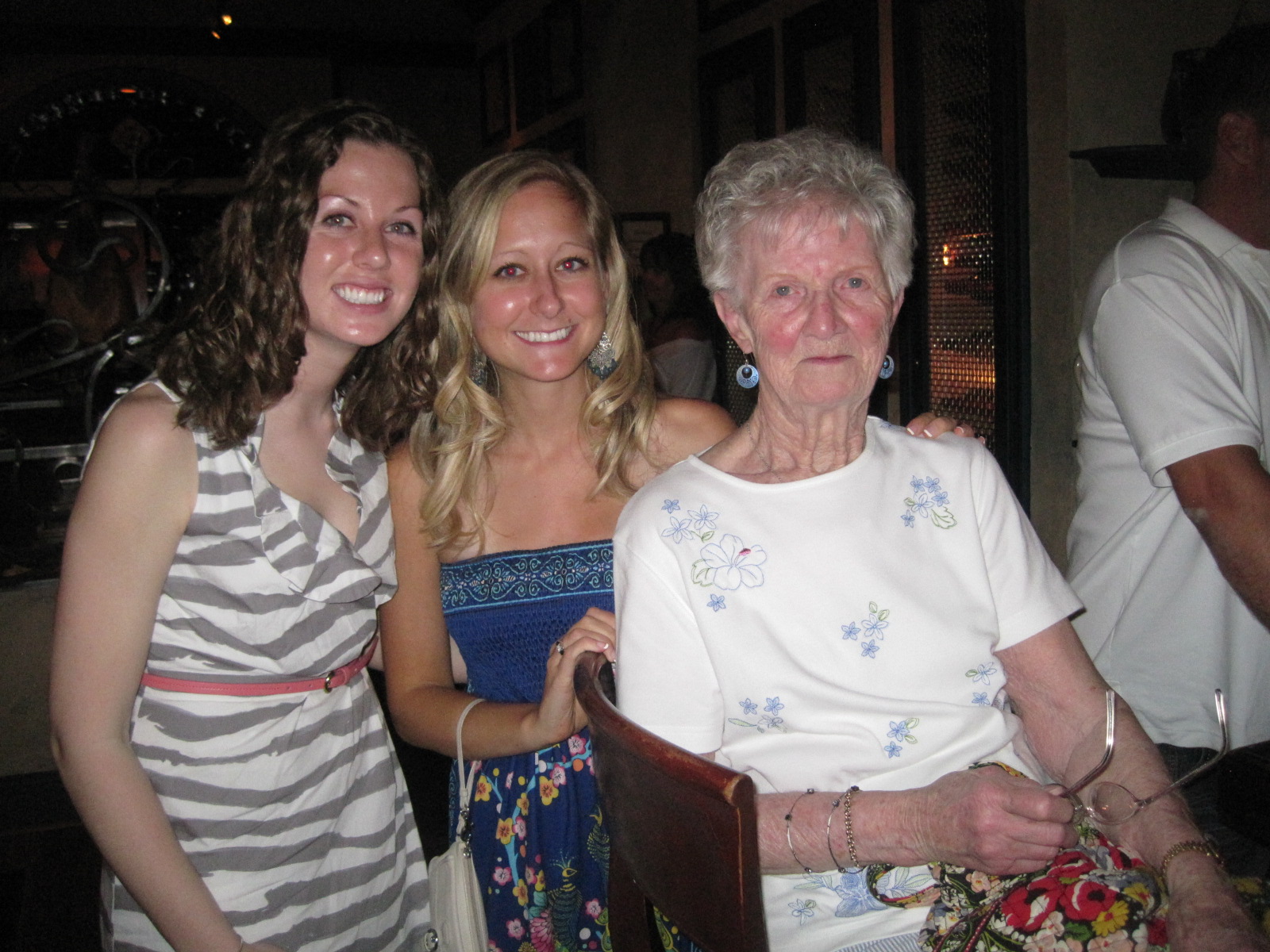
I was so happy that my cousin Brenna and my grandma (who everyone affectionately calls "Gramz") visited me last weekend as part of their fourth annual Spring Break trip to Florida. It's the first time I've been with family on Easter Sunday since moving to the Sunshine State. Gramz, who I consider a surrogate mom, hid Easter eggs for us and bought us stuffed Easter bunnies for old time's sake. Couldn't have asked for a better weekend.
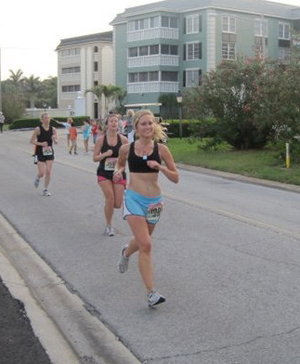
Ran the Iron Girl half marathon in under two hours, which was my goal.
Running has always been a powerful release for me. It’s a good stress reliever, and it’s also a way for me to make progress. When I train for races, I set goals for myself so I can have something to work toward. With each run, I can feel myself getting stronger. I become more aware of my body — the aches, the soreness, the feeling of hunger.
Running helps me keep my eating on track. And it’s a way for me to simultaneously be alone, but with people. I’m someone who needs alone time. Maybe it’s because I grew up as an only child, or because I’m somewhat of an introvert. Alone time helps me recharge and gives me time to write, run or do other activities that make me happy. But the time I spend alone often leads to a feeling of loneliness. When I’m in my apartment by myself for too long, I feel like I’m 11 years old all over again. That same feeling I got when I would come home to an empty house after my mom died comes rushing back to me. For months after she passed away, I tried hiding from the reality that she had died, still hoping she would be there when I came home from school.
This feeling of loneliness and loss is strongest on Sundays. Sunday is supposed to be the day of rest. But I’ve always thought of it as the day of stress. It’s the day when I overwhelm myself thinking about the work week ahead. It’s the day when out-of-town visitors usually go back home and say their goodbyes. It’s the day that my mom died.
For as much as I try to make Sundays enjoyable — by going to church or spending time with people I care about, they still throw me off course. Most Sundays, I turn to food for comfort, as a way to numb the pain. But lately I’ve been trying to find alternatives. I’ve been spending more time with friends and my boyfriend, and I’ve started having weekly phone calls with a friend who knows that Sundays are difficult for me. She calls me every Sunday night on her way home from church to check in and catch up.
I’ve also been making more time for exercise on Sundays. When I run along the bay in St. Pete, I feel a sense of connection with the others who are out and about, and I start to feel less alone. I see different crowds from the ones I see when I run on weekdays. The bow-legged man who nods his head and smiles whenever he passes, the two men who walk their fluffy black dog, and the girl who power walks with a constant look of determination are my favorites. For as often as I run by these people, I don’t even know their names. Still, there’s an understood sense of recognition, a comfort in knowing that for as much as things change, we’ve found an outlet for consistency.
I felt this sense of comfort when I ran the Iron Girl half marathon last Sunday. I had never met the women standing by me at the starting line. But we counted down the minutes to the race together and calmed our nerves by talking about how happy we were that the day we’d been training for had arrived.
After running the race, I spent the day with my boyfriend and ate all of my meals with him. This half-marathon experience was a lot different from last year’s, when I came home to an empty apartment and binged all night. This year, I felt full — not from food but from the fulfillment that comes from being with people we love.
I’ve heard non-runners say that people who like to run are running away from something. But I never looked at it that way. As a runner, I’m always running toward something — toward a goal, toward a stronger feeling of self respect. Years ago, that goal would have been to lose weight. Now, it’s to stay healthy. I run not just because it keeps me fit, but because it makes me feel better about myself and gives me a chance to enjoy my own company without feeling so alone. I know that exercise won’t always curb my loneliness on Sundays, but anything that helps some of the time is worth continuing. I got through last Sunday and this Sunday without turning to food for comfort. That’s only two good weeks out of many bad ones, but it’s progress.
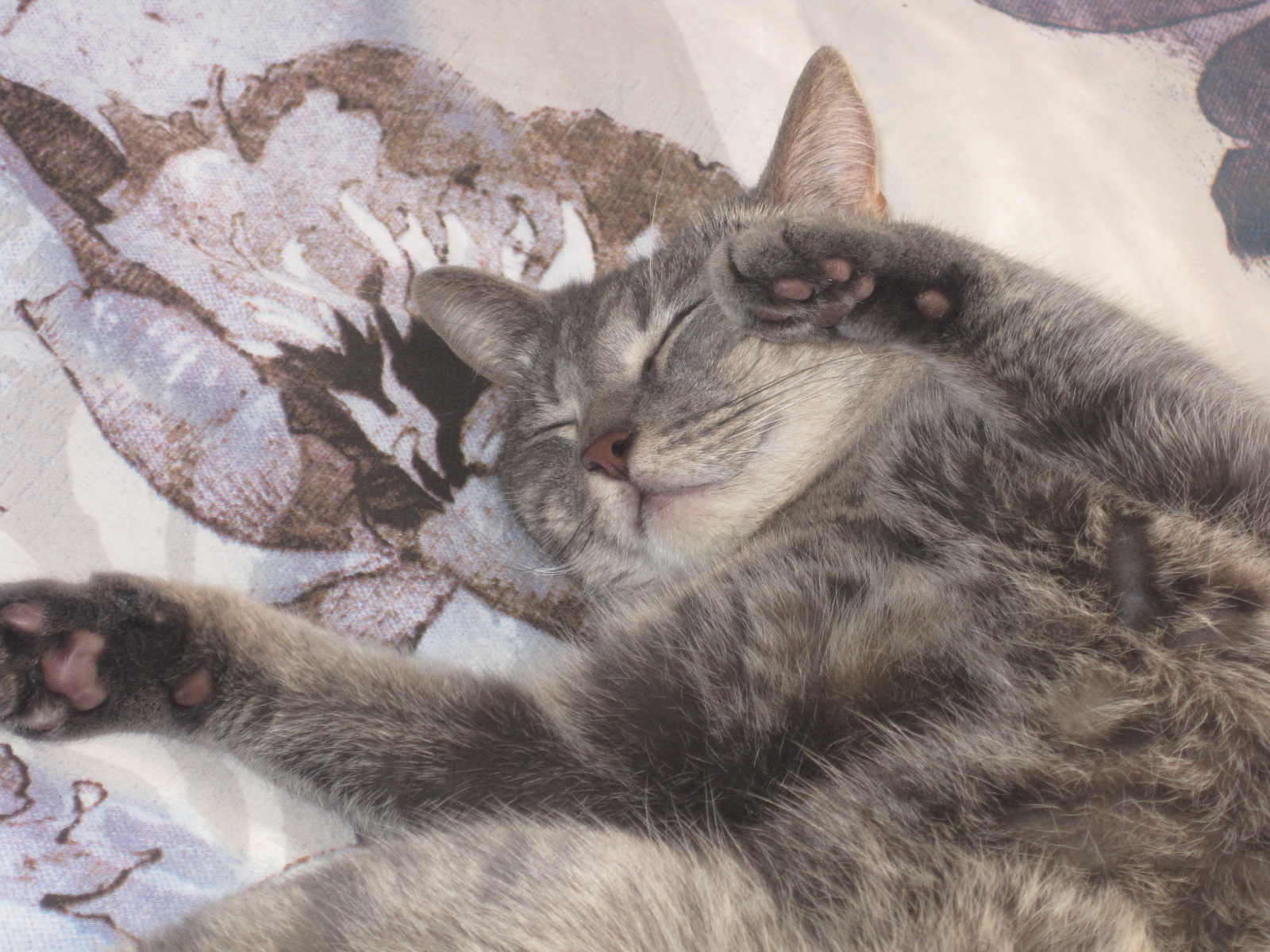
When life gets busy, rest sometimes goes by the wayside. Wish I had as much time to sleep as my cat does!
A quick update for those of you who follow my blog: Just about every day I think about how I want to write a blog post, and then something comes up. We’ve all been there. We keep saying we’re going to do something, but when we don’t make it a priority, it never gets done.
As I write more stories for work, I’ve found it harder to keep up with my blog on a regular basis. I’ve had a lot of visitors in town, and I’ve been training for a half-marathon, which has taken up a lot of time. The less “me” time I get, the less likely I am to write outside of work.
Despite the craziness of life lately, I’ve been thinking a lot about the next few personal essays I want to write. A new memoir by one of my favorite authors, Geneen Roth, has really inspired me. The book, called “Lost and Found,” talks about food and money, and how the two are inextricably linked. The book has made me think a lot about loss as it relates to food and money, and about the concepts of hoarding and hiding. And it’s made me realize things about myself that I never had before. I plan to write a related personal essay, as well as others, in the coming months. In the meantime, I’ll post when I can, hopefully more than I have over the past month or so.
I talked with him one-on-one and then listened to two talks he delivered at Poynter. Here are some of the highlights from my interview with him and his talks:
Woodward, who knows Eric Schmidt, said the Google CEO’s tombstone should say, “I killed newspapers.”
“It’s odd that the scandal got called Watergate. It turned out the secret code word for the operation was ‘gemstone,’ but we didn’t know that for a long time.” Woodward said. If they had, the suffix for big breaking stories would have been “stone,” like “Monicastone,” instead of “Monicagate.”
“So much is hidden. I get up in the morning and I ask the question: ‘What are the bastards hiding?’ Not as a cynical reporter, but as a realistic reporter. People are always hiding things.”
“You get the truth at night, the lies during the day.”
The perfect time to visit someone, he told students, is after 8 p.m. “They’ve eaten. And if they’re home, they probably haven’t gone to bed.”
“How much do we know about what really goes on in government, particularly in the White House? Do we get it? In the case of the Nixon administratoon with the tapes, I think we know 90 percent, but I don’t think we know everything.”
“We have the housing bubble and the dot.com bubble, and in journalism I think we have a news bubble.”
“I think there’s too much emphasis on speed and feeding the impatience people have. … In many ways, journalism is not often enough up to the task of dealing with the dangerous and fragile nature of the world, or the community, or anything you might try to understand.”
“The world requires “high quality, probing journalism. And there’s just been not enough of it.”
Woodward has a laptop, iPhone and iPad, which he uses to read The Washington Post and The New York Times. “I have a bridge game I play on it, too,” he said. “It keeps an old man’s mind functioning.”


 Word on the Street