I’ve been writing some personal essays that I plan to publish on my blog throughout the next few weeks. Finding time to write essays is an ongoing challenge, but I’ve been trying to do it more — for the sake of my writing and for the sake of self-discovery.
In writing about my life and tying my experiences to universal themes, I always learn a lot about myself and how my past has shaped me. I hope you’ll look for the essays, offer your feedback and find a way to relate to them.
For now, I’ll share some of my recent Poynter Online stories. I have two new pieces that I’m working on and that are set to run this coming week, so you can look for those. Here are some recently published ones:
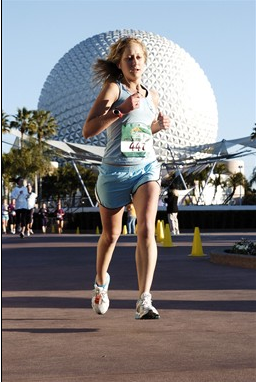
My wake-up call was much too early. Saturday night, I went to bed at 8:30 p.m. and set my alarm for 3:15 a.m. — the time I usually go to bed on Saturday nights. The Disney Princess Half Marathon was starting at 6 a.m. the next morning, and my friends and I had to be at the starting line by 5:30 a.m.
Why in God’s name, I asked myself, was I waking up in the middle of the night to run 13.1 miles? Was I crazy?
Maybe. But after flipping on the light switch, splashing my face with water and eating some toast and peanut butter, I was awake enough to get excited about being a running princess, if only for a day.
In the days leading up to the race, I was pretty worried. How well would I do? What if I couldn’t fall asleep the night before? What if I got cramps in the middle of the race? I spent months training for the race, and had run more than 13 miles, so I knew I could do it. Running is so mental, though, so it’s easy to let doubt impede your speed.
It helped to be in the company of two of my closest friends — Linsey and Colleen. They both flew to Florida from Massachusetts to run in the race. Linsey’s mom, my high school cross-country coach, also ran in it and warmed up with me at the starting line. I told her I wanted to finish the race in two hours, but that so long as I finished my first half marathon, I’d be happy.
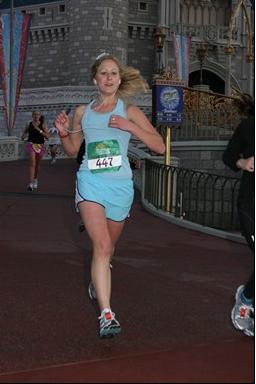
Running through the Magic Kingdom.
When the race began, I felt strong. I started out running an 8-minute mile and continued at this pace throughout the race, finishing it in an hour and 45 minutes. Colleen came in about the same time I did, and Linsey ran it in an hour and 27 minutes, placing 9th out of nearly 13,000 runners. (Pretty amazing!)
Crossing the finish line gave me such a great sense of accomplishment and made me remember why I spent so much time training. All those mornings I woke up to run when I would have liked to have just stayed in bed had paid off.
Now, five days after the race, I’m still on a running high. I want to train for another half marathon, like this one in Minneapolis. There’s also one in Boston this spring that I’d like to run, but I should really be focusing on swimming, not running, over the next month-and-a-half. I’m part of a relay team for the St. Anthony’s Triathlon and need to train for a mile-long, open water swim on April 25. Eek. Time to kick my aquatic training into gear! I like swimming, but it’s not usually something I look forward to doing.
After running the Disney Princess Half Marathon, all I really want to do is run. …
I'll be donning this Claire's tiara for the race. Very classy.
I’ve bought my tiara and am ready to be a princess, if only for a day. This weekend I’m running the Disney Princess Half Marathon with two of my best friends — one from my hometown and one from college. I’ve been training for a few months for this race, getting up early in the morning before work to run, or going to the gym after work and (begrudgingly) running on the treadmill.
Training has forced me to make more healthy choices about my diet and the amount of sleep I get and has given me a goal to work toward. It has also become a healthy release. Like many people, I don’t always make time for myself, so running daily has forced me to enjoy my own company, have some quiet time outside and reflect a little.
Long runs by the water are often when I do some of my best thinking — about my personal life, work, and why I’m running. Sure, there are mornings when I just don’t want to get up and run six miles, and there are times when I’m in pain and wonder why the hell I’m putting my body through this. But there’s a certain level of gratification I get from running that helps keep me driven and focused, not just in running but in other areas of my life, too. For that reason alone, it’s worth it.
Staying focused on long runs can be tough, but once I get about three miles into them, I start to find a rhythm. The longest I’ve run is 14.5 miles, so I know I can run the half. I just have to pace myself so that I can accomplish my goal of running the race in under two hours. I’ll be focused less on time, though, and more on finishing. So long as I can cross the finish line and celebrate with my friends, I’ll be happy. (Perhaps the biggest challenge is making sure I get enough sleep before the race. I’m a night owl, so it’ll be difficult waking up at 4:30 a.m. Sunday morning. …)
I can do it, though. Here’s to getting enough sleep and running my first marathon — with friends and with the hope that all my training will pay off. Check back here early next week to see how it went!
Today Poynter Online published a story I’ve been working on about bounce rates. In the course of my reporting, I came across a variety of news sites that have found creative ways to increase user engagement and lower their bounce rates. You can find out more about what they’re doing here:
“There are lots of ways to draw users to news sites. The trick is figuring out how to keep them engaged enough to stay on your site once they land there.
“Some news sites, including Forbes.com, The Huffington Post and DailyMe, have developed strategies to increase engagement and decrease bounce rates — a metric used to describe the percentage of single-page site visits, often traffic referred by search engines.
“Here are a few examples of their strategies, along with some additional tips that could help keep people on your site. I hope you’ll share your ideas, too.”
I’ve been lucky enough to have some great mentors throughout the years, many of whom graduated from my alma mater, Providence College. Last weekend, I drove across the state of Florida to visit one of them.
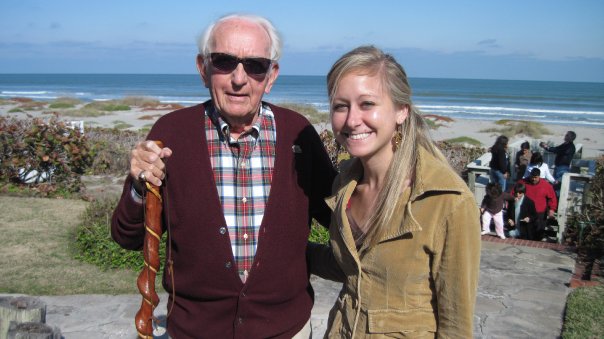
John Quinn, who graduated from PC in 1945, 62 years before I did, held a Chips Quinn reunion at his Cocoa Beach home, where a group of local Chips Quinn scholars gathered to talk about their work as journalists, the low morale in their newsrooms and the entrepreneurial journalism opportunities they’d like to pursue.
Quinn created the Chips Quinn scholarship program in memory of his late son in hopes of bringing more diversity in today’s newsrooms. It’s worked, as about 1,200 scholars have gone through the program and been given journalism internships. Mr. Quinn likes to call me an “honorary Chipster.” I received a John C. Quinn scholarship in his name at PC, so he often invites me to the Chips Quinn reunions and other related events.
I’m grateful for his help and for how willing he’s been to help me when I’ve needed career advice or someone to share ideas with. Someday I hope to return the favor to other young journalists. Everybody needs a mentor, especially one who motivates you to be better at what you do and reminds you that, yes, the work you do as a journalist matters.
In timing with Super Bowl XLIV, I wrote a story about ProPublica’s investigation into which Congress members were going to the game and whether they would be fundraising there. ProPublica reporter Marcus Stern is the lead reporter on the “Super Bowl Blitz” project, which is one of several projects he hopes to pursue this year as part of his investigation into political fundraising leading up to the November elections.
To help expedite the reporting process, ProPublica asked the public and journalists to contact their local Congress members to see if they were going to the game. ProPublica documented the results of the crowdsourcing effort on its Web site and has reported follow-up stories since my piece about the project ran on Friday.
“ProPublica reporter Marcus Stern will don his press badge at the Super Bowl this Sunday, but he won’t be covering the game. He’ll be looking for members of Congress who are there, figuring out how they got their tickets and trying to attend whatever fundraisers they’re holding.
“Stern, who plans to reveal his findings in a ProPublica story on Monday, has had some reporting help along the way. Knowing it would be too much for one person to contact all U.S. Congress members, ProPublica turned its “Super Bowl Blitz” investigation into a crowdsourcing effort and asked professional journalists and the public for help.
“The project is an example of how one news organization can tap into professional journalists nationwide to turn an 11th-hour idea into a collaborative investigation.”
Personal essay writing has always been my saving grace. When the spoken word fails, when I have the urge to get out my feelings, when I want to preserve a memory, I write.
In recent years, I’ve written a lot of personal essays that touch upon universal themes — mother-daughter relationships, loss and healing. I write about these things because I can relate to them, but also because I want others to read them and know that they’re not alone. So many of our life experiences are connected in some way or another, so I try my best to illuminate and make sense of them through writing.
I’m in my second week of the four-week course and am learning a lot about different types of essays and about how to shape my ideas. My personal essay idea for the course involves nourishment. Specifically, I want to write about being nurtured (or not) — by my mother and by food. I hope to explore the ways that food has connected me to my Mom, the ways it pulled me apart from her and the ways it has fueled my memories of her.
I haven’t really written publicly about how food relates to my mom, but there are so many connections between the two that I feel the need to explore them more. I hope to publish my final product on this blog and, if it’s good enough, somewhere else. I hope you’ll offer your feedback when I post it.
Feel free to share your ideas for personal essays in the comments section of this post. We can work together to sort through them!
Having grown up watching Couric on “The TODAY Show,” I was excited to talk with her by phone about her career as a journalist and the future of her craft. Talking with her brought back memories of standing outside the NBC Studio in New York City as a little girl, hoping I could see her during a filming of “The TODAY Show.”
My mom, dad and I used to go to New York City every couple of years. We’d often wake up early when we were there so we could get a good spot outside of the studio and catch a glimpse of Couric, Matt Lauer or Al Roker. Mom loved anything that was free, so the idea of watching a nationally televised show without having to pay for tickets naturally excited her.
Talking to “CBS Evening News” anchor and managing editor Couric on Monday made me think about Mom and about how much I’ve grown up since the days when I would admire journalists from afar. Now, as part of my job at The Poynter Institute, I’m interacting with journalists on a daily basis, finding ways to learn from them and interviewing them.
When interviewing Couric, I tried to ask as many questions as I could in the 15-20 minutes allotted. I was happy that she was so willing to share her views on political journalism, the future of network newscasts and more.
“I spoke with Couric, ‘CBS Evening News’ anchor and managing editor, by phone on Monday to hear more about that role, what she learned from her interviews with Palin and her thoughts on political journalism and the future of network news. An edited transcript of our talk appears below.”
In keeping up with the news about the Haiti earthquake, I’ve been following how news organizations have covered the tragedy. Earlier this week, I interviewed some journalists in South Florida to find out what they were doing to best serve their local audience, which is largely comprised of Haitians.
Journalists at The Miami Herald and the Sun-Sentinel in particular were scrambling Wednesday to send reporters to the scene of the disaster. They were faced with the challenge of reporting on an international tragedy that has affected a place many readers call home. Readers turned to these news outlets for help, asking them to please look for their relatives and give them some sign of hope.
You can read more about how the Herald and the Sun-Sentinel responded to these readers here:
“The Miami Herald had sent seven staff members to Haiti as of Wednesday evening. Its Spanish-language sister publication, El Nuevo Herald, had sent one reporter to Haiti and two to the Dominican Republic, where many of the relief efforts are taking place. Jacqueline Charles, who covers the Caribbean for the Herald, and Patrick Farrell, who won the 2009 Pulitzer Prize for his coverage of lethal storms in Haiti, were among the journalists sent abroad.
“The earthquake has presented South Florida news outlets with the challenge of helping the city’s Haitian population make sense of an international tragedy that has hit all too close to home. At this point, many people just want a sense of connection.
” ‘It’s one thing to get the testimonials of what people are hearing, but to try to connect one side to the other is the thing that we’re most determined to do — but it’s also the hardest thing to do,’ said Rick Hirsch, the Herald’s senior editor for multimedia. ‘In South Florida there’s this wrenching effort to acquire real information and connect with people back home.’ ”
It would have been difficult to write about columnist Ellen Goodman without writing in first person. I grew up reading Goodman’s nationally syndicated columns and often looked to her as a role model. I’m going to miss her writing now that she’s retiring.
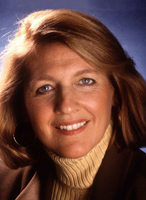
Ellen Goodman/The Washington Post Writers Group
Last week, after hearing about Goodman’s retirement, I set up an interview with her to find out more about her career, her writing tips and how she helped strengthen the role of women in journalism.
When we talked, Goodman was down-to-earth, friendly and open about her experiences as a columnist, and about why she chose to “let herself go” and explore her next steps in life. You can read my Poynter Online story about her here:
“I couldn’t help but be disappointed last week when I heard that the Pulitzer Prize-winning columnist Ellen Goodman was retiring or, as she put it, letting herself go.
“I grew up reading Goodman’s nationally syndicated columns in my hometown newspaper, and as a young female journalist have looked to her not just as a source of inspiration, but as proof that the written word has power — to challenge the status quo, shape ideas and ultimately create change.
“As one of America’s first female columnists, Goodman helped liberate women from the realm of domesticity by daring to write about the “F word” — feminism, that is. Her columns proved that females were capable of far more than cooking, sewing and cleaning, and that a woman’s opinion matters. … “

 Word on the Street