While listening to my Jose Gonzalez Pandora radio station earlier this week, I stumbled across a song I hadn’t heard before: Sigur Ros’ “Track Three.” It’s an instrumental song, but one that I liked enough to want to look up on YouTube.
It seemed fitting that the first video that popped up wasn’t the official music video or a live version of the band playing the song; it was a video chronicling the bond between a mother and her young daughter. The descriptor said: “This is a Spec Video: Love this track so much, so I made a visual of a mother and daughter in the [pursuit of] emotion: love.”
Sometimes signs come when we least expect them. I didn’t think this song would end up reminding me of my mom, but it did. I cried when I watched the video — I think because there was so much emotion in it, long and drawn out as it is. So often, I try to capture memories of my mom through anecdotes, essays and words. But in this case, emotion was enough. Sometimes, as Hans Christian Andersen once said, “Where words fail, music speaks.”
The video reminded me of a tape I have of my mom and I singing together. The song we sang speaks to our relationship and to my love for entertaining and doing whatever I could to get my mom’s attention. I’m going to try re-recording it and turning it into an audio slideshow. You can look for the slideshow in an upcoming blog post.
The Poynter staff have recently had their pics taken for promotional materials. Here's the one they took of me at my desk. (No, that AP Stylebook wasn't strategically placed there!) Photo by Jim Stem
I’ve gotten to write some fun stories lately about innovative college students, online news startups and news consumers donating to good causes they hear about in the news.
For years I’ve said I wanted to get a bike. I always had one growing up, but when I moved to Florida, I had to leave my good ol’ Schwinn mountain bike behind. Now I have a new one, which I bought this week for $50.
Growing up, I rode my pink and purple Huffy everywhere. I used to love coasting down hills in my neighborhood, just me and four-wheeled freedom. Because I lived so close to downtown, I would regularly ask my mom if they needed anything at the store. She didn’t usually need anything, but she knew I liked to feel grown-up, so she’d usually ask me to get her something small — a toothbrush, a razor, a box of Good ‘N Plenty. The worst was when she’d ask me to buy a gallon of milk. Oh man. My bike would teeter back and forth as I rode the mile from CVS to my house, and I’d wonder if I would make it back okay. I always did.
Bikes also remind me of the neighborhood block party that the self-proclaimed “Mayor of Mudville” held every year on the Fourth of July. (I grew up in a part of Holliston, Mass., called Mudville, which is where we like to believe Casey at the Bat is from.) Mayor Blair always had a bicycle decorating contest, which is a great idea for kids, not such a great idea for their parents.
I remember hiding behind my garage with friends, secretly decorating our bikes so we could “surprise” our parents. One summer, I got out my four sticker books and put stickers all over my bike — pretty much everywhere except the wheels. Then I got my red and white pompoms that I had bought at a yard sale and held on to them as I rode my bike. I somehow didn’t win the contest — or my parents’ approval.
“Mallary! What did you do??!!”
“I decorated my bike! See all the stickers?” My favorite were the glittery ones.
Alas (or thankfully), my new bike doesn’t have stickers on it, and I don’t plan to decorate it anytime soon. But I do plan to ride along the water and the streets of St. Pete. And I live down the street from CVS, so some bike rides for the occasional (half!) gallon of milk might just be in order.
What are some of your favorite childhood memories of riding a bike?
If you’re from the area: Where should I ride in St. Pete?
Loss has always played a significant role in my life — especially the fear of it. As a child, my mom used to scream at me whenever I lost something.
“Maaaaaallllarrrry!” she would say, her brow furrowed, her head titled.
Uh. Oh.
I grew to fear what would happen if I told her I had lost a mitten or an earring or my lunch money. The worst was when I lost my retainers. For almost a week, I wore just my top retainer and smiled with my mouth closed so Mom wouldn’t notice. I had accidentally thrown the bottom one away in the school cafeteria, where all kids’ retainers go to die.
Mom made me spend nearly five hours tearing apart my room in hopes that I’d find it. “You’re not going to bed,” Mom quipped, “until you find your retainer.” I never found it. So she and my dad bought me a new one, even despite the fuss my mom made about how much it would cost.
The fear of loss that Mom instilled in me might explain why I get so mad at myself when I lose things, which happens often. Lost keys. Lost paperwork. Lost Debit cards. But those losses are nothing compared to the loss of my Mom, who died of breast cancer when I was 11. For years after she died, I was afraid to tell my dad when I lost something, thinking he’d yell at me like Mom did. Inside I always felt ashamed, as though I had let Mom down by letting loss win.
I’m still trying to recover what I lost when Mom passed away. I have a heightened sense of attachment to letters, photos, text and voice messages that help connect me to the people I care about — reminders that even though the person I loved and trusted most in the world has died, I’m not alone.
It’s no surprise, then, that I have a drawer full of cards people have given me, or that I have 2,666 old e-mails in work inbox. The screen on my digital camera, meanwhile, often reads: “Memory card is full.” Similarly, my phone sends me frequent error messages saying I won’t receive new text messages until I delete all the old ones that are taking up space. But I don’t want to delete the moments, the memories.
Me and Mom in July 1990 at a hotel swimming pool in New Hampshire's Loon Mountain.
For years after my mom died, I felt as though I had lost all control, so I searched for ways to hold onto whatever memory of her I could, even memories that didn’t make sense for a little girl to hold on to.
I asked my dad, for instance, to keep Mom’s clothes in the closet so I could wear them — oversized as they were — to school. I kept mom’s wigs in a Ziploc freezer bag in one of my dresser drawers. I’d try them on, then tear them off when memories of Mom’s chemo treatments got in the way. I held onto Mom’s shoes, her nail polish, her eyelash curler.
I was living in a fantasy world, and my dad was afraid to let reality take that fantasy away. The first Christmas after Mom died, he wrote “Love Mom and Dad” on all of my gifts. He talked about her a lot, often in the present tense. He saved what was hers until three years later, when we moved to a new house across town. The memories of all that had happened in the house I grew up in were too hurtful to be reminded of every day. “Mal,” Dad told me, “we need to let go.”
I’ve since let go of a lot of what was Mom’s. I let go not because I wanted to but because in holding on to so much from the past, I couldn’t bear the weight of it all. I held on to her jewelry, her journals and her bike. I still wear her unassuming, tiny wedding ring sometimes. I keep shoe boxes containing photos of me and her. And that rusty eyelash curler? It’s in my makeup bag.
I like to think Mom responds via signs. When I’m thinking about her or am in need of a hug, I’ll sometimes hear Sarah McLachlan’s “I Will Remember You” — the song she dedicated to me before she died — on the radio. On other occasions, I’ll look at the clock and see Mom’s “special time” — 7:24 — symbolic of her July 24 birthday. The last two times I’ve gone on dates, I’ve looked at the clock when getting out of the car and been reassured to see that it was 7:24 p.m.
As hard as I try to search for these signs, I’m often too late. I’ll hear the disc jockey say he just played “I Will Remember You,” or I’ll look at the clock and it’ll be 7:25 p.m. And as hard as I try to hold onto what is dear to me, or what I need, I still lose a lot.
Last month, I lost my retainers. I had put the retainers in a napkin when eating breakfast with my friends, whom I was visiting as part of a bachelorette party. I didn’t realize until the next night that I’d lost them, and even then I was afraid to admit it.
Those memories of searching through napkins in the cafeteria with the middle school lunch ladies came flooding back to me when I realized my mistake. I still expected to hear Mom yell. Instead, my friends joked with me about my efforts to keep my teeth straight.
Maaaaaallllarrrry!
“You seriously still wear your retainers at night? C’mon!”
Just a month before the bachelorette party, my friends and I had all been in Costa Rica, where I lost my Debit card. They’re used to me losing things. They know loss and I don’t get along very well.
Apparently, I've always liked shoes ...
This point was reinforced the other day when I went shoe shopping for my Halloween costume. While driving along the interstate, a bright yellow sign advertising $3.99 shoes drew my attention. I made a U-turn and went inside what I’ll call Cheap Shoe Heaven. Could it be? Sandals for $3.99? Heels for $7.99? Super cute wedges for $13.99?!
I came in looking for baby blue sandals for my costume, but ended up trying on about 15 pairs of shoes. My frugal, shoe-loving self couldn’t help it. I bought three pairs. When I got to the register, though, I realized I didn’t have my car keys. Crap.
Maaaaaallllarrrry!
I knew I must have put them down somewhere. I have a bad habit of keeping my keys in my hand instead of putting them in my purse.
“Don’t worry,” the cashier said, flipping her wrist and talking with a New England accent. “People sometimes lose their keys here, but they usually find them within a few minutes.”
I hate when I’m the exception to the rule.
It shouldn’t be that hard to find my keys, right?
Two hours later, I was still at a loss. I’d looked through every size 7, 7 1/2 , 8 and 8 1/2 pair of shoes I had tried on. I got down on my knees and looked on the ground while praying to St. Anthony. I recruited the clerks to be on my search team, but they found nothing.
As I rummaged through boxes, some curious customers wondered what I’d lost. “What are you looking for?” …”Did you find them yet?” Others thought I worked there. “Can you help me?” … “So do you have this shoe in size 9?”
One accidentally dropped a yellow heel on my head while I was looking. Ouch. Meanwhile, “Whip It” and “Sexual Healing” played in the background. Guys tried on sparkly heels in the aisles. It was a perfect “Sex and the City” meets “Seinfeld” scenario. Where the hell am I? I thought, laughing. Definitely not Cheap Shoe Heaven.
Realizing my keys were probably nestled in the heel of one of the thousands of shoes in the store, I stopped searching. I called AAA, and the man I talked to contacted a locksmith to come help me. I didn’t call my dad, but I know he would have understood. I thought of my Mom and winced.
After the locksmith made my key, I got in my car to head home. When I turned on the ignition, the clock stared back at me: 7:24 p.m.
... and big bows.
Life works in funny ways. There comes a time when we begin to realize that for as much as we try to make life work, it breaks. Things fall apart. So, we learn to mend them back together as best we can and hope the stitches don’t come undone.
I bet Mom wished she could have done more mending. She got so mad when I was younger because she wanted to teach me right from wrong and didn’t know how. She let loose her “Portuguese temper,” as my grandma used to call it, when I didn’t learn the first time, when I continued to lose another mitten, or earrings or lunch money. She tried hard to make me the “perfect” child and to be the perfect parent — a plan that inevitably exposed the ugly side of perfection’s pied and blemished beauty.
All of this might help explain why I’m a perfectionist and why I fear failure and loss. Looking back, though, I realize that for as big of a deal as my mom made about me losing things, she almost always replaced what was missing, even when she was sick and could hardly muster the energy to drive to the store. I would hug her out of gratitude and close my eyes, not wanting to let go.
I wish Mom could replace loss with love, with great big bear hugs that only moms can give. I wish I could just throw up my hands in frustration, ask “Why couldn’t you be here right now?” and have her answer me. But sometimes the best we can do is just hold on to all that we’re lucky enough to have, to the things that can’t be lost in shoe boxes or in middle school cafeteria trash cans. All those memories and signs we hold dear are, like it or not, always ours for the keeping.
I’ve written a lot of essays about my mom in recent years. Here’s a sampling of them:
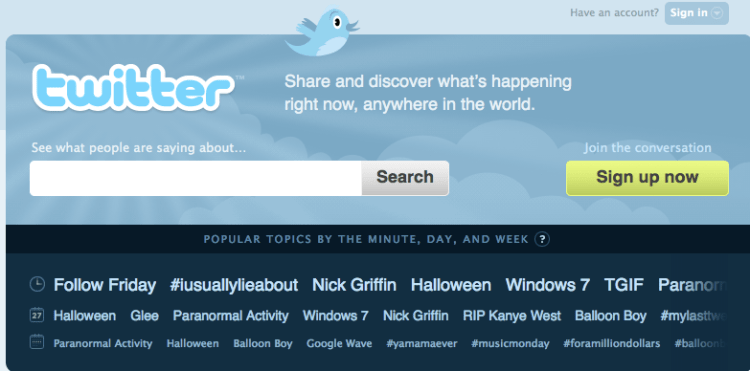
A University of Tampa student recently asked for my input regarding the use of Twitter in the journalism world. She reached out to me for comment, but didn’t end up writing the story. So, for what it’s worth, I’m posting her questions and my answers here. Feel free to disagree with, or expand on, my points. You can follow me on Twitter @MallaryTenore.
1. What do you think are the main advantages of using Twitter to report news?
Dissemination of news. I use Twitter in place of an RSS reader because I find it to be a quality tool for assembling news. Twitter is a great resource for reporters because it is a way to stay on top of breaking news, solicit feedback and cultivate sources. Some reporters I know, for instance, will pose a reporting-related question to people on Twitter in hopes that they can get a lead or a source from it. Twitter is also great because it allows for a diversity of voices. Depending on who you’re following, you can get a wide variety of news that you might not otherwise find out about if you’re just looking at the same Web sites every day.
2. What are the disadvantages, and what changes would you like to see made?
I think that while Twitter can be extremely beneficial in the reporting process, it can also give us “an easy way out.” Reporters, for instance, may just turn to Twitter as a resource and then stop that. When it comes to finding sources, Twitter is a good starting point. The real reporting comes afterward, in the follow-up phone calls and interviews that result from what the reporter found out on Twitter. Another disadvantage is that sometimes the silly language of Twitter — tweet, twoosh, twitteria — can give people the wrong impression of the site and lead them to believe that it shouldn’t be taken seriously as a tool for journalists. Another disadvantage is that many people think that just because they can use Twitter, they should. It’s just like any other medium; sometimes it works better for certain stories than others. (Example: Rocky Mountain News journalist tweeting a funeral.)
Twitter.com
3. Do you believe Twitter has enhanced or diminished the quality of journalism?
I wouldn’t say that Twitter has necessarily enhanced the quality of journalism, but I would say it has enhanced the ways that journalists are able to communicate information and the speed at which they can communicate it. Now journalists can tweet during court hearings and sports games (depending on restrictions), and other live events. Twitter can make news seem more immediate and more personal, especially when reporters build a big base of followers and then use their voice and storytelling style to connect with them. Nicholas Kristof of The New York Times does a good job of this.
4. Is this trend on the rise or flaming out?
I would say that in the past year or so, Twitter has become increasingly popular, especially among younger and mobile Internet users. When I first wrote about Twitter back in September 2007, very few news organizations were using it, and I got a lot of comments from readers who said they thought the site was dumb, irrelevant and “ridiculous.” Now, people seem to embrace it. Facebook is even copying many of Twitter’s features. Now, for instance, you can @reply someone in a Facebook status update. Will Twitter continue to thrive as a leading social media platform moving forward? Probably. But I have no doubt that other sites like it will soon emerge.
Helpful Twitter resources from Poynter.org (@poynter), the site I write/edit for:
Wednesday nights used to be “put the paper to bed and forget about sleep” nights. As editor-in-chief of Providence College‘s student newspaper, The Cowl, I’d often stay up until 4 a.m. or 5 a.m. editing final versions of stories, re-reading headlines and making sure the paper didn’t contain any glaring errors. Perfectionism often kept me and the associate editor-in-chief there later than it should have, but we cared about the paper and wanted it to be nothing short of awesome.
In retrospect, I wish I hadn’t let the paper rule so much of my college life, but it doesn’t surprise me that it did. I’ve always struggled to achieve a healthy work-life balance; more often than not I let work take precedence, even when it shouldn’t.
The lack of sleep and the headaches that came with editing the paper were worth it, though. I liked the work and think it helped me become a more effective leader and a better writer and editor. I also met a lot of people and learned a great deal from the upperclassmen who were my editors during my first few years on the paper. I still keep in touch with some of them, including Frank, the editor-in-chief who hired me the first day of my freshman year.
I remember lugging a big blue binder of clips into The Cowl office and showing it to Frank, hoping I would land a position as a staff writer. Little did I know, it wasn’t all that difficult to get hired on staff, but I was nonetheless excited to start reporting college news. My first story for The Cowl was about computer problems at the start of the school year — a pretty straightforward story but one that I remember working hard on. (Reading it six years later makes me cringe — and realize how far I’ve come since then!)
Frank, who assigned me that first story, approached me earlier this month to ask if I wanted to be part of a committee to help commemorate The Cowl‘s 75th anniversary in November 2010. I said yes and am looking forward to reconnecting with the paper and helping out to the extent that I can. (Living 1,000-plus miles away from the school makes traveling tough.) At this point, we’re still in the brainstorming stage and are looking for ideas as to how we might recognize 75 years of student journalism at Providence College.
Anniversaries present us with an opportunity to acknowledge the past, but they should also prompt us to think about what’s to come, to challenge “traditions” and to ask important questions about the viability of what we’re celebrating. Some questions that come to mind are: What have we been doing all these years that just isn’t working anymore? What could we, and should we, be doing differently? How daring will we be when it comes to experimenting with new ways of telling stories?
In the case of The Cowl, the experiments might mean more hours in the office on Wednesday nights, but the benefits they yield could mean many more anniversaries down the road.
What ideas do you have for celebrating student newspapers’ anniversaries?
My latest Poynter Online story is about journalists who are using a site called Kickstarter to raise thousands of dollars for personal projects. The journalists I interviewed are pursuing projects that involve filming a documentary, writing a book and traveling to Tanzania to study Kihansi spray toads:
“As journalists face pay cuts and are asked to do more with fewer resources, it has become increasingly difficult for them to find the time and money to pursue large-scale enterprise stories or personal projects.
“But some journalists are finding a way to make it work. In recent months, they have raised thousands of dollars on Kickstarter to fund book projects, documentaries and international reporting. The site is similar to Spot.Us, the crowd-funding journalism site, but it isn’t limited to journalists.
“Launching projects on the site, journalists say, has given them the opportunity to pursue passions, think entrepreneurially about their work and find new ways of interacting with audiences — not only after completing a project, but while they’re working on it.”
I’ve been getting to write more stories for work, which has been great in terms of developing my reporting and writing skills. I’ve found that line and copy editing stories for Poynter Online throughout the past year has made me a better writer.
It’s taught me to write tighter sentences, triple-check my facts and cut out unnecessary information. It’s also helped me improve my ability to conceptualize an idea and see it through the reporting process. I’m now more readily able to take a big idea and find a focus for it. Perhaps most importantly, I’ve learned how helpful it is to find a focus and talk about a story with an editor on the front-end as opposed to writing the story and then having an editor tell you after the fact that the story is “all over the place.”
Here are some of my recent Poynter Online stories:
We’ve all heard or read them — those quotes that speak to us and make us realize that for as confused about life as we sometimes get, there’s someone else out there who understands. I recently read two Erica Jong quotes from the book, “The Writer and Her Work” that resonated with me, so much so that I hand-wrote them out and stuck them on my nightstand so I could read them regularly.
Here they are:
“In the past several years, I have learned, in short, to trust myself. Not to eradicate fear but to go on in spite of fear. Not to become insensitive to distinguished critics but to follow my own writer’s instinct despite what they say women should or should not write. My job is not to paralyze myself by anticipating judgment but to do the best I can and let the judgment fall where it may.
“The difference between the woman who is writing this essay and the girl sitting in that creative writing class in 1961 is mostly a matter of nerve and daring — the nerve to trust my own instincts and the daring to be a fool. No one ever found wisdom without being a fool. Writers, alas, have to be fools in public, while the rest of the human race can cover its tracks. But it also painfully true that no one avoids being a fool without also avoiding growth, and growth does not, alas, stop with the current feminist vision of reality. It goes far beyond it.”
Second quote:
“When I look back on the years since I left college, and I try to sum up what I have learned, it is precisely that: not to fear change, not to expect my life to be immutable. All the good things that have happened to me in the last several years have come, without exception, from a willingness to change, to risk the unknown, to do the very things I feared the most.
“Every poem, every page of fiction I have written has been with anxiety, occasionally panic, always uncertainty about is reception. Every life decision I have made — from changing jobs, to changing partners, to changing homes — has been taken with trepidation. I have not ceased being fearful, but I have ceased to let fear control me. I have accepted fear as a part of life, specifically the fear of change, the fear of the unknown, and I have gone ahead despite the pounding in my heart that says: turn back, turn back, you’ll die if you venture too far.”
Whenever I get an e-mail saying I have a new comment on my blog, I get the same feeling of enthusiasm I used to get when I would hear the mail truck stop in front of my house as a little girl. I’d dash out the front door and flip through the envelopes, hoping there was one addressed to me. The thought that someone would have taken the time to write always excited me and still does.
I’ve gotten three blog comments in the past month or so that struck me as being particularly meaningful. They serve as reminders of why I keep this blog up. Sure, I do it for myself, but I also do it for my audience, small though it may be. Knowing that about 100 people turn to my site every day keeps me motivated to blog regularly in the hopes that what I write will resonate with readers and prompt them to discover something about themselves, think deeper about an issue or respond to what I have to say.
Below, I’ve listed the aforementioned comments. The first two are from readers who I don’t personally know, while the third is from a cook who taught the cooking classes my mom and I used to attend years ago.
“I love your blog, and this is an interesting post. An idea: having an audience helps a lot. I keep a “writing journal” by emailing friends my ideas or experiences as they come up and pasting my jottings into a Word file.
“In your case, these are great essay ideas, and you might just write about them on this blog, or on a companion blog. You don’t try to be perfect that way, but you do get something down, which you can later expand for separate publication somewhere, or not. In my case, for the last four years I have been writing and rewriting a memoir and I break out stand-alone essays as they occur and as I notice them. For me in this phase, essays have mostly been a byproduct of a larger work. And I think that’s helpful, whether you are writing things for a blog or for a book . . .”
“After my Dad’s funeral we came back to their sweet little house with all the memories and my Mom sat there listening to laughter, stories and jokes about my Dad. It helped her so much. My brother left the house and needed time to be alone so he walked down the driveway and stood under a grove of mulberry trees my Dad had planted. Later he told us that he looked up in the night sky and saw a shooting star and a few minutes later he heard an owl hooting. He had read somewhere that in some cultures the owl was a sign from loved ones who have died that they are ok. With tears in his eyes my adult brother said out loud where no one could hear him … ‘Is that you Dad? I love you and miss you.’
“Four months later we buried our Mom who had a broken heart losing her best friend of 67 years. I had a hard time returning to church with memories of her casket up there near the altar but little by little she must have asked God to bring me back and stay close to Him. Several years before my Mom died she said ‘when I am gone, don’t grieve for me too long. I spent my whole life waiting for that beautiful day when I can be with God.’
“With tears in my eyes I am writing this, thanking all of you for sharing your memories and signs. I lost my Dad and Mom 4 months apart after two years of caregiving them through cancer, blindness and Parkinson’s. I grieved for their loss but thanked God they were suffering no more.
“I did grieve and I continue to miss her and my Dad but it has gotten easier. My parent’s graves are under a big shady tree and when I visit them the birds are chirping and leaving their droppings on their grave stone and I feel their presence and their sense of humor bringing me laughter again. The gravestone was carved with my Dad’s name on the left and my Mom’s name on the right. A week after the burial we realized my Dad had played a trick on us from Heaven. My Mom was mistakenly buried on the left under my Dad’s name and my Dad was buried under my Mom’s name. We thank our parents for that last joke from Heaven and it has comforted us.”
“My husband recently ‘googled’ me and your blog from June 08, regarding comments and memories found in cookbooks, came up with your mention of my first cookbook, ‘From Ellie’s Kitchen to Yours.’ As soon as I saw your name it brought back fond memories of you and your mother, Robin, sitting very attentively in my cooking classes at Roche Bros in Millis. I believe that your Mom was already ill at the time, but I’m not sure. However, I admired the fact that she faithfully brought you to all the classes and you were always very interested and well behaved. Your Mom was a lovely woman and I was sorry to hear of her passing.
“I read about you and what you are doing and thought that you might find it interesting that I have Dan Poynter’s book on self publishing and found it very helpful when publishing my second cookbook, ‘So Easy, So Delicious.’
“I left Roche Bros more than 10 years ago and currently give private cooking classes and lessons, as well as corporate culinary seminars and team building events.
“In case you are still interested in cooking you are welcome to check out my website, elliedeaner.com or my blog, elliedeaner.blogspot.com. You are also welcome to sign up for my complimentary monthly e-newsletter, which contains recipes and culinary tips.
“Your upcoming vacation sounds great and I hope that you have a wonderful time!
“BTW, I’d be curios to know if you have any memories of your lessons at Roche Bros, so long ago!
“Best regards,
Ellie Deaner”
What keeps you coming back to this blog? What type of posts do you want to see more of? Less of? I hope you’ll share your thoughts in a comment!


 Word on the Street